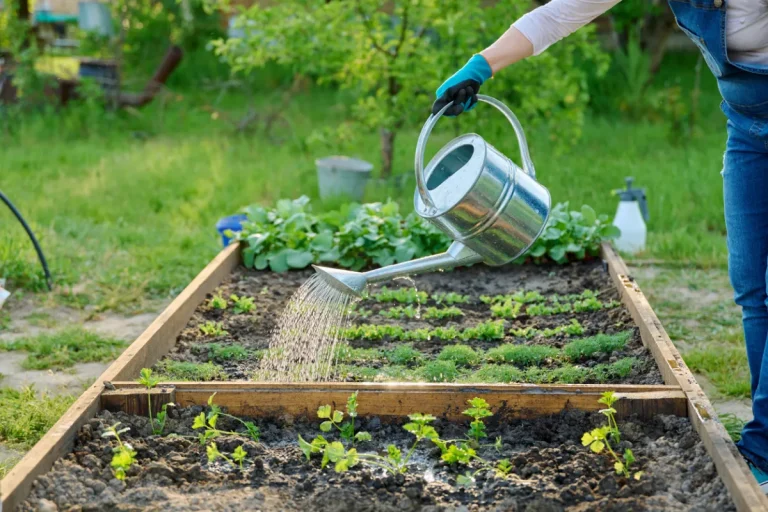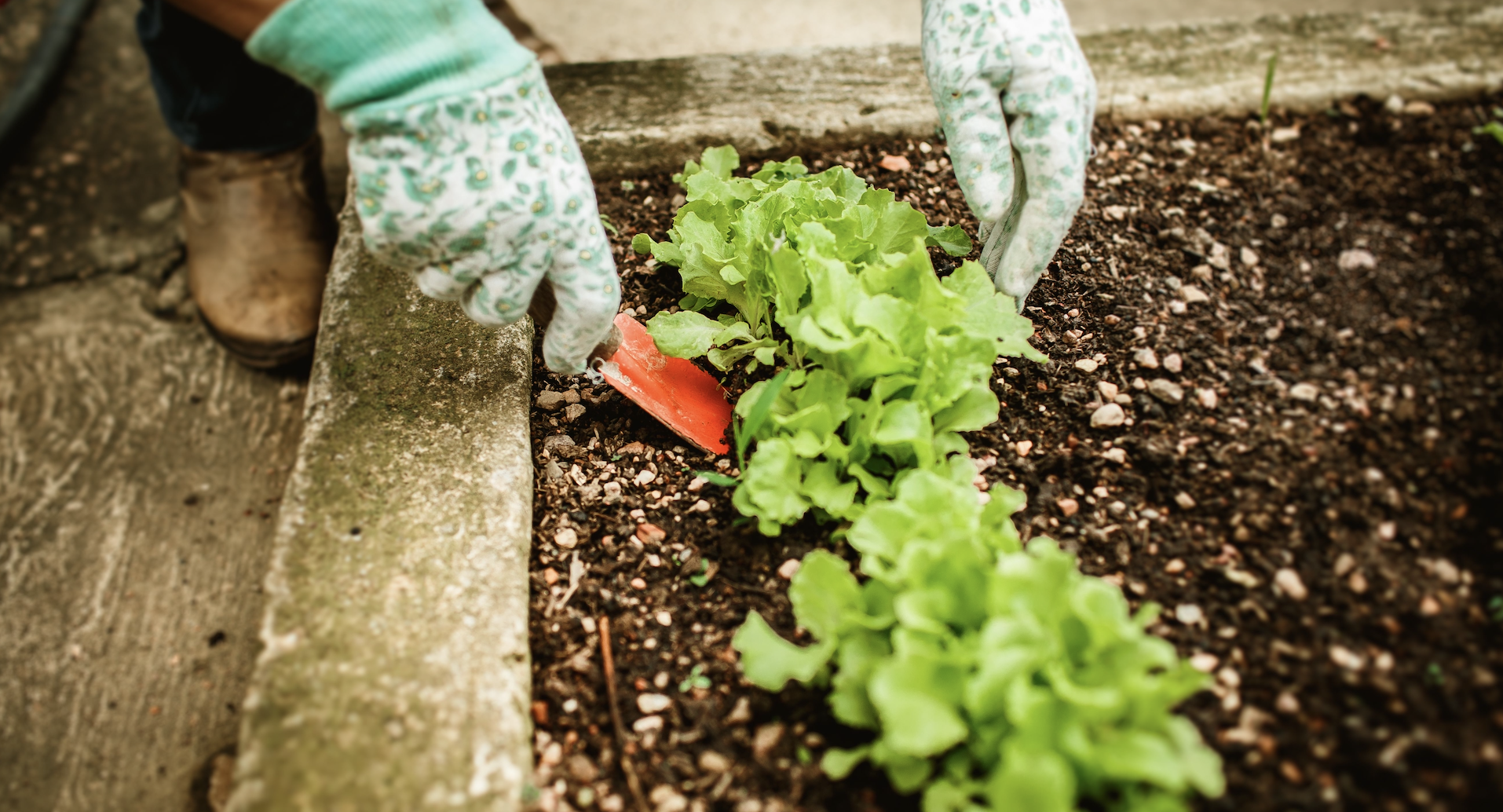
Starting a vegetable garden is exciting because the early stages are full of visible progress. Seeds sprout, seedlings unfurl new leaves, raised beds look neat and organized, and young plants seem to fit comfortably into spaces that will eventually become much more crowded. During those first few weeks, almost any garden can look promising.
The real test begins later. Tomatoes that seemed small in May suddenly shade half the bed in July. Lettuce bolts before you get around to harvesting it. Cucumbers sprawl across the path, peppers stop producing, squash leaves wilt in afternoon heat, and weeds begin competing with vegetables that were supposed to be the priority. A first garden often struggles not because the gardener lacked enthusiasm, but because many mistakes do not reveal themselves until the season is already well underway.
That is what makes beginner gardening difficult. You are making decisions about sunlight, soil, spacing, irrigation, variety selection, timing, and plant support before you have seen how those plants behave in your own yard. A tiny tomato transplant gives very little indication of how much space it may eventually occupy. A dry-looking soil surface does not always mean the root zone is dry. A packet of seeds may tell you when to plant, but your local weather may not behave exactly like the calendar suggests.
The most damaging garden mistakes are therefore rarely dramatic. They are usually small decisions repeated over time. Planting slightly too close becomes severe overcrowding once everything matures. Watering lightly every evening can create shallow roots instead of a resilient root system. Ignoring one hornworm, aphid colony, or fungal spot for several weeks can allow a manageable problem to become a much larger one. Choosing vegetables based only on what looks exciting in a seed catalog can leave you with crops your climate, space, or household does not actually support.
The good news is that most of these mistakes are preventable. You do not need expert-level knowledge to grow a successful first vegetable garden. You need a realistic plan, a manageable number of crops, enough sunlight, workable soil, consistent watering, and a habit of observing the garden before small problems become major ones.
These twelve mistakes explain where beginners most often go wrong, why the problem matters, and what to do instead.
1. Starting the Garden in a Spot That Does Not Get Enough Sun
One of the biggest mistakes a beginner can make happens before the first seed is planted: choosing a garden location based on convenience rather than sunlight. Vegetables vary in their light requirements, but many of the crops gardeners most want to grow — tomatoes, peppers, cucumbers, squash, beans, eggplant, and melons — generally perform best with strong, direct sun. A bed that receives only a few hours of light may still grow something, but the plants can become stretched, weak, slow to flower, or less productive than expected.
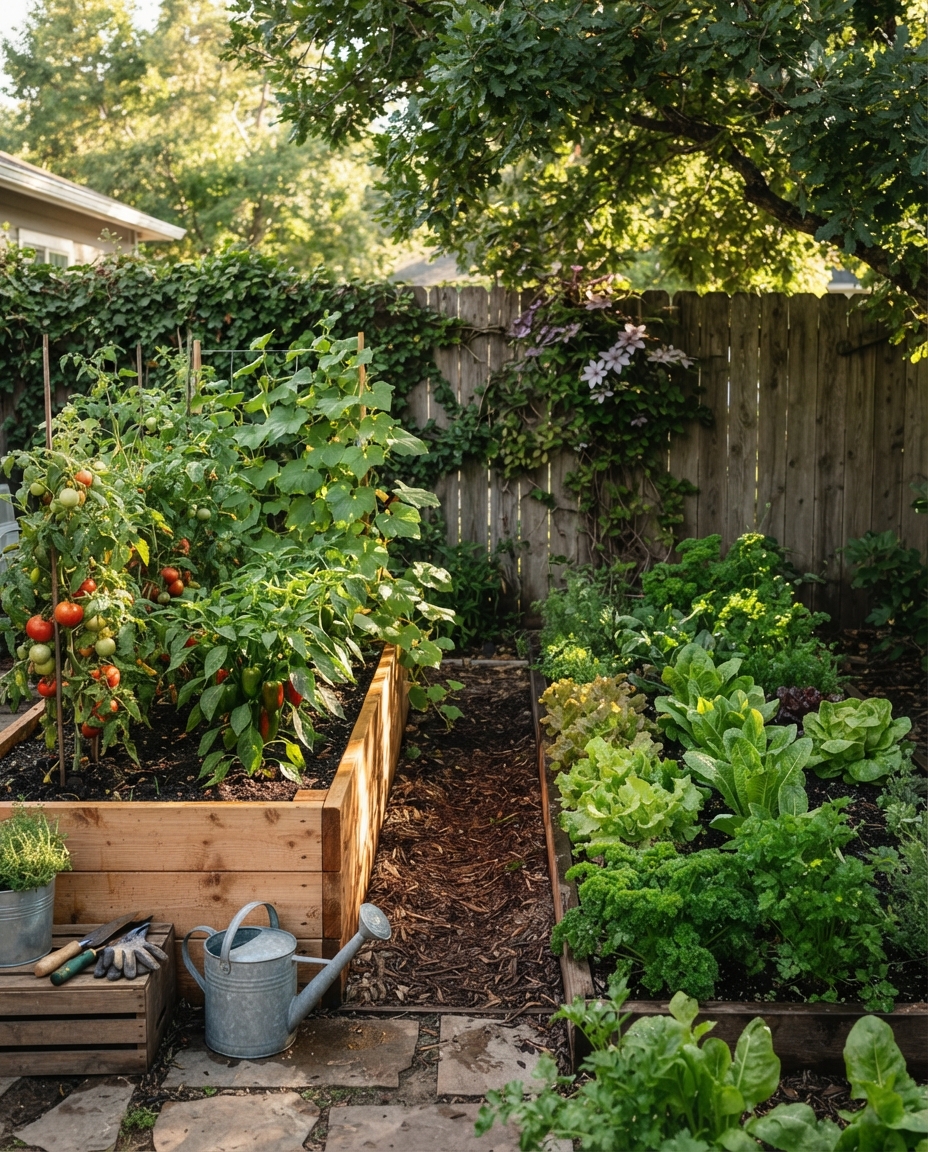
The problem is that many yards look sunnier than they really are. A garden space may receive excellent light in early spring before trees leaf out, then become shaded later in the season. A fence may cast a narrow shadow in the morning but cover half the bed by late afternoon. Nearby houses, garages, sheds, hedges, and mature trees can all change the light pattern significantly.
Before building a permanent raised bed, observe the area over several days. Check it in the morning, around midday, and later in the afternoon. If possible, do this during the part of the year when you actually plan to grow vegetables.
Do not assume that every crop requires identical conditions. Lettuce, spinach, some herbs, and other cool-season greens may tolerate or even appreciate some shade under warm conditions, while fruiting vegetables usually benefit from stronger light. The key is matching the crop to the actual site rather than forcing a sun-loving vegetable into a location that cannot support it well.
Quick Sunlight Guide
| Crop Type | General Light Need | What Low Light Often Causes |
|---|---|---|
| Tomatoes, peppers, eggplant | High | Fewer flowers, weaker growth, slower ripening |
| Cucumbers, squash, melons | High | Reduced flowering and lower productivity |
| Beans | Moderate-high | Slower growth, lower yields |
| Lettuce, spinach | Moderate | Can tolerate some shade, especially in heat |
| Parsley, cilantro | Moderate | Often more flexible than fruiting crops |
| Root vegetables | Moderate-high | Tops may grow better than roots in poor light |
These are broad categories, and exact needs vary by climate and variety.
What to do instead: Put your highest-light crops in the brightest area and use partial-shade spaces for vegetables that tolerate lower light more comfortably.
2. Planting Far More Than You Can Realistically Maintain
The excitement of a first garden often encourages beginners to plant one of everything. A tomato plant becomes four. Four cucumber seedlings become eight. Several packets of lettuce, radishes, carrots, beans, zucchini, basil, peppers, and flowers all seem manageable while the seedlings are small. The garden can look surprisingly empty at planting time, which makes adding just one more plant feel harmless.
By midseason, the reality is very different. Every additional plant needs water, nutrients, space, pest monitoring, pruning or support where appropriate, harvesting, and eventually cleanup. More plants also produce more food, which sounds entirely positive until twenty zucchini mature in the same week and nobody in the household wants another zucchini meal.
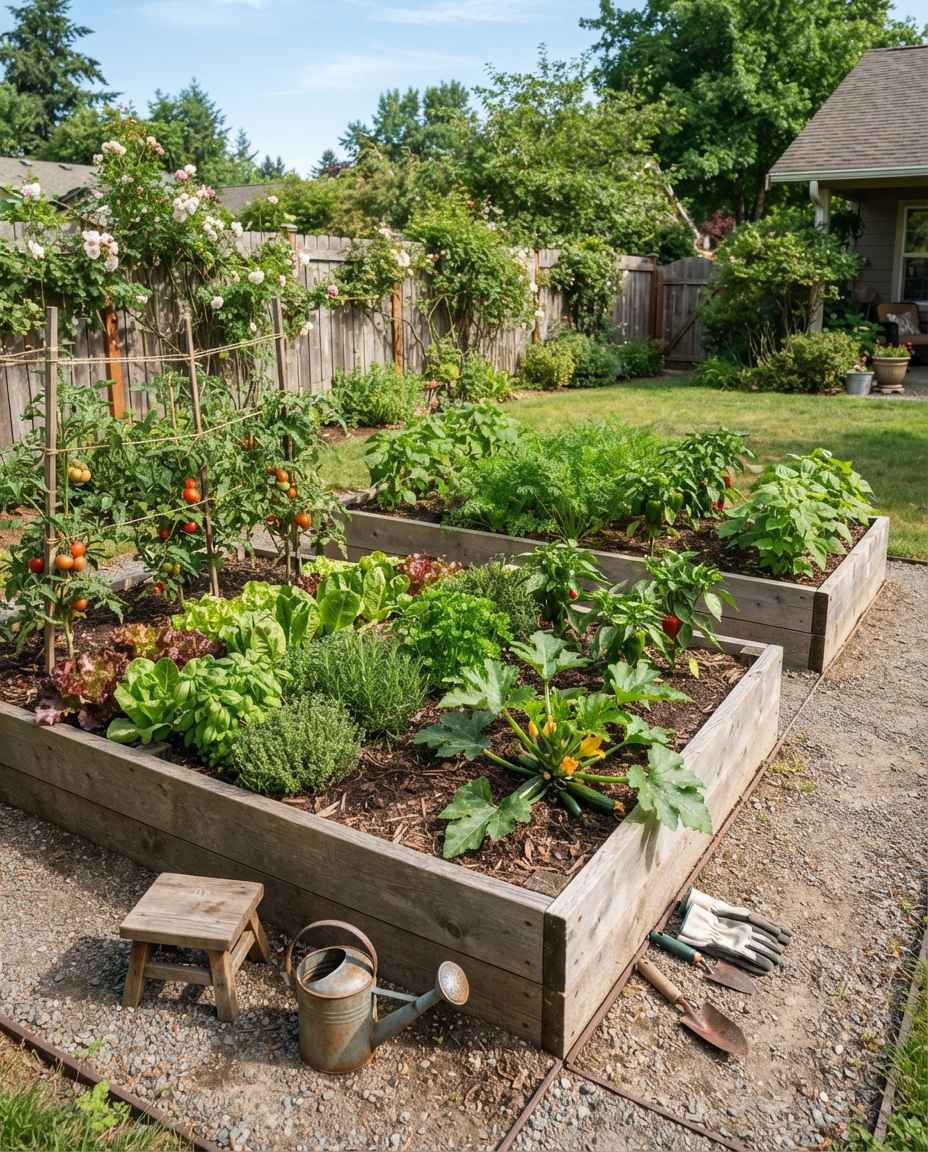
A garden is productive only when you can maintain and use what it produces. Starting too large also makes learning harder. When several crops develop problems simultaneously, beginners have a difficult time determining whether the cause is watering, soil, pests, weather, or variety selection because too many variables are being managed at once.
A smaller garden allows you to observe more carefully. You can learn how quickly soil dries, which crops your family actually eats, how much time harvesting takes, and how many tomato plants you really need before committing to a much larger growing area. A first-year garden of two or three well-managed beds can be far more successful than six beds that become overwhelming by July.
A Better First-Garden Approach
| Garden Element | Beginner-Friendly Strategy |
|---|---|
| Tomatoes | Start with a few plants rather than a full row |
| Zucchini | Often one or two plants can produce heavily |
| Herbs | Grow the ones you actually cook with |
| Greens | Plant smaller batches repeatedly |
| Root crops | Sow manageable sections, not entire packets |
| New crops | Try a few rather than every unusual variety at once |
What to do instead: Build a garden you can manage consistently for the entire season, not just one that looks impressive on planting day.
3. Ignoring the Mature Size of Plants
Seedlings are deceptive. A six-inch tomato transplant looks tiny inside a four-foot raised bed, and a young zucchini plant occupies barely any space at all. That visual emptiness encourages many beginners to plant far too closely.
The problem is that vegetables do not remain seedlings for long. A mature tomato plant can become several feet wide. Zucchini and summer squash produce enormous leaves that extend well beyond the point where the stem enters the soil. Cucumbers may travel several feet if they are not trellised. Pumpkins and winter squash can send vines far outside the bed entirely.
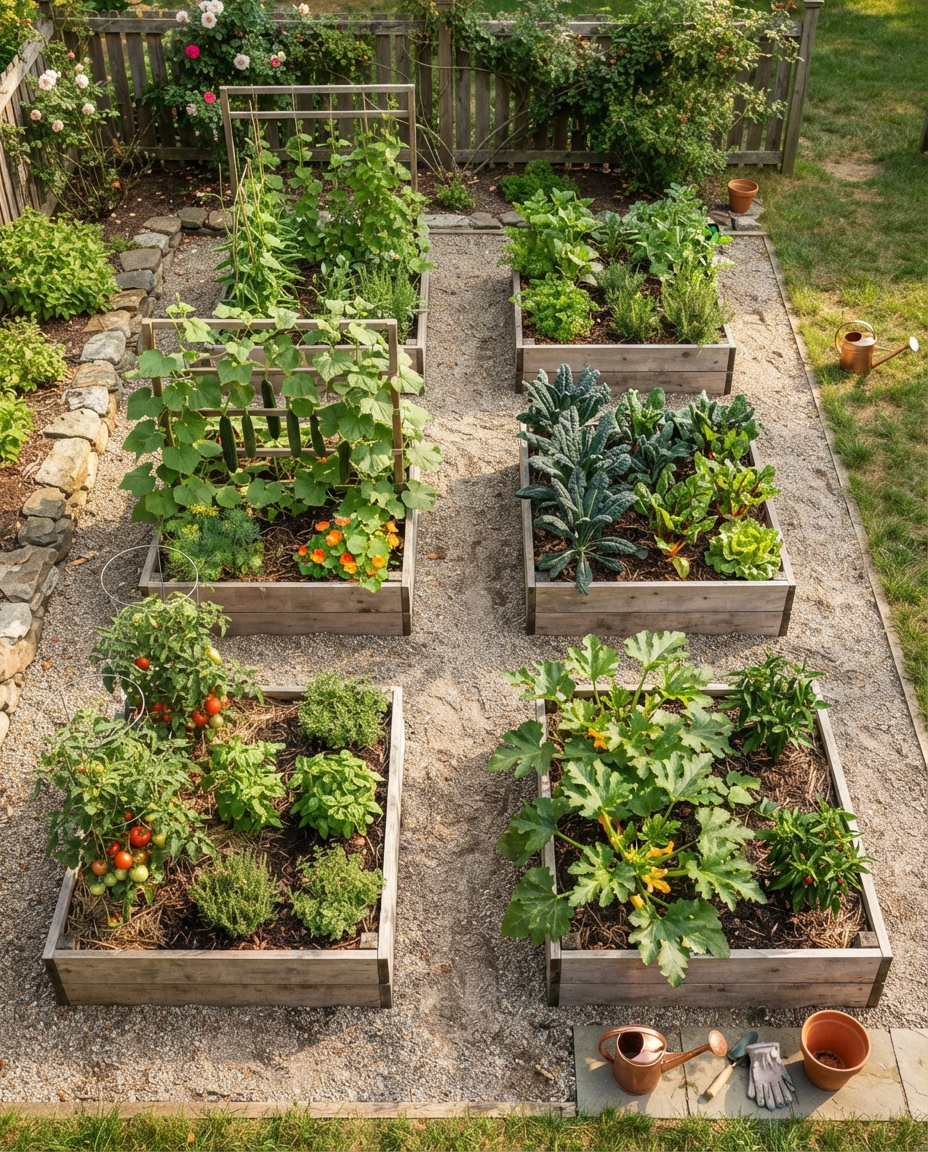
Overcrowding creates several problems at once. Leaves begin shading one another, airflow through the garden decreases, harvesting becomes difficult, and plants compete more intensely for water and nutrients. Dense foliage can also make it harder to notice pests or disease until the problem has spread.
Spacing recommendations are therefore based on the mature plant rather than the seedling. The specific spacing depends on variety and training method. A single-leader tomato on a string trellis can be managed differently from a large unpruned tomato in a cage. A bush cucumber occupies a different footprint from a vigorous vining type.
Read the mature size on the seed packet or plant label and plan accordingly.
Mature Space Matters More Than Seedling Size
| Crop | Young Plant Looks Like | Mature Plant Can Become |
|---|---|---|
| Tomato | Small upright transplant | Tall, wide, heavily branched plant |
| Zucchini | Compact seedling | Broad plant with large spreading leaves |
| Cucumber | Small vine | Several feet of vigorous growth |
| Pole bean | Tiny seedling | Tall vertical vine |
| Pumpkin | Small plant | Long spreading vines |
| Kale | Small leafy rosette | Broad mature plant with large leaves |
What to do instead: Design the bed as though every plant is already full size.
4. Watering a Little Bit Every Day Without Checking the Soil
Frequent shallow watering is one of the most common beginner habits because it feels responsible. The soil surface looks dry, so the gardener sprays the bed for a few minutes. The next afternoon it looks dry again, so the process is repeated. The plants appear to be receiving plenty of attention, yet the deeper soil may remain surprisingly dry.
Roots respond to where moisture is available. If only the top inch of soil is repeatedly moistened, plants may develop a shallower root system. That can make them more vulnerable to hot weather because the roots depend heavily on water near the surface, where evaporation happens quickly.
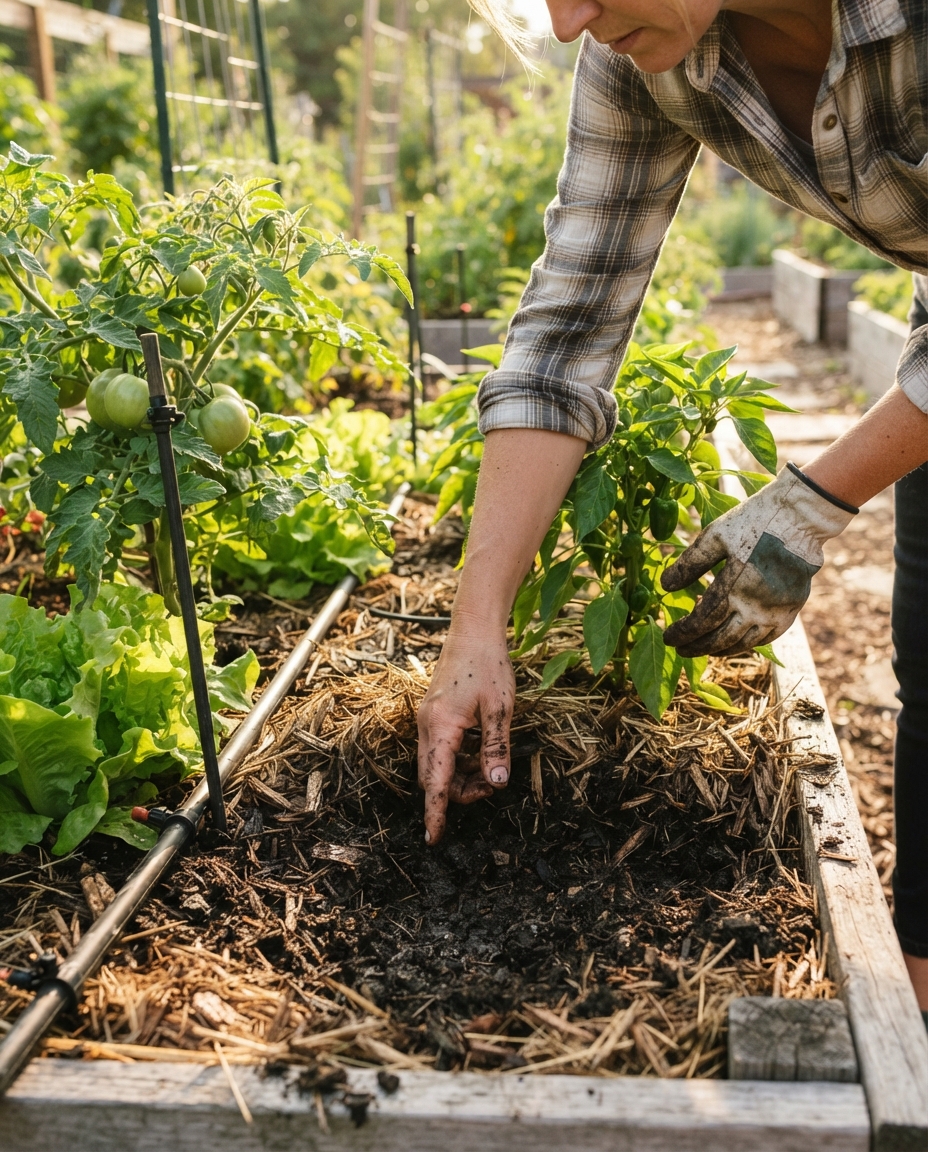
A better approach is to water deeply enough that moisture penetrates the root zone, then allow the soil to begin drying appropriately before watering again. The exact frequency depends on temperature, wind, soil type, plant maturity, mulch, rainfall, bed depth, and crop.
This is why fixed schedules can be misleading. “Water every day” and “water twice a week” may both be wrong depending on the conditions. Use your fingers, a trowel, or another simple method to check moisture below the surface. If the top is dry but the soil several inches down remains comfortably moist, the garden may not need more water yet. Mulch can reduce evaporation substantially by covering exposed soil. Drip irrigation or soaker lines can also place water more directly around the root zone rather than repeatedly wetting large amounts of foliage.
Watering Diagnosis Table
| What You See | Possible Meaning | What to Check |
|---|---|---|
| Dry surface, moist soil below | Garden may still have enough water | Check several inches deep |
| Wilt during hot afternoon, recovery at night | Heat stress may be temporary | Check soil before watering |
| Wilt in morning with dry soil | Water shortage more likely | Water deeply |
| Constantly wet soil | Possible overwatering/drainage issue | Reduce watering, inspect drainage |
| Yellowing with soggy soil | Roots may be stressed | Check irrigation and soil drainage |
What to do instead: Water based on actual soil moisture and weather rather than habit alone.
5. Planting in Poor Soil and Expecting Fertilizer to Fix Everything
Vegetables depend on soil for far more than nutrients. The root zone also has to hold enough moisture, drain excess water, provide oxygen, and allow roots to move through the soil without excessive resistance. A garden can contain plenty of fertilizer and still perform poorly if the soil is compacted, waterlogged, extremely sandy, or structurally weak.
This is especially important in new suburban gardens, where construction soil can be heavily compacted or low in organic matter. Beginners sometimes respond to weak growth by adding more fertilizer. If the real problem is poor drainage or damaged roots, extra nutrients may do very little and can sometimes make management more complicated.
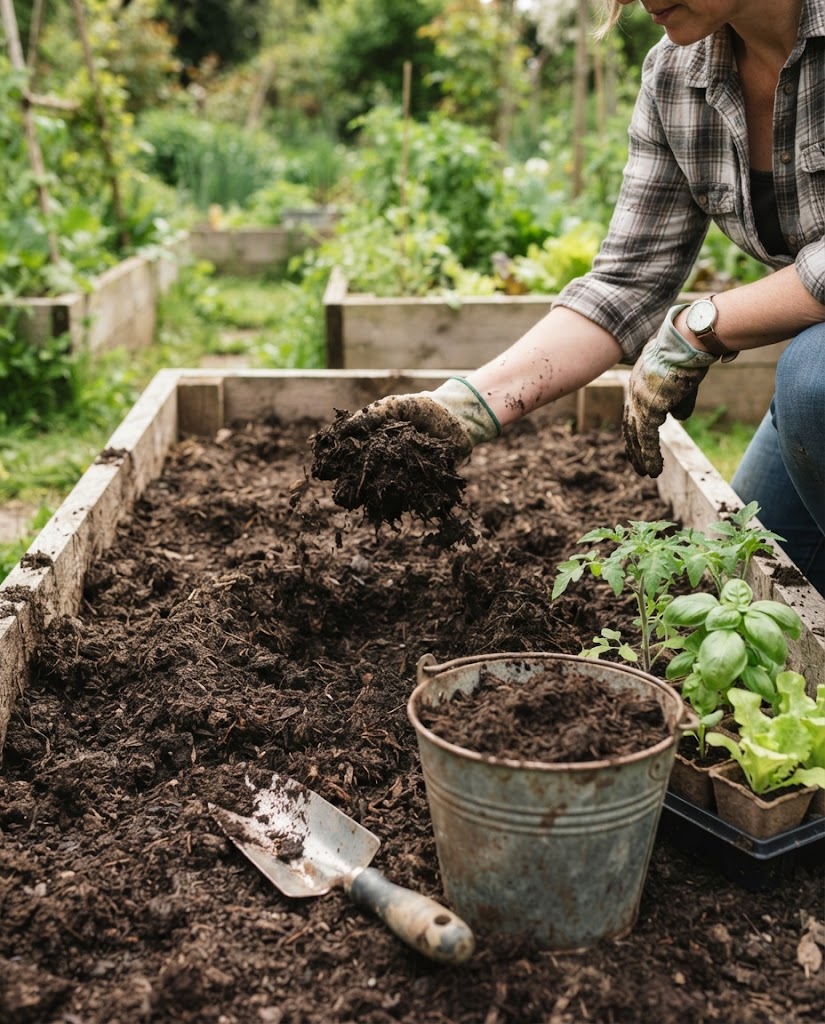
Before planting, evaluate the soil itself. Does water disappear immediately, or remain pooled for hours? Does the soil turn into a dense brick when dry? Can you dig into it easily? Is it dominated by sand, clay, or fill material? Adding mature compost can improve organic matter and soil structure, but it is not a universal cure for every soil issue. In very difficult locations, raised beds with a well-designed growing medium can provide more control. Soil testing can also be useful, particularly if you are planning a larger garden or suspect unusual pH or nutrient problems. A test gives you information instead of forcing you to guess which fertilizer the garden needs.
Soil Problem vs. Fertilizer Problem
| Symptom | Could Be Nutrients? | Could Be Soil Structure/Water? |
|---|---|---|
| Pale leaves | Yes | Yes |
| Slow growth | Yes | Yes |
| Root rot | Less likely | Very likely |
| Water pooling | No | Yes |
| Hard compacted soil | No | Yes |
| Leaf burn after feeding | Possibly excess fertilizer | Possibly |
What to do instead: Build healthy soil first, then fertilize according to crop needs rather than using fertilizer as a substitute for good soil conditions.
6. Planting at the Wrong Time for Your Climate
A vegetable can be healthy and perfectly spaced yet still fail because it was planted at the wrong time. Cool-season vegetables and warm-season vegetables have very different temperature preferences. Lettuce, peas, spinach, radishes, and several brassicas often grow best during cooler parts of the season. Tomatoes, peppers, cucumbers, squash, beans, and eggplant generally prefer warmer conditions and can be damaged or slowed by cold.
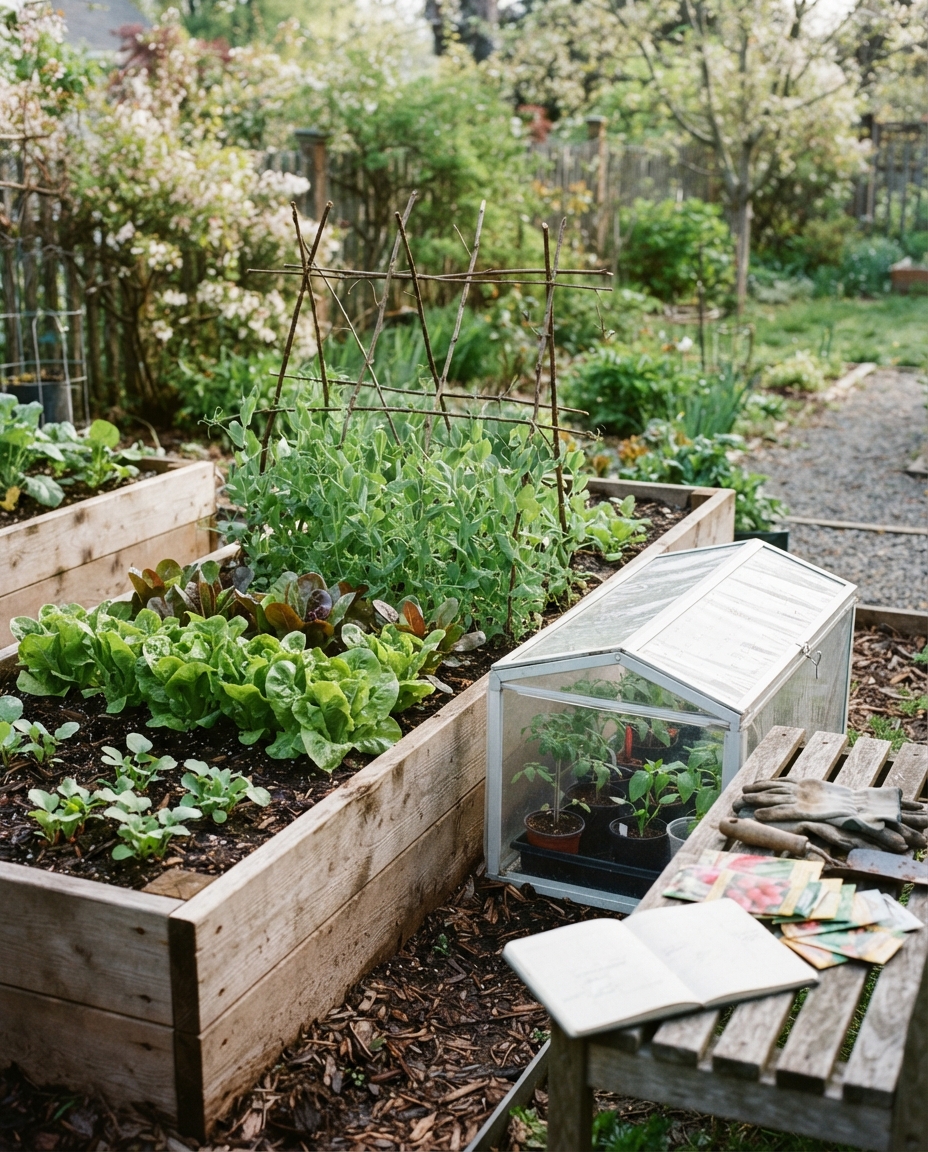
Beginners often use a generic planting calendar without adjusting it to their local climate. That can create two opposite problems. Plant warm-season crops too early and they may sit in cold soil, grow slowly, or suffer from unexpected frost. Plant cool-season crops too late and they may encounter heat before they have time to mature, leading to bolting, bitterness, or poor quality.
Your last spring frost date and first autumn frost date are useful reference points, but they are not perfect predictions. Soil temperature, nighttime temperatures, rainfall, and local microclimates also influence planting success. A sheltered urban garden can behave differently from an exposed rural property only a few miles away. Keep notes each year. Record when you planted, what the weather did, and how the crop responded. This turns a generic calendar into a garden schedule based on your own site.
Cool-Season vs. Warm-Season Crops
| Cool-Season Examples | Warm-Season Examples |
|---|---|
| Lettuce | Tomato |
| Spinach | Pepper |
| Peas | Cucumber |
| Radishes | Squash |
| Kale | Beans |
| Broccoli | Eggplant |
This classification is general; exact timing varies by climate and variety.
What to do instead: Plan around local frost dates and real weather conditions rather than a universal calendar.
7. Choosing Varieties That Are Too Large for the Space
The crop name does not tell you how much space the plant will use. A tomato can be a compact patio variety or a vigorous indeterminate type capable of growing many feet tall. A cucumber may be bushy and container-friendly or produce long vines. Squash, beans, melons, and even peppers vary substantially in growth habit.
This is one of the easiest mistakes to avoid if you read beyond the front of the seed packet. Look for descriptions such as determinate, indeterminate, bush, compact, dwarf, patio, pole, vining, or container variety. Those terms often tell you more about whether the plant fits your garden than the vegetable name itself. Small-space gardeners benefit greatly from choosing varieties intentionally.
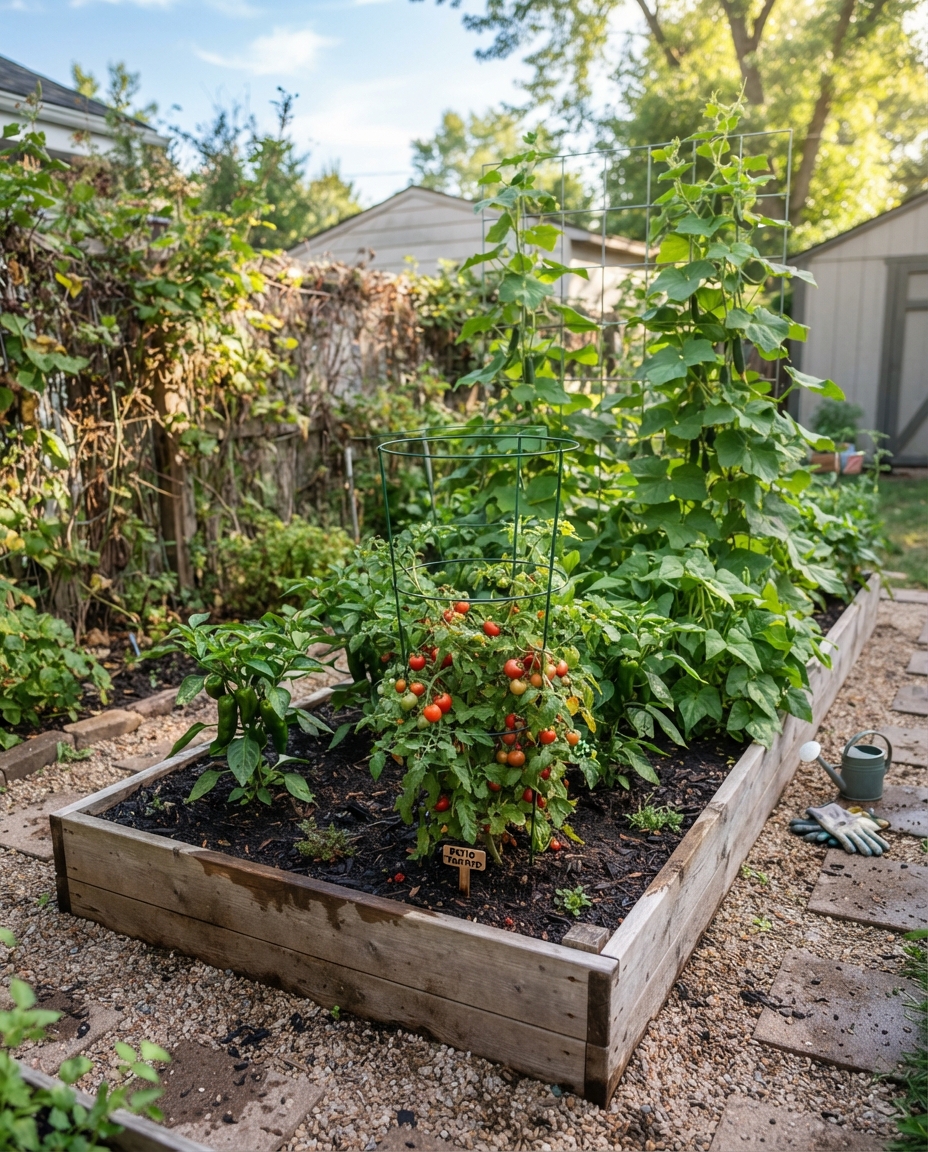
A compact tomato may produce less total fruit than a giant indeterminate plant, but if the larger plant shades three other crops and blocks a pathway, the compact variety may create a more productive garden overall. The same logic applies to squash and cucumbers. A bush variety may allow you to grow a crop that would otherwise overwhelm a small raised bed. Vertical supports can expand your options, but they do not make every giant plant appropriate for every space.
What to do instead: Choose varieties based on mature growth habit, not just flavor, appearance, or novelty.
Variety Terms Beginners Should Understand
| Term | Usually Means |
|---|---|
| Determinate tomato | Grows to a more defined size and produces in a more concentrated period |
| Indeterminate tomato | Continues growing and fruiting through the season under suitable conditions |
| Bush bean | Compact, self-supporting growth |
| Pole bean | Climbing growth requiring support |
| Bush cucumber | More compact growth |
| Vining cucumber | Longer vines, often suited to trellising |
| Dwarf/compact | Selected for reduced size, though dimensions still vary |
8. Waiting Until Plants Are Huge Before Adding Supports
A tomato cage is much easier to install around a six-inch transplant than around a four-foot plant loaded with flowers. The same is true of cucumber trellises, bean supports, stakes, and string systems. Beginners often delay supports because young plants do not appear to need them. By the time they do, branches are tangled, roots have expanded through the soil, and forcing a support into place risks damaging the plant.
Install trellises, cages, posts, and stakes early. This gives plants a structure to grow into rather than requiring you to reorganize them later. Early installation is especially useful with cucumbers and beans because their vines begin attaching themselves quickly once active growth starts. Directing them onto the correct support from the beginning reduces tangling and keeps paths clear.
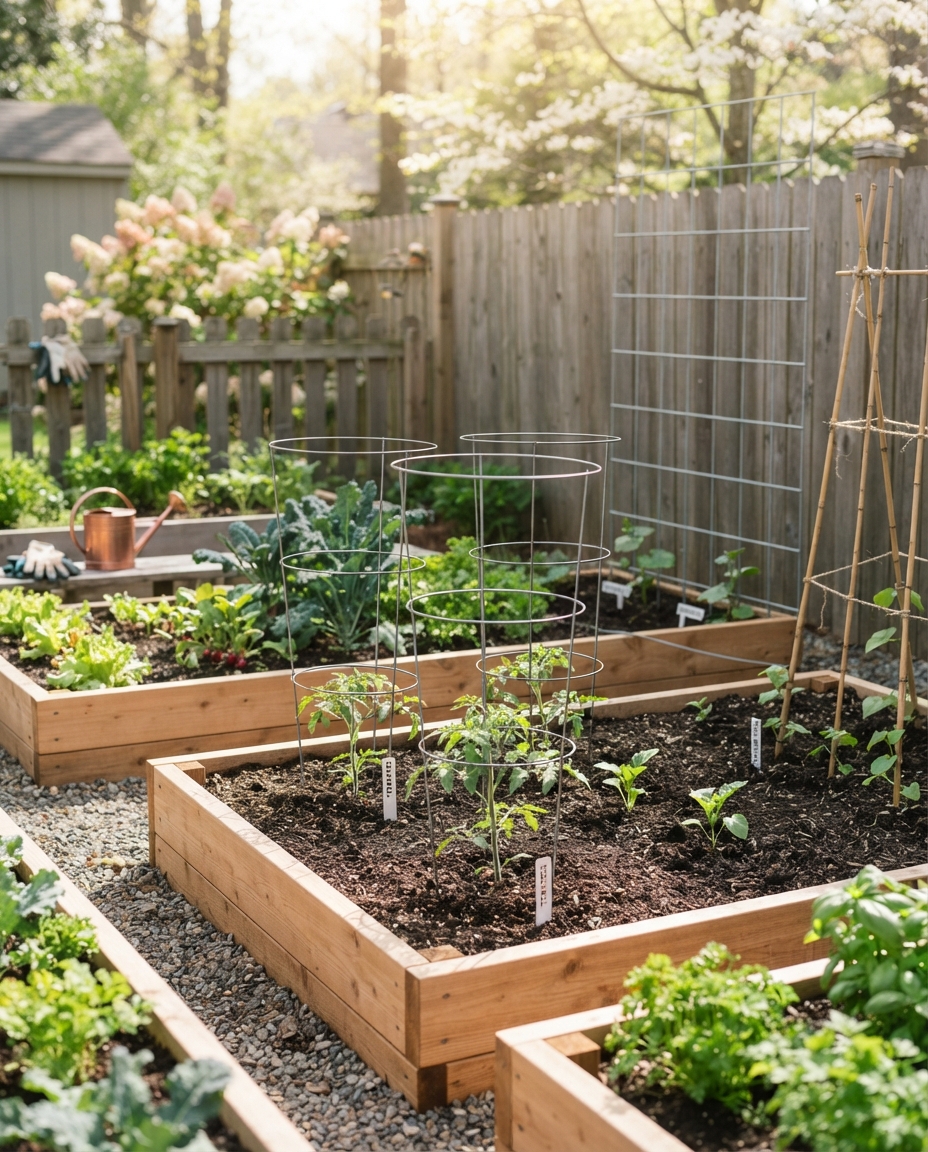
Tomatoes need different support depending on variety and training style. A sturdy cage can work well for some plants, while tall indeterminate tomatoes may be easier to manage with stakes, panels, or string systems. Whatever method you choose, build for mature weight. A flimsy support that seems strong around a seedling can collapse when it carries several months of foliage and fruit.
What to do instead: Install support at planting time or shortly afterward.
9. Fertilizing Too Much Because More Seems Better
Fertilizer is useful, but vegetables do not respond to nutrients according to the rule that more is always better. Excess fertilizer can produce several different problems depending on the nutrient balance and crop. Too much nitrogen may encourage lush leafy growth at the expense of flowers or fruit. Concentrated fertilizer can damage roots. Overfeeding can also create unnecessary runoff and complicate soil nutrient balance.
Beginners often fertilize because a plant looks disappointing without first diagnosing what is actually wrong. A wilted plant may need water. A pale plant might be suffering from root stress, poor drainage, disease, cold soil, or nutrient deficiency. A tomato with lots of leaves but few flowers may already be receiving too much nitrogen. Start with decent soil, understand whether your growing medium already contains nutrients, and follow product directions carefully if additional feeding is needed.
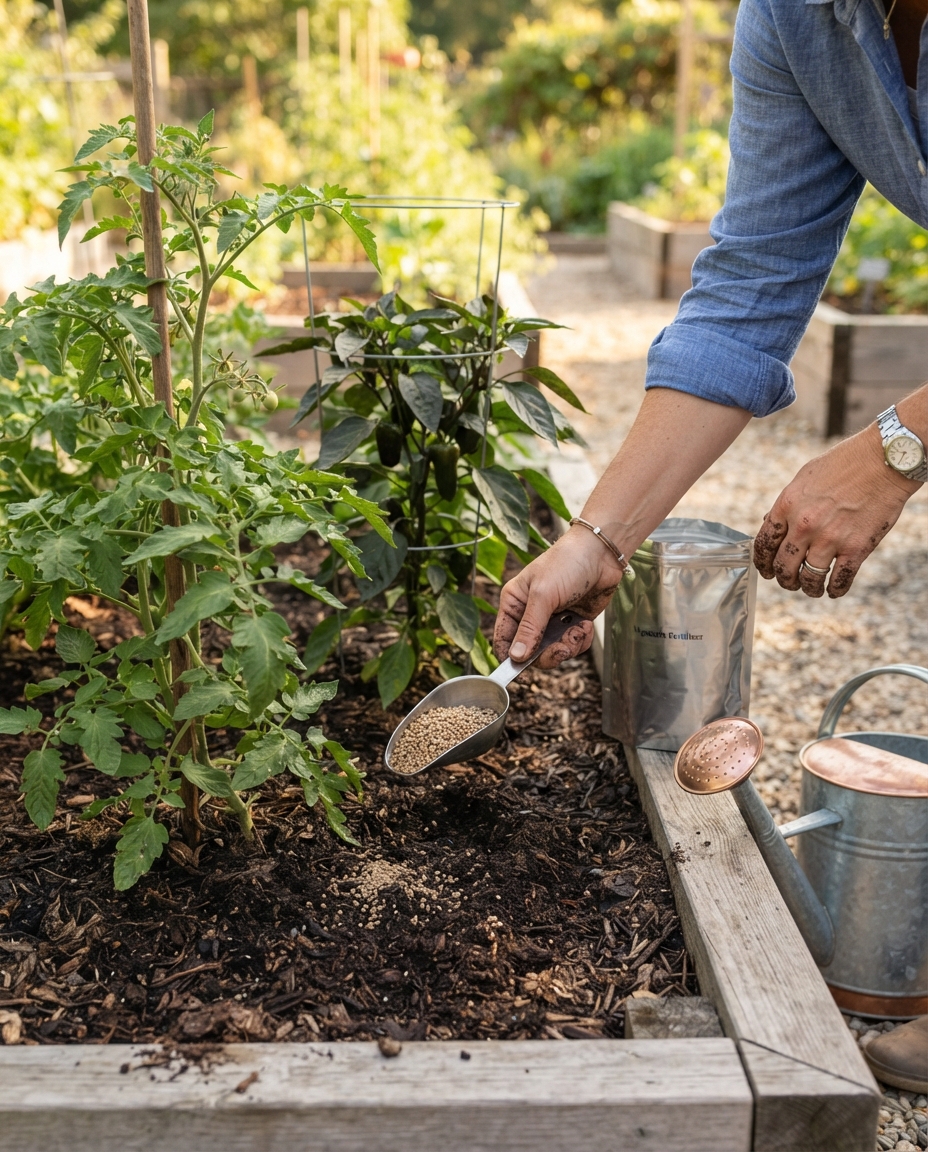
Different crops also have different demands. Heavy-feeding tomatoes or squash may require more fertility than many herbs, while root vegetables can respond poorly to excessively rich conditions. The safest strategy is targeted nutrition rather than routine overfeeding.
Before Adding Fertilizer, Ask:
| Question | Why It Matters |
|---|---|
| Is the soil actually dry or waterlogged? | Water stress can resemble nutrient problems |
| Has the plant recently been transplanted? | Temporary stress may resolve |
| Is the whole plant pale or only old leaves? | Symptom location can matter |
| Is growth lush but fruiting weak? | Too much nitrogen may be possible |
| Has fertilizer already been applied recently? | Repeated feeding may cause excess |
| Have you tested the soil? | Testing can reduce guesswork |
What to do instead: Feed plants based on actual need, crop requirements, and the fertility already present in the soil.
10. Ignoring Pests and Disease Until the Damage Is Obvious
A vegetable garden can change dramatically in one week. A few aphids can become a dense colony. Caterpillars can remove large sections of foliage. Squash bugs can multiply. Fungal spots that begin on a handful of leaves may spread through a plant under favorable conditions. The easiest time to manage many garden problems is when they are still small.
That requires observation. Walk through the garden regularly and look beneath leaves, along stems, around growing tips, and near the soil line. Check unusual discoloration, holes, curling leaves, sticky residue, eggs, webbing, or sudden wilting. Do not assume every insect is harmful. Gardens contain pollinators, predators, decomposers, and other beneficial organisms. Identification should come before treatment.
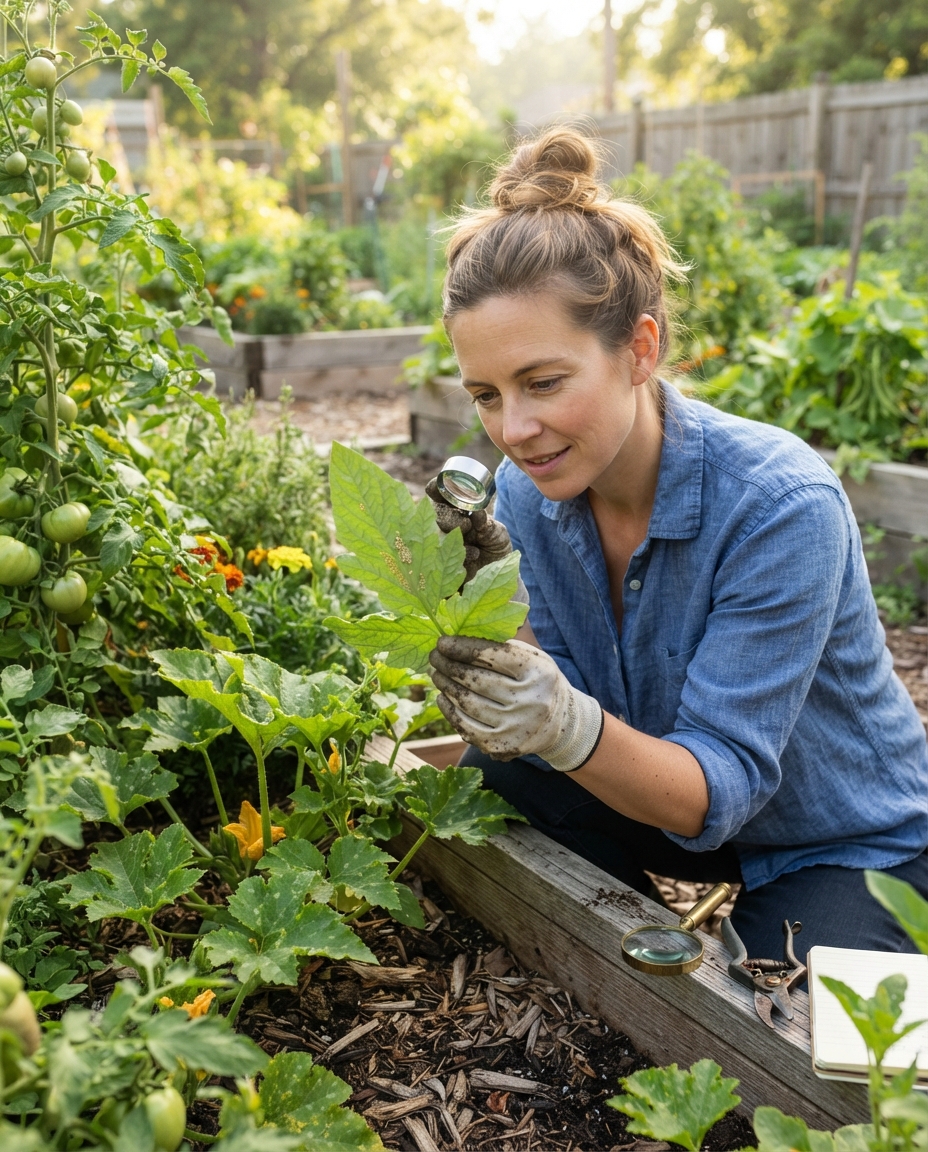
Likewise, not every damaged leaf requires a pesticide. Sometimes removing a few affected leaves, hand-picking a pest, improving airflow, correcting watering, or simply monitoring the plant is enough. Treatment decisions should be proportional to the actual problem. The danger of waiting is that a small issue becomes difficult to diagnose because several symptoms appear at once.
Early-Warning Garden Signs
| Sign | Possible Issue |
|---|---|
| Small holes in leaves | Chewing insects or slugs |
| Sticky residue | Sap-feeding insects such as aphids |
| White powdery coating | Possible powdery mildew |
| Yellow lower leaves | Could be aging, water, nutrients, or disease |
| Sudden wilt | Water stress, root damage, disease, or pests |
| Eggs under leaves | Potential pest population developing |
What to do instead: Inspect the garden several times each week and identify problems before deciding how to manage them.
11. Letting Weeds Get Established Before Dealing With Them
One tiny weed is easy to remove. Fifty mature weeds with established roots and seed heads are not. Beginners often focus almost entirely on the vegetables during the first few weeks because weed growth appears minor. Then warm weather accelerates growth and the spaces between plants fill rapidly. Weeds compete for water, nutrients, light, and physical space. They can also make harvesting and pest inspection much more difficult.
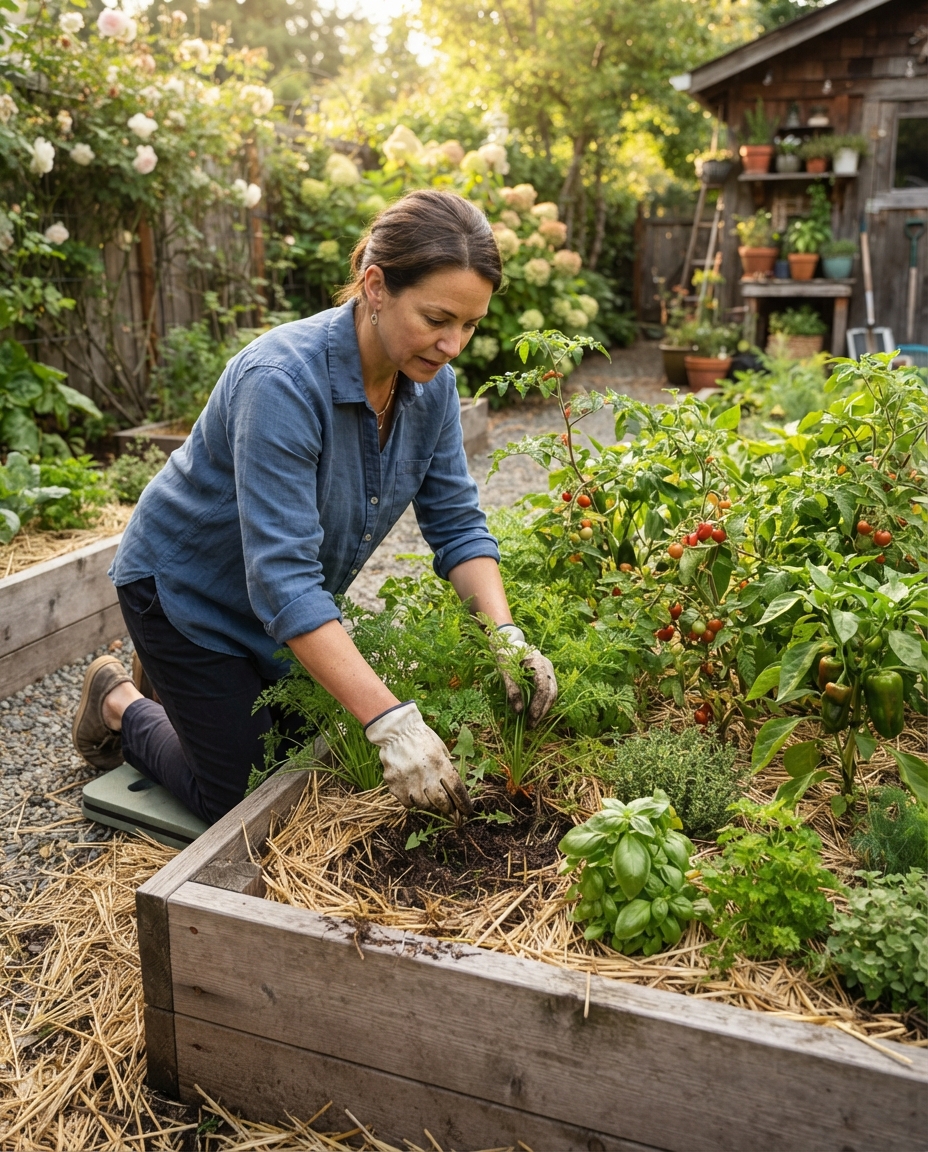
The most efficient weed strategy is prevention and early removal. Mulch is one of the best tools for reducing weed pressure while also helping conserve soil moisture. Straw, shredded leaves, compost, or other appropriate materials can cover exposed soil and reduce the amount of light reaching germinating weed seeds.
Mulch should not be piled tightly against plant stems, and the best material depends on the crop and local conditions. Hand-pull weeds when they are small, ideally before they set seed. A few minutes of regular maintenance can prevent hours of work later. Do not assume a weed must be large to matter. Fast-growing weeds can develop extensive root systems surprisingly quickly.
What to do instead: Treat weed control as a weekly garden habit rather than an emergency task.
12. Harvesting Too Late and Missing the Best Quality
A successful garden is not finished when the vegetables appear. You still have to harvest them at the right stage. Beginners frequently leave produce on the plant because they assume larger is always better. This can result in oversized zucchini with tougher texture, cucumbers with larger seeds, beans that become fibrous, lettuce that bolts, and herbs that become less tender.
Regular harvesting can also encourage continued production in several crops. Beans, cucumbers, zucchini, peppers, and some herbs often continue producing more effectively when mature produce is removed rather than being left indefinitely. Learn what “ready” looks like for each crop.
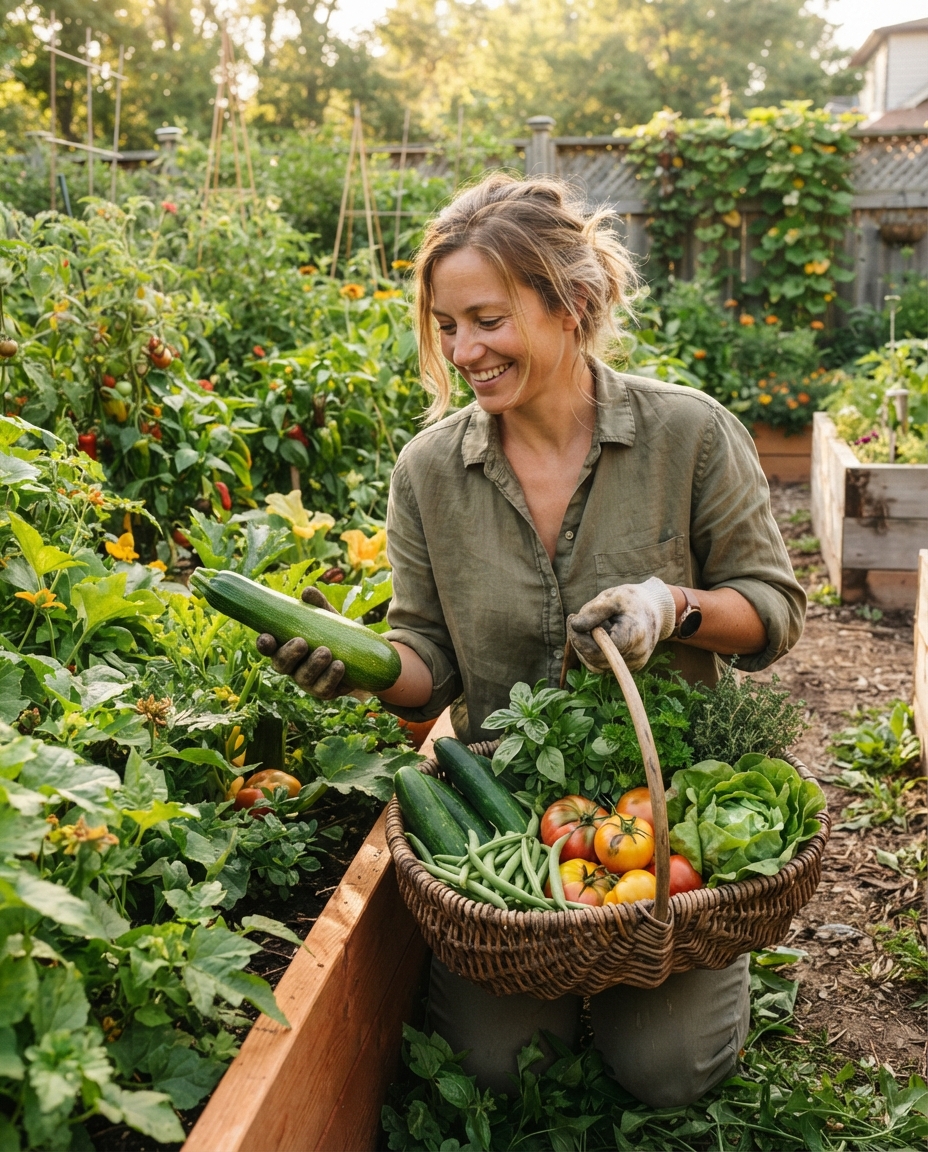
A tomato can often finish ripening after harvest, while sweet corn has a much narrower quality window. Root vegetables can sometimes remain in the ground longer, but texture and size still change over time. Check highly productive plants frequently during peak season. A zucchini can move from ideal size to enormous much faster than a beginner expects. Harvesting is also part of garden planning. If several crops mature simultaneously, decide in advance how you will use or store them.
Harvest Timing Matters
| Crop | Common Beginner Mistake | Better Approach |
|---|---|---|
| Zucchini | Waiting for maximum size | Harvest younger for better texture |
| Cucumber | Allowing fruit to become oversized | Pick regularly |
| Green beans | Leaving pods too long | Harvest while tender |
| Lettuce | Waiting through hot weather | Harvest before severe bolting |
| Herbs | Allowing plants to become overgrown | Cut regularly |
| Tomatoes | Leaving damaged fruit on plant | Harvest usable fruit before deterioration |
What to do instead: Check productive plants often and harvest for eating quality rather than maximum size.
A Beginner Vegetable Garden Needs a Plan Before It Needs More Plants
Many gardening problems begin because the layout was never really planned. A beginner sees available soil and fills it. A stronger approach begins by dividing the garden according to sunlight, mature plant height, harvest frequency, trellising needs, and seasonal timing. Tall tomatoes and climbing beans should not be placed where they will create unwanted shade over shorter sun-loving crops. Frequently harvested greens should be easy to reach. Trellised vegetables need enough path space for harvesting from the side of the support.
Water access matters too. If the garden is far from the nearest faucet, every hot summer day becomes more work. A beautiful bed placed somewhere inconvenient can eventually receive less attention simply because maintaining it is frustrating.
A Simple First-Bed Layout
| Bed Area | Possible Crop | Reason |
|---|---|---|
| Back/north side | Trellised cucumbers or beans | Uses vertical space |
| Middle | Tomatoes or peppers | Main fruiting crops |
| Front | Lettuce, radishes, herbs | Easy to reach |
| Corners | Basil, parsley, flowers | Fills smaller gaps |
| Pathways | Mulch/gravel | Keeps access usable |
This is a conceptual example rather than a universal layout. Sun direction, climate, bed orientation, and crop variety should determine the actual design.
How Big Should a First Vegetable Garden Be?
A beginner garden should be large enough to produce something meaningful but small enough that watering, weeding, harvesting, and troubleshooting remain manageable. For many people, one or two raised beds are enough to teach most of the important lessons of vegetable gardening. A single four-by-eight-foot bed can support several different crops when planned well. That may not sound large, but vegetables grow dramatically once they mature, and intensively planted beds can produce more than beginners expect.
Adding another bed is always possible next season. Removing an overgrown garden that has become exhausting is much less enjoyable. Your available time should determine the garden size just as much as your yard. If you travel frequently, work long hours, or know you will not want to spend several evenings each week maintaining vegetables during peak summer, design a smaller garden around crops that match that lifestyle.
Productivity is not measured by square footage. It is measured by how much useful food the garden produces relative to the effort and space you can realistically maintain.
Which Vegetables Are Best for a First Garden?
Beginner-friendly does not necessarily mean impossible to fail with. Weather, pests, and local conditions can affect any crop, but certain vegetables are generally easier to understand and manage in many home gardens. Bush beans grow relatively quickly and do not require elaborate support. Lettuce and radishes give beginners experience with short-season crops. Herbs such as basil and parsley can be harvested repeatedly. Peppers and tomatoes are extremely popular, although they require a longer season and benefit from stronger planning around sun, spacing, and support.
Zucchini is famous for producing heavily, but the plant itself becomes large, so it should not be treated as a tiny-space crop. Cucumbers are manageable when given a good trellis. Carrots seem simple but require loose soil and consistent moisture during germination, which can make them slightly more challenging than their appearance suggests.
Beginner Crop Comparison
| Crop | Difficulty | Space Need | Main Challenge |
|---|---|---|---|
| Lettuce | Easy | Low | Heat/bolting |
| Radish | Easy | Low | Timing and consistent growth |
| Bush beans | Easy | Moderate | Regular harvest |
| Basil | Easy | Low | Cold sensitivity |
| Tomato | Moderate | Moderate-high | Support, disease, watering |
| Pepper | Moderate | Moderate | Warmth and long season |
| Cucumber | Moderate | Moderate if trellised | Vigor and watering |
| Zucchini | Easy-moderate | High | Large mature size |
| Carrot | Moderate | Moderate | Germination and soil texture |
How to Water a Beginner Garden More Effectively
The most useful watering habit is not following a rigid calendar. It is learning how your soil behaves. Sandy soil may drain quickly and require more frequent irrigation. Clay-rich soil may retain moisture much longer. Raised beds often dry faster than in-ground gardens, especially during hot or windy weather.
Mulch changes the equation by reducing evaporation. Plant size also matters. A newly transplanted seedling has a small root system and may require more frequent attention than the same plant six weeks later, when its roots have explored a much larger soil volume.
When watering, aim for the root zone rather than simply spraying the leaves. Drip lines, soaker hoses, or slow watering at soil level can deliver moisture efficiently. Morning is often a convenient time because plants enter the hot part of the day with available moisture and foliage that becomes wet has time to dry.
Do not panic every time a plant wilts briefly during extreme afternoon heat. Some plants temporarily wilt even when soil moisture is adequate. Check the soil before automatically adding more water. The goal is consistent moisture without permanently saturated soil.
How to Tell Whether Your Garden Is Overcrowded
The easiest time to recognize overcrowding is before it occurs, but there are several warning signs once the garden begins filling in. If you cannot see or reach the soil around major plants, spacing may be too tight. If one plant’s leaves completely cover another, competition for light has already begun. If harvesting requires reaching through a wall of stems, the layout has become difficult to maintain.
Dense foliage that stays wet for long periods after rain or irrigation can indicate insufficient airflow. Another clue is disappearing paths. Cucumber vines, squash leaves, or tomato branches that extend across walkways tell you the plant needed more room or better support. Do not be afraid to remove a plant if the entire bed will perform better without it.
Beginners often hesitate because every seedling feels valuable. Sometimes sacrificing one overcrowded plant improves the light, water availability, airflow, and accessibility of five others.
Mulch: One of the Simplest Ways to Prevent Several Beginner Problems at Once
Mulch is valuable because it addresses several garden problems simultaneously. It slows moisture loss from the soil, suppresses many weeds, reduces soil splashing onto lower leaves during watering or rain, and can moderate rapid temperature changes at the soil surface. Organic mulches such as straw, shredded leaves, or other suitable garden materials can also contribute organic matter over time as they break down.
The mulch layer should be deep enough to reduce exposed soil but should not be piled against plant stems. Keep some breathing room around the base of crops, especially where persistent moisture could encourage stem problems. Fresh grass clippings require care because thick wet piles can become slimy or hot as they decompose.
The exact mulch material matters less than using something appropriate, clean, and manageable for your garden. For a beginner, mulch is one of the highest-value upgrades because it reduces both watering pressure and weed pressure — two of the most time-consuming parts of summer garden maintenance.
The First-Year Garden Record You Should Actually Keep
You do not need a complicated gardening journal. A simple record can dramatically improve your second season. Write down what you planted, the variety, approximate planting date, where it grew, and whether you liked the result. Note major problems. Did the cucumbers get shaded by tomatoes? Did lettuce bolt too early? Did one tomato variety outperform another? Did you plant far more zucchini than the household could eat? Also record successes.
Which bed stayed productive longest? Which vegetables did the family request repeatedly? Which trellis worked? Which crops were surprisingly easy? Photographs are useful too. A picture of the garden in early spring and another in midsummer can reveal spacing mistakes much more clearly than memory.
The point is not to document every leaf. It is to make sure you do not unknowingly repeat the same mistakes next season.
When a Struggling Plant Should Be Removed
Beginners often become emotionally attached to every plant because each one represents time, seed, and effort. But a severely diseased, badly damaged, or hopelessly overcrowded plant can sometimes reduce the productivity of the rest of the garden. If one plant is spreading an obvious disease, removing it may protect neighboring crops.
If two large plants occupy a space designed for one, keeping both can leave both underperforming. If a plant was installed far too late to mature before cold weather, its space may be more valuable to another crop. This does not mean removing plants at the first sign of difficulty. Plants recover from transplant stress, temporary heat, minor insect feeding, and many other setbacks. The useful question is whether the plant is still likely to produce enough value to justify the space, water, and attention it is consuming. A garden is a living system, and sometimes improving the system means accepting that not every plant has to remain.
12 BEGINNER MISTAKES AT A GLANCE
| Mistake | What It Causes | Better Approach |
|---|---|---|
| Too little sun | Weak growth, low yields | Observe sunlight before planting |
| Starting too large | Maintenance overload | Begin with manageable beds |
| Ignoring mature size | Overcrowding | Space for full-grown plants |
| Shallow daily watering | Weak roots, inconsistent moisture | Water deeply based on soil |
| Poor soil | Weak roots and growth | Improve soil structure first |
| Wrong planting time | Heat/cold stress | Follow local seasons |
| Wrong variety size | Plants overwhelm space | Choose compact types when needed |
| Late supports | Damaged tangled plants | Install early |
| Too much fertilizer | Excess foliage or root damage | Feed only as needed |
| Ignoring pests | Small problems become large | Inspect regularly |
| Letting weeds mature | Competition and extra work | Weed early and mulch |
| Harvesting too late | Lower eating quality | Harvest regularly |
FINAL THOUGHTS
Your first vegetable garden does not need to be perfect to be successful. It needs to teach you something. Maybe you discover that your yard receives less sun than you thought. Maybe the tomato plants become twice as large as expected. Maybe one zucchini plant feeds the household more effectively than the four you originally planned. Maybe the lettuce is wonderful in spring and almost impossible in midsummer.
Those lessons are not failures. They are how a garden becomes adapted to a specific home. What matters is avoiding the preventable mistakes that can turn the entire first season into frustration. Choose the sunniest appropriate location. Start smaller than your excitement tells you to.
Plan for the mature plant instead of the seedling. Build healthy soil. Water the root zone rather than merely wetting the surface. Plant according to your climate. Install supports before the plants need them. Watch the garden closely enough that pests, weeds, and disease cannot become invisible until they are severe. And harvest what you grow while it is still at its best.
A first garden should leave you wanting to grow again next year. If you can finish the season knowing which crops worked, which ones you actually enjoyed eating, where the garden struggled, and what you would change next time, you have already accomplished something valuable. Because the best second-year gardeners are rarely the people who made no mistakes. They are the people who noticed them.