Ducks are messy animals by nature, but there is an important difference between a duck enclosure that looks lived in and one that is beginning to create health problems. A little scattered bedding, feathers, mud near the run, and splashed water are normal parts of keeping waterfowl. Persistent dampness, strong ammonia, mold, contaminated drinking areas, and poor airflow are not.
The difficulty is that unhealthy housing often develops gradually. A waterer splashes a little every day, manure accumulates beneath sleeping areas, bedding becomes slightly wetter, and the windows stay closed because the weather is cold. Nothing seems serious on its own, but over time the coop can become warm, humid, dirty, and poorly ventilated enough to increase exposure to ammonia, bacteria, fungal spores, and other environmental stressors.
Waterfowl make moisture management especially important. Penn State Extension recommends placing waterers outside whenever practical for ducks and other waterfowl because doing so helps reduce humidity inside poultry housing. The same guidance emphasizes that dampness and ammonia buildup are signs that ventilation is not adequate for the number of birds being housed.
A poorly maintained coop does not automatically explain every illness. Ducks can develop infectious diseases, parasites, nutritional problems, injuries, and other conditions even when their housing is excellent. However, poor housing can increase exposure to disease-causing organisms, irritate the respiratory system, contribute to foot problems, and make an existing illness more difficult for birds to handle.
That distinction matters. If ducks are already wheezing, struggling to breathe, unusually lethargic, refusing food or water, developing eye or nasal discharge, or dying unexpectedly, cleaning the coop should not be treated as the only solution. Those birds need prompt assessment by an avian or poultry veterinarian or the appropriate local animal-health service.
The six signs below focus on the environment itself so that problems can be corrected before they become part of a larger flock-health issue.
1. You Can Smell Ammonia When You Enter the Coop
A healthy duck shelter should smell like bedding, birds, and perhaps a mild amount of manure. It should not hit you with a sharp ammonia odor as soon as the door opens.
Ammonia develops as microorganisms break down nitrogen-containing material in manure, and moisture makes the problem considerably worse. When bedding remains wet and ventilation is inadequate, ammonia can accumulate in the air rather than being carried out of the house. Mississippi State Extension identifies high ammonia as a serious poultry-health concern associated with respiratory problems and eye damage, while Penn State treats noticeable ammonia and dampness as clear signs that more ventilation is needed.
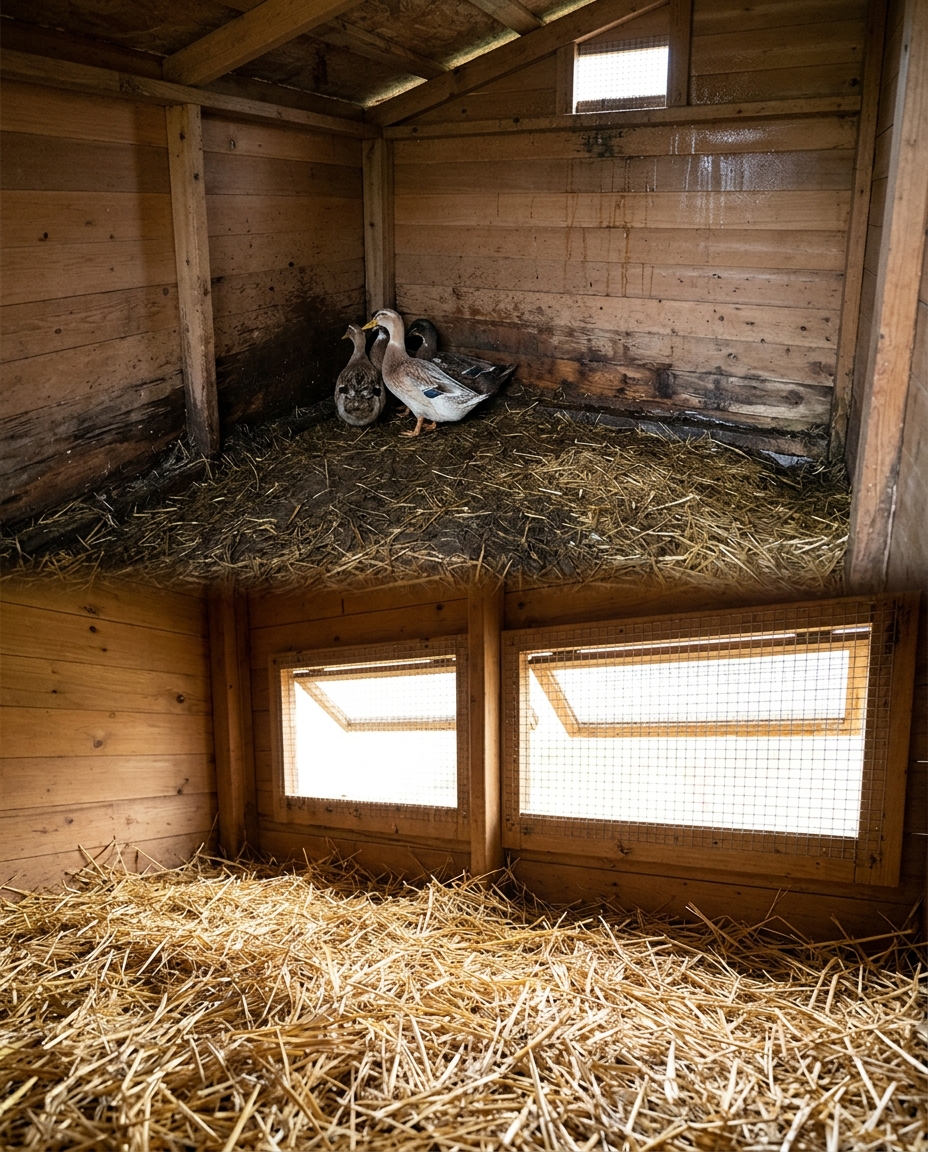
The important point is that your nose is not a perfect ammonia detector. People who enter the same coop every day can gradually become accustomed to the smell and fail to recognize how strong it has become. If the air seems sharp after you have been away from the coop for several hours, or if your own eyes and throat feel irritated when you enter, the environment needs immediate attention.
Do not solve the problem simply by adding another layer of dry bedding over heavily contaminated wet material. Fresh bedding may hide the smell temporarily while leaving the manure and moisture underneath. Remove badly soiled or caked material, correct any leaking or splashing water source, and increase air exchange without directing a strong draft at resting birds.
High ventilation openings are often useful because warm, moist air naturally rises. The goal is constant exchange of stale air for fresh air while keeping the sleeping area protected from direct wind and rain.
What to Do First
Remove the wettest manure and bedding, inspect the drinker for spills or leaks, and open or improve protected ventilation. If ammonia returns quickly after cleaning, the coop may be too humid, too crowded, poorly ventilated, or receiving more moisture than the bedding system can handle.
2. The Bedding Is Almost Always Wet or Caked
Ducks will never maintain bedding as neatly as chickens because water is central to their normal behavior. They dunk their bills, shake water from their heads, step into containers, and can turn an ordinary drinking station into a wet zone surprisingly quickly. That makes some localized moisture expected, but the sleeping floor should not remain saturated day after day.
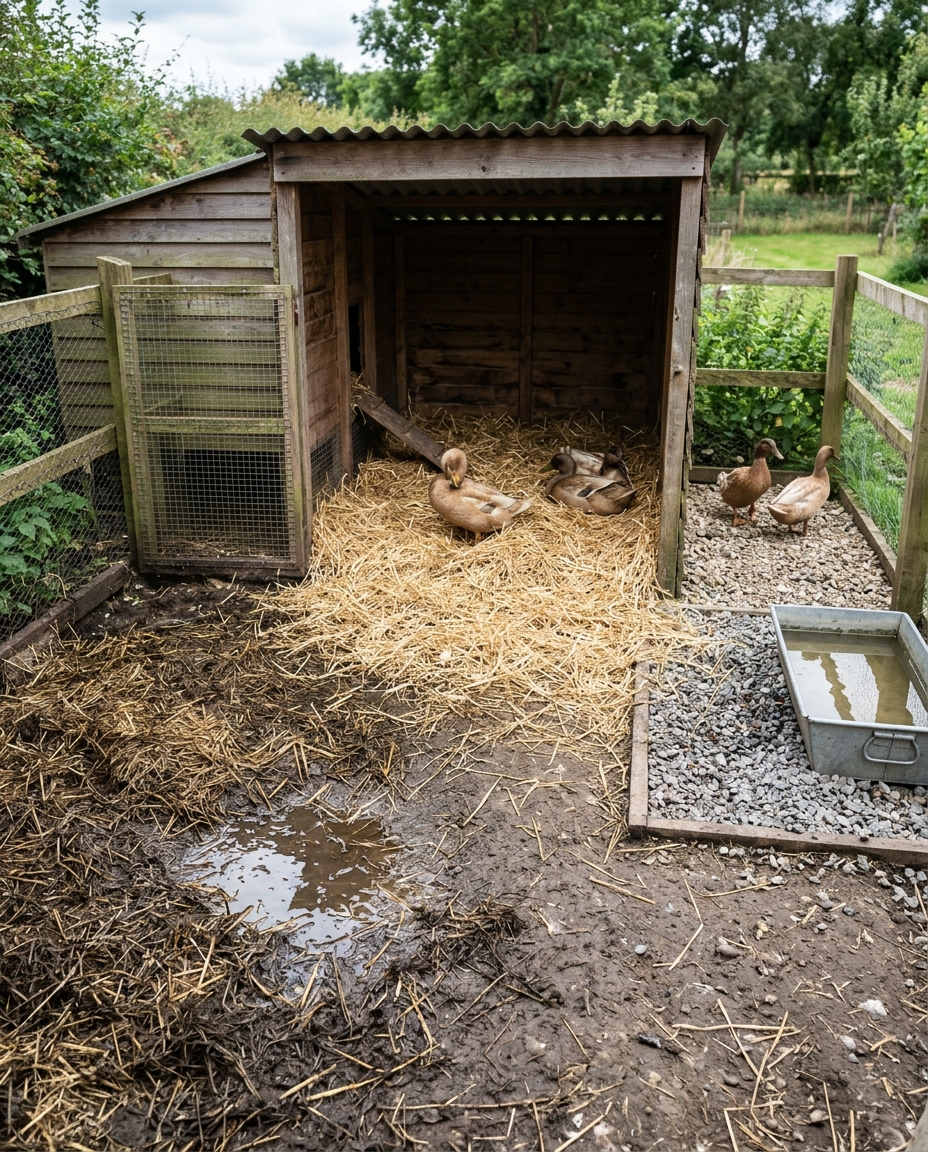
Wet litter creates several problems at once. It encourages ammonia production, allows microorganisms to survive longer, and creates prolonged contact between the birds’ feet and contaminated damp material. Mississippi State Extension notes that wet poultry litter is associated with increased bacterial loads, ammonia production, footpad damage, and other disease risks. Although much of that research comes from chickens, the basic litter-management problem is highly relevant to ducks because their housing often receives even more water.
Caked bedding is another warning sign. Healthy litter should remain reasonably loose and absorbent, whereas thick flattened slabs indicate that moisture and manure have bound the material together. Once that happens, simply stirring the surface is unlikely to restore the bedding properly. The wet cake should be removed and replaced.
Water placement is usually the first thing to reconsider. Penn State specifically recommends keeping waterers in outside runs when possible for waterfowl because this reduces indoor humidity. If ducks need indoor water temporarily because of weather or another management issue, the container should sit over a surface designed to catch and drain spills rather than directly over ordinary sleeping bedding.
The sleeping zone should remain physically separate from the wet zone whenever the enclosure allows it. A gravel or paver area around water containers, combined with a dry bedded house several feet away, makes routine management considerably easier.
A Simple Bedding Test
Pick up a handful of material from beneath the surface while wearing gloves. Bedding that feels slightly dry and loose is very different from material that compresses into a wet clump, smells strongly, or releases moisture when squeezed. The latter needs more than another decorative layer of straw on top.
3. You See Condensation, Mold, or Smell a Persistent Mustiness
A duck house that stays humid enough for condensation to form repeatedly on walls, windows, or ceilings is telling you that moisture is entering faster than the ventilation system can remove it. In cool weather this is particularly easy to miss because owners often close vents in an effort to keep birds warm.
Keeping the coop sealed is not necessarily keeping the birds healthier. Poultry housing needs air exchange to remove water vapor, ammonia, dust, and other contaminants. Penn State recommends ample air movement without direct drafts and notes that moisture accumulating on walls and ceilings is a sign of inadequate ventilation.
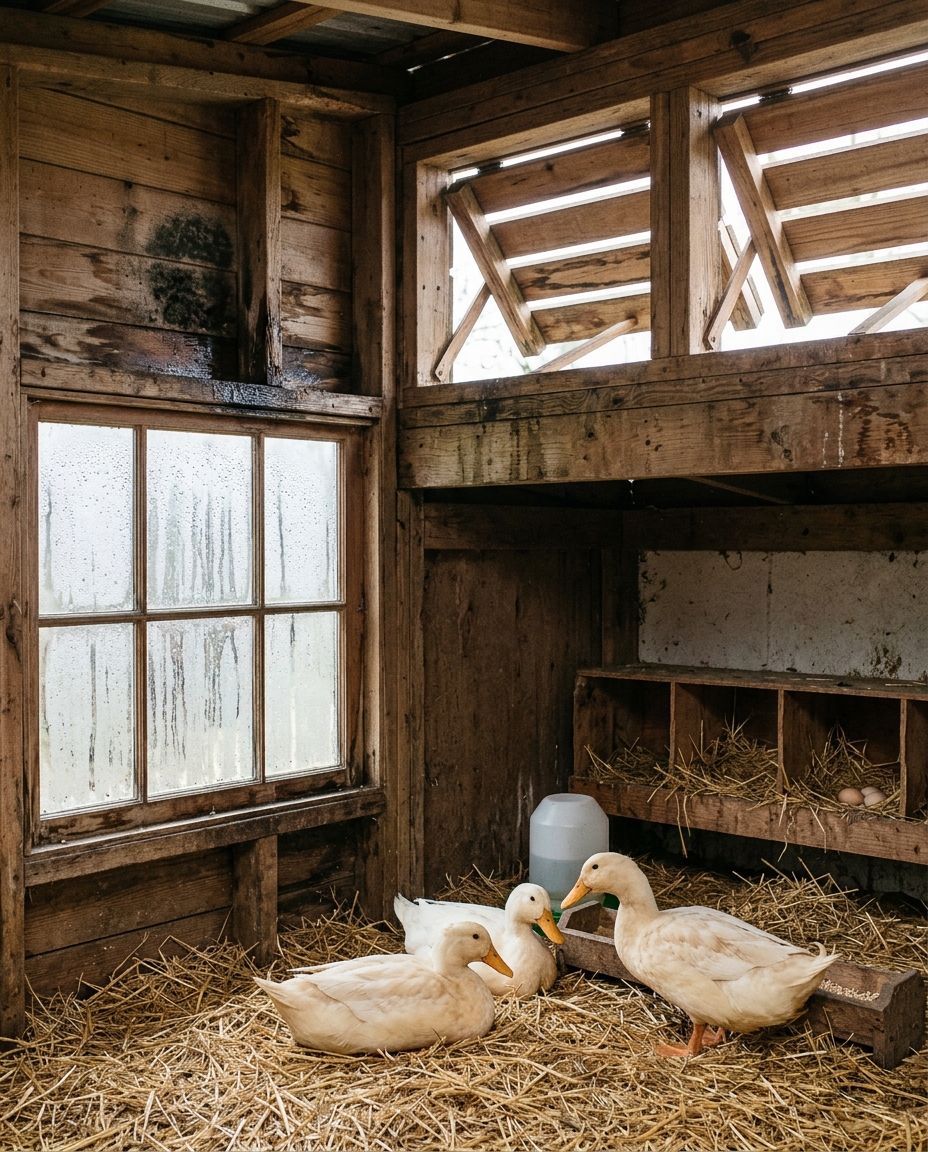
Visible mold deserves even more immediate attention. Moldy feed or bedding can release large numbers of fungal spores, and Aspergillus species are capable of causing respiratory disease in poultry, including ducks and ducklings. The Merck Veterinary Manual reports that wet bedding that later dries can produce large numbers of spores that become airborne when the material is disturbed, and inadequate ventilation can further contribute to exposure.
This is why mustiness should not simply be covered with fresh straw or fragrance products. Find the source. Check the roof for leaks, inspect walls for water intrusion, examine stored feed for moisture, and look beneath bedding where mold may be hidden from view.
If obviously moldy bedding is present, avoid aggressively shaking or stirring it around the birds because that can aerosolize spores. Remove contaminated material carefully, improve airflow, identify the moisture source, and replace it with clean, dry bedding. Moldy feed should be discarded rather than fed, particularly because ducks are notably susceptible to some mycotoxins such as aflatoxins.
Healthy Ventilation Does Not Mean a Drafty Coop
The aim is continuous air exchange above and around the birds rather than cold air blowing directly across them while they rest. Protected vents under the roofline can allow warm humid air to escape, while solid lower walls provide shelter from wind.
4. Drinking Water and Feed Are Constantly Dirty
A duck water container will rarely stay perfectly clean for long. Ducks rinse their bills, carry mud into the water, and can turn clear water cloudy within a surprisingly short period. That does not mean dirty or stagnant water should simply be accepted as normal.
Birds need access to fresh drinking water, and stagnant water can support pathogen growth. Penn State’s poultry nutrition guidance specifically cautions that stagnant water can become a breeding ground for pathogens and recommends keeping containers clean and water fresh.
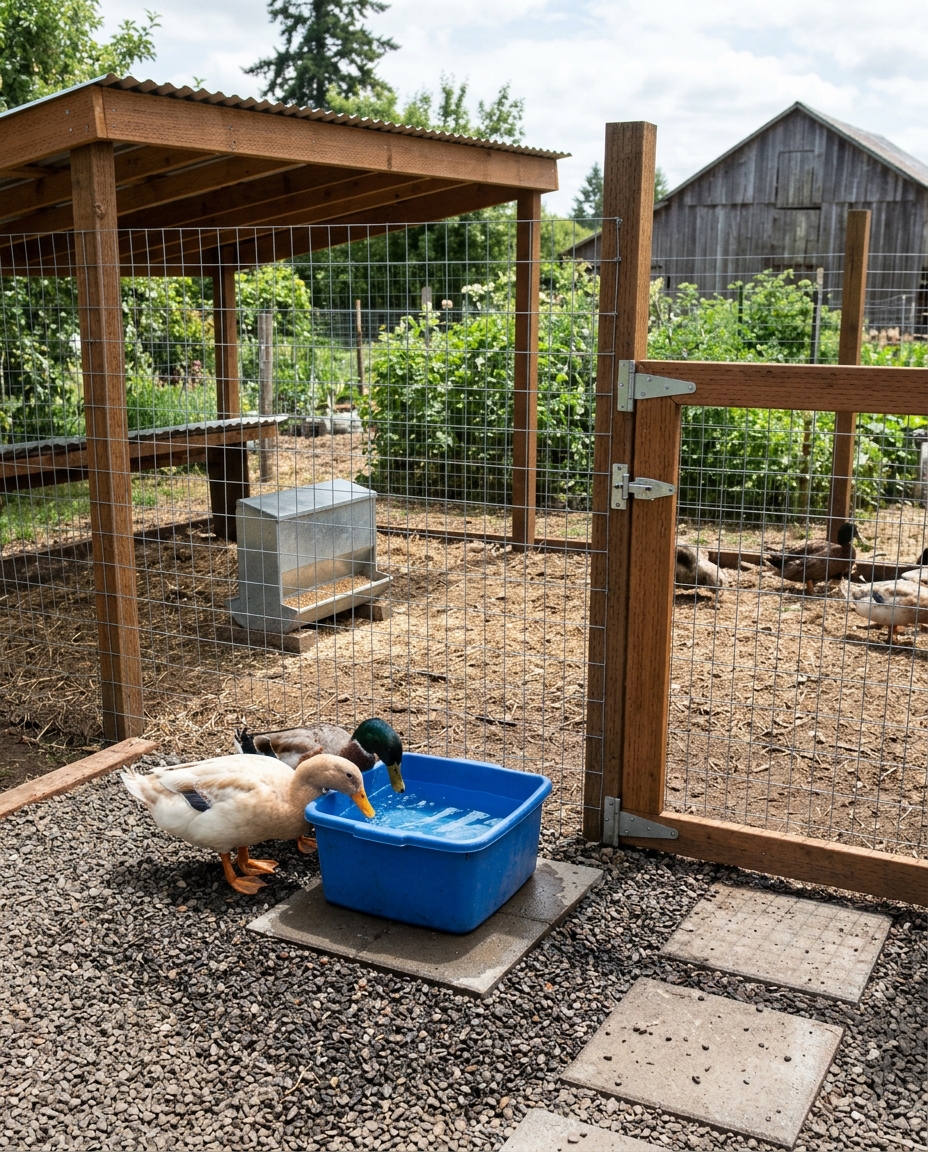
The design of the coop can make this problem either easier or much worse. A drinking container placed directly in deep bedding becomes surrounded by wet organic material, while an oversized open tub left unchanged for long periods accumulates manure, feed, mud, and feathers. Moving the primary water station onto gravel or another washable, drainable surface makes frequent emptying much easier.
Feed deserves the same attention. Damp feed can spoil or develop mold, especially when ducks splash water toward the feeder. Feeders should therefore sit far enough from bathing water to remain dry, and stored feed needs protection from moisture and rodents.
Wild birds should also be prevented from routinely using the flock’s feed and water. University of Minnesota Extension recommends keeping poultry feeders and waterers clean and inaccessible to wild birds as part of backyard-flock biosecurity, particularly because wild waterfowl can introduce diseases such as avian influenza.
You do not need to make a duck’s water look pristine every minute of the day. The goal is to provide clean drinking water frequently enough that the flock is not forced to rely on stagnant, heavily contaminated water as its normal source.
Better Water-Station Design
Place drinkers close to the run entrance so they can be emptied and cleaned without carrying heavy containers across the entire enclosure. Use gravel, pavers, or another drainage-friendly base, and position food outside the splash radius so it remains dry.
5. The Coop Is So Crowded That It Never Has a Chance to Dry
Overcrowding does more than make an enclosure look busy. Every additional duck contributes manure, moisture from respiration, spilled drinking water, body heat, and traffic across the bedding. Once too many birds occupy too little space, keeping the floor dry and the air fresh becomes substantially harder even with frequent cleaning.
Penn State’s small-scale poultry-housing guidance lists approximately 3 square feet of indoor space and 15 square feet of outdoor run space per duck as minimum housing figures. Those numbers should be treated as planning references rather than an excuse to crowd every enclosure to the minimum, particularly in wet climates or where birds spend long periods confined.
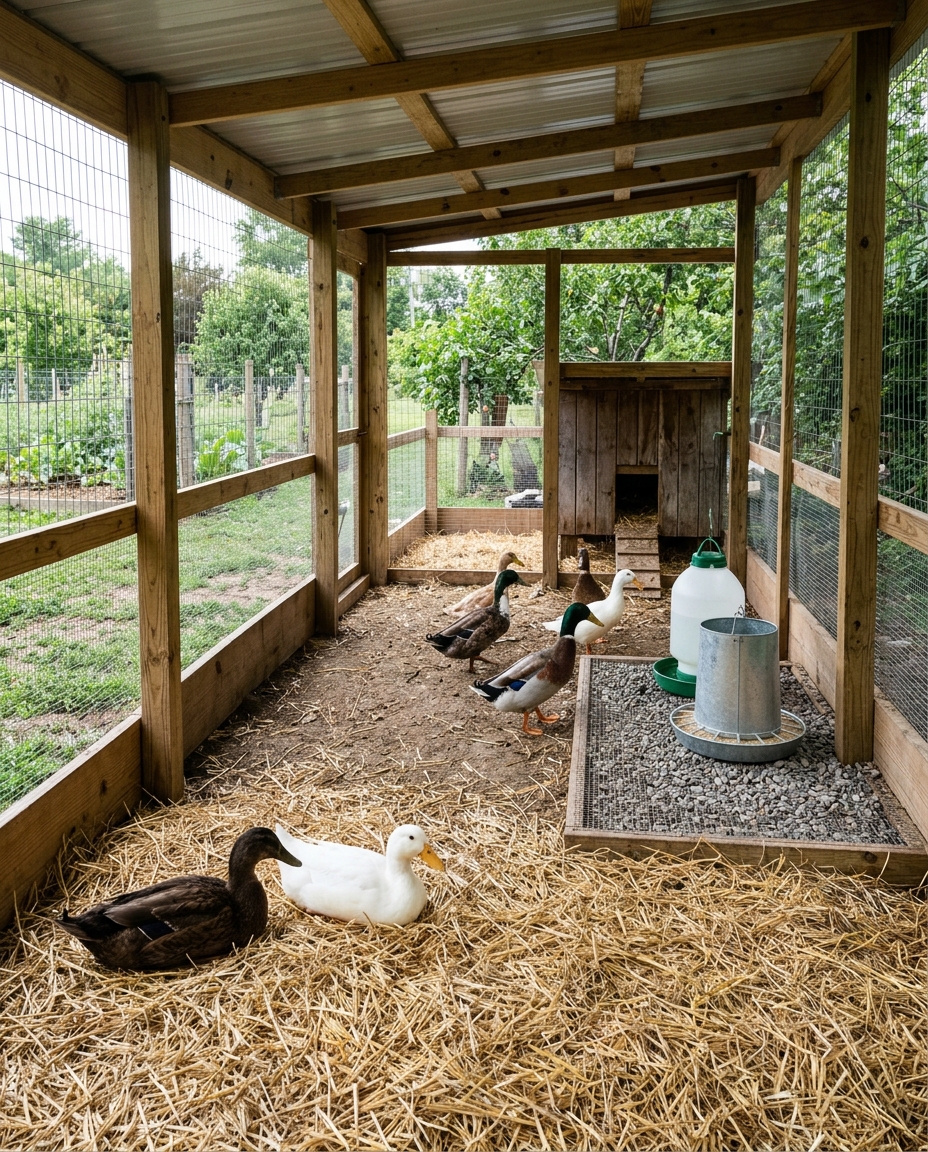
Behavior provides useful clues as well. If ducks cannot move away from one another easily, if the doorway becomes a bottleneck, if birds are continually pushed around the feeder, or if the entire floor becomes manure-covered shortly after cleaning, the flock may have outgrown the space.
More birds also require more feeder and water access. An enclosure can theoretically meet a floor-space calculation while still function poorly if one small feeder forces all the ducks into the same corner or if a single water source creates a permanently saturated zone.
Reducing crowding may mean expanding the run, creating an additional covered area, moving some birds to another suitable enclosure, or changing how much time the flock spends confined. The solution is not simply cleaning twice as often if the underlying design cannot reasonably support the number of ducks living in it.
Space Should Be Usable
A twelve-square-foot house containing large water tubs, storage boxes, and inaccessible corners does not provide four ducks with twelve square feet of usable resting space. When estimating capacity, subtract areas occupied by equipment and make sure every bird can rest on a dry surface.
6. Rodents or Wild Birds Can Easily Reach the Feed, Water, and Bedding
A coop can appear reasonably clean while still exposing ducks to disease through unwanted animal visitors. Rodents, wild birds, and other wildlife may contaminate feed and water with droppings, carry parasites or infectious agents, and create additional stress within the enclosure.
This is particularly important with ducks because wild waterfowl can be involved in the spread of avian influenza. University of Minnesota recommends preventing backyard poultry from contacting wild birds, keeping feed and water inaccessible to wildlife, and using enclosed shelters and covered outdoor areas where practical.
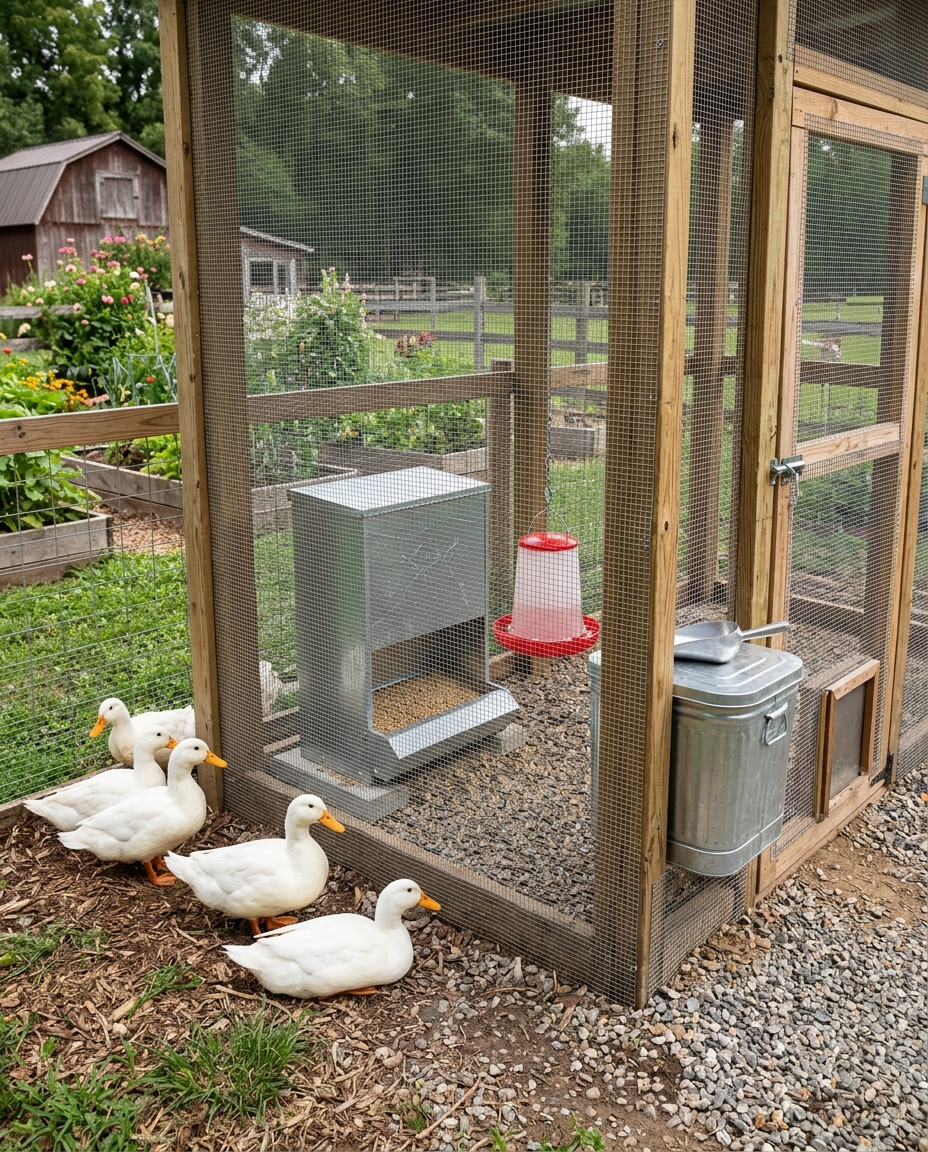
Rodents create a different but equally frustrating problem. Spilled feed attracts mice and rats, while holes around the floor or walls give them access to both food and bedding. Penn State’s current biosecurity guidance recommends storing feed securely, cleaning spills immediately, closing holes in poultry buildings, and addressing rodent activity when signs appear.
Look for evidence rather than waiting to see an animal directly. Small droppings around feed storage, gnawed containers, tunnels beside the walls, scattered feed in unusual places, feathers or wild-bird droppings inside the run, and holes beneath the enclosure all suggest the housing barrier needs improvement.
Feed should be stored in sturdy, dry, closed containers rather than left in open sacks. Water and feeders should sit beneath covered areas that wild birds cannot access easily, and mesh openings should be small enough to prevent routine entry by smaller birds where local conditions make that necessary.
Biosecurity sounds like a commercial-farm concept, but the principle is simple for a backyard flock: limit unnecessary contact between your ducks and animals that could bring contamination into their living area.
What a Healthy Duck Coop Should Feel Like
A healthy duck house does not need to look spotless. Ducks produce manure frequently and naturally create more moisture than many other backyard birds, so some mess is unavoidable. The goal is an environment where that mess can be managed before it becomes persistent contamination.
When you enter the shelter, the air should feel fresh rather than sharp or musty. The bedding should be mostly dry and loose, particularly in the sleeping area, and any wet spots should be localized enough that they can be removed easily. Walls and ceilings should not remain covered in condensation, and visible mold should not be accepted as a normal part of keeping waterfowl.
The birds should also have room to move away from one another and choose a dry resting place. Drinking water should be available without forcing ducks to stand continually in saturated bedding, while feed should remain dry and protected from wildlife.
A practical duck enclosure generally works better when it contains distinct zones. The house serves as a dry sleeping area, the covered run provides secure movement space, and the water station occupies a deliberately wet but well-drained section away from the bedding.
Healthy Coop vs. Problem Coop
| Healthy Condition | Warning Condition |
|---|---|
| Mild natural poultry smell | Sharp ammonia odor |
| Loose mostly dry bedding | Wet, compacted bedding |
| Fresh airflow | Stuffy stagnant air |
| Dry walls and roof | Persistent condensation |
| No visible mold | Mustiness or mold growth |
| Clean drinking source | Stagnant contaminated water |
| Dry feed | Wet or moldy feed |
| Adequate resting space | Constant crowding |
| Wildlife excluded | Rodents/wild birds regularly entering |
Why Ducks Make Moisture Management Harder
A chicken may drink neatly from a well-adjusted waterer, but many ducks use water differently because they need to immerse their bills and naturally splash while drinking and cleaning their nostrils. That behavioral difference is one reason a housing system copied directly from a chicken coop may not work well for ducks.
The answer is not to deprive ducks of appropriate water access simply to keep the enclosure clean. Instead, design the enclosure so water can exist without saturating the sleeping area.
A drainable surface beneath the water station is extremely helpful. Gravel allows some water to move away from the surface, while pavers can be scraped or washed. Some keepers use a gravel-filled catchment area beneath elevated water containers so splash drains downward rather than spreading across bedding.
Roof runoff should also be considered. A perfectly designed water station will not keep the run dry if a downspout empties into it during every rainstorm. Direct roof water away from the enclosure and avoid placing the house at the lowest point in the yard.
The best duck housing accepts that water will be spilled and gives that water somewhere appropriate to go.
Ventilation Without Making the Coop Cold and Drafty
One of the most persistent poultry-housing misunderstandings is the belief that ventilation and warmth are opposites. A winter coop is often sealed tightly in an effort to conserve heat, only for humidity and ammonia to increase because moisture cannot escape.
Ventilation should occur primarily above duck level. Protected openings beneath the roof or high on the walls allow warm humid air to rise and exit while lower solid walls protect resting birds from direct wind.
Penn State’s housing guidance emphasizes ample air movement without drafts and specifically recommends positioning openings so they do not blow directly across birds.
A useful winter test is to inspect the coop early in the morning after the ducks have spent the night inside. If windows are dripping, the ceiling feels damp, or ammonia becomes much stronger overnight, the house is retaining too much moisture.
Adding heat without improving ventilation can sometimes make matters worse by increasing the amount of moisture that air can hold while doing nothing to remove the source. Dryness and airflow should therefore be addressed before assuming the flock simply needs a warmer sealed house.
How Often Should a Duck Coop Be Cleaned?
There is no universal schedule because cleaning frequency depends on flock size, enclosure size, bedding system, weather, water placement, and how much time ducks spend inside. A four-duck shelter with an outdoor water station may stay manageable much longer than an eight-duck shelter where water is splashed directly onto indoor bedding every day.
Instead of cleaning entirely by calendar, monitor conditions. Remove obvious wet spots and caked manure when they appear, refresh bedding before ammonia develops, and perform deeper cleaning whenever the lower layers have become damp or heavily contaminated.
Water containers require more frequent attention because ducks contaminate them quickly. Depending on design and weather, that may mean dumping and refilling drinking water one or several times a day. Containers should also be scrubbed regularly so slime and residue do not simply remain after the old water is poured out.
Feed spills should be removed promptly rather than left for the next scheduled cleaning because they attract rodents and become mold risks when wet.
The right cleaning routine is the one that prevents environmental problems from developing, rather than waiting until the coop smells bad enough to demand attention.
Bedding Materials That Work Better in Duck Housing
Absorbency and drying ability matter more than appearance. Wood shavings and straw are common choices, and either can work when they are kept dry enough and replaced appropriately.
Very fine dusty bedding can create respiratory irritation when disturbed, while any organic bedding can become a mold risk if it remains wet. The management system therefore matters at least as much as the material itself.
A deeper bed may absorb more moisture temporarily, but depth should not be used to bury an uncontrolled water problem. If the bottom layer is permanently saturated, adding more clean bedding on top only creates a deeper contaminated floor.
Whatever material you choose, check beneath the visible surface regularly. The top inch can look reasonably clean while the material against the floor remains wet.
The sleeping area should ultimately feel dry enough that ducks can settle onto it without remaining in continual contact with cold, wet manure.
What If Your Ducks Are Already Showing Symptoms?
Environmental correction is important, but it should not become a reason to delay medical assessment. Respiratory signs such as wheezing, labored breathing, nasal or eye discharge, pronounced lethargy, poor appetite, abnormal balance, or sudden deaths can occur with infectious diseases and other serious conditions, not just poor ventilation.
Penn State lists watery eyes or nostrils, rattling or wheezing respiration, reduced eating and drinking, lethargy, diarrhea, neurological abnormalities, and sudden death among warning signs of sick poultry. Merck likewise identifies labored breathing and reduced appetite among signs associated with poultry aspergillosis, which can arise after heavy exposure to contaminated mold spores.
If several ducks develop signs at once, separate visibly sick birds where doing so is appropriate, reduce unnecessary movement of animals and equipment, and contact an avian or poultry veterinarian or local animal-health authority. Do not assume that opening a vent or changing the bedding will treat an established infection.
At the same time, correct obvious environmental problems immediately. Remove moldy bedding, improve ventilation, provide clean water, and reduce exposure to whatever condition may be worsening the birds’ respiratory stress.
A Five-Minute Daily Duck-Coop Health Check
A quick visual inspection each morning can prevent many housing problems from becoming large ones. Begin by noticing the air when you open the shelter. If ammonia or mustiness is immediately obvious, investigate rather than assuming that is simply how a duck house smells.
Look next at the bedding, especially around doorways and beneath sleeping areas. Remove wet or heavily caked sections before they spread, then check that the water station is not leaking into the dry zone.
Inspect feed and drinking water for contamination and make sure rodents or wild birds have not gained access overnight. Walk the perimeter periodically and look for new holes, damaged mesh, or signs of digging.
Finally, watch the ducks themselves for a minute before beginning chores. Birds often reveal a developing problem through behavior before the enclosure looks dramatically different. A duck that remains isolated, breathes differently, stops eating, or seems reluctant to stand deserves closer attention.
6 Warning Signs at a Glance
| Warning Sign | Why It Matters | First Action |
|---|---|---|
| Strong ammonia smell | Irritates eyes and respiratory system | Remove wet litter + increase ventilation |
| Constantly wet/caked bedding | Raises ammonia and microbial load | Remove wet material + fix water source |
| Condensation or mold | Indicates excess humidity; mold can expose birds to fungal spores | Correct leak/moisture + improve airflow |
| Dirty stagnant water or wet feed | Increases contamination and spoilage risk | Clean containers + redesign wet zone |
| Overcrowding | Makes moisture, manure, and stress harder to control | Increase usable space or reduce density |
| Rodent/wild-bird access | Creates biosecurity and contamination risk | Secure feed, water, mesh, and openings |
Final Thoughts
Ducks do not need a perfectly clean house, but they do need an environment capable of drying, breathing, and being cleaned effectively.
The biggest warning signs usually appear before a serious problem is obvious. The coop begins smelling sharper. Bedding stays wet instead of drying. Condensation appears on the walls each morning. Feed gets damp beside the waterer. Wild birds discover the feeder, or the number of ducks grows while the housing remains exactly the same size.
None of those problems necessarily means the flock is already sick, but each one increases environmental pressure that can make good health harder to maintain.
Start with moisture because it connects to so many other issues. Keep bathing and drinking water away from sleeping bedding when possible, provide drainage beneath wet areas, repair leaks, and remove caked litter rather than repeatedly covering it.
Then address airflow. A duck house needs protection from wind and weather, but it also needs enough ventilation to remove moisture and ammonia. A sealed, humid shelter is not healthier simply because it feels warmer.
Protect feed and water from rodents and wild birds, and provide enough space that every duck can rest somewhere dry. Penn State’s minimum housing reference of approximately 3 square feet indoors and 15 square feet of outside run space per duck provides a useful starting point, although more room can make moisture management substantially easier.
Most importantly, pay attention to the birds rather than the coop alone. Wheezing, labored breathing, eye or nasal discharge, unusual lethargy, poor appetite, or sudden deaths are not normal consequences of keeping ducks. They require prompt investigation and may need veterinary diagnosis.
A healthy duck enclosure should make disease prevention easier, not create another challenge the birds have to overcome.