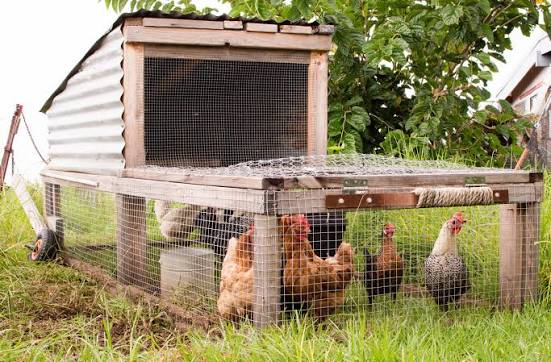
Anyone who’s let their flock free-range near a vegetable garden for even one afternoon knows how much damage chickens can do in a shockingly short window of time. Scratching, dust bathing, pecking at seedlings, and devouring anything green and tender are all completely natural chicken behaviors — which is exactly the problem. Chickens aren’t being destructive on purpose; they’re following instincts that have nothing to do with your carefully planned vegetable beds and everything to do with survival, dominance, and comfort.
The good news is you don’t have to choose between keeping chickens and keeping a garden. Once you understand why chickens do the specific damage they do, the fixes become a lot more targeted than “just build a fence.” This guide breaks down ten strategies in real depth — the reasoning behind each one, how to actually implement it, and what materials or setup choices matter.
1. Install a Physical Barrier Sized and Built for Actual Chicken Behavior
A fence is the most reliable fix, but the details of how you build it determine whether it actually works. Standard chicken breeds can fly, and while most won’t bother clearing a tall barrier unless there’s a strong incentive, a 2-foot fence next to ripe strawberries is a very different test than the same fence next to an empty bed. As a rule, 3 to 4 feet of vertical barrier height handles the vast majority of standard dual-purpose and heritage breeds; lighter, more athletic breeds (Leghorns, Hamburgs, most bantams) may need 4 to 5 feet or a fence with an inward-angled top to physically prevent clearing it.
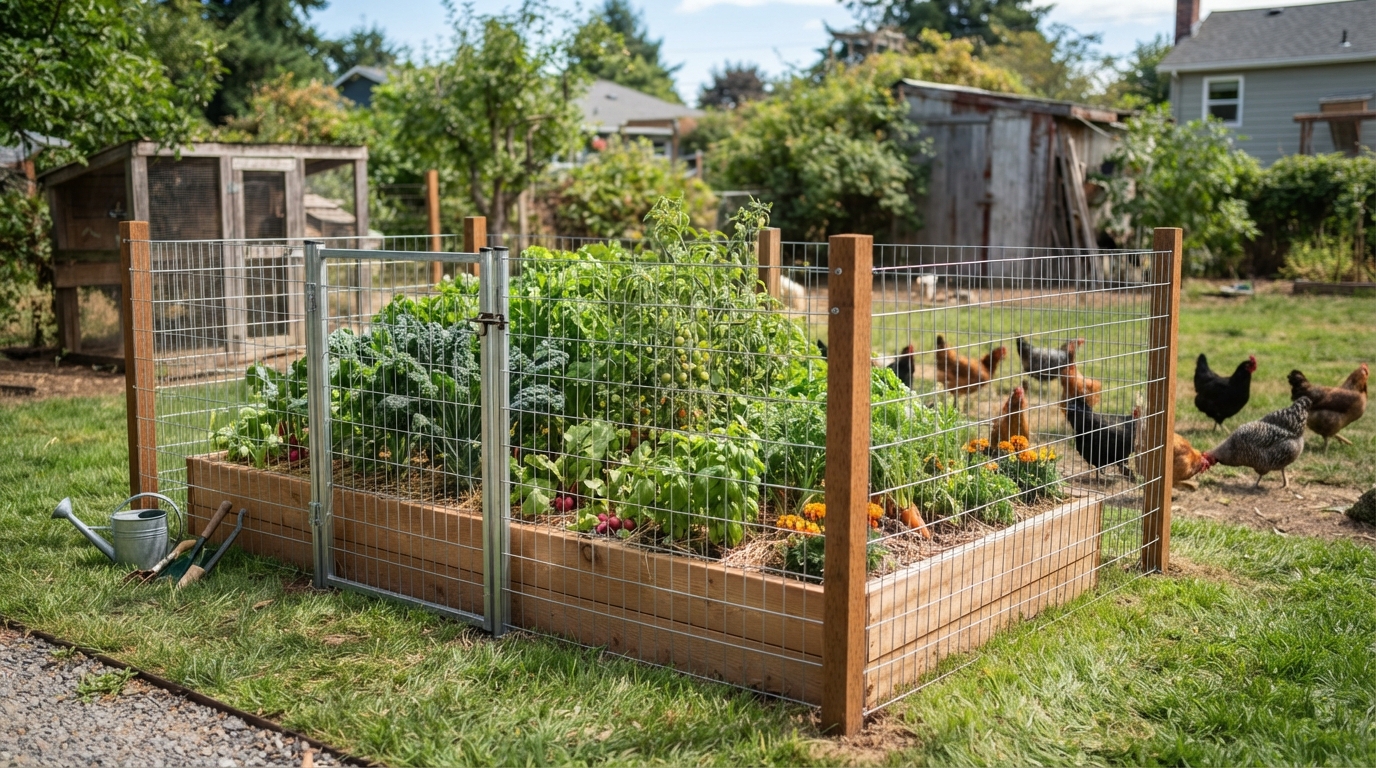
The bottom of the fence matters just as much as the height. Chickens will walk the perimeter of a barrier looking for gaps, and a fence that doesn’t sit flush to the ground, or has gaps larger than about 2 inches, will eventually get found. Chicken wire (technically “poultry netting”) works for height but is flimsy at ground level and easily pushed up by determined scratching; welded wire fencing with a 1×2 inch or smaller grid holds its shape at the base far better and is worth the extra cost for garden perimeters specifically.
| Barrier Type | Height Needed | Ground-Level Durability | Approx. Cost per 50 ft | Best For |
|---|---|---|---|---|
| Chicken wire (poultry netting) | 3–4 ft | Low — sags and gaps over time | $25–$40 | Temporary or budget setups |
| Welded wire fencing | 3–4 ft | High — holds shape at ground level | $60–$100 | Permanent garden perimeters |
| Hardware cloth | 2–3 ft | Very high — rigid, pest-proof | $80–$150 | Small beds, rodent-prone areas |
| Electric poultry netting | 2–3 ft (with shock deterrent) | Moderate | $150–$250 | Free-range flocks with persistent breachers |
Best for: Anyone building a permanent solution rather than a quick patch.
2. Line Raised Beds With Hardware Cloth From Below
Chickens don’t only attack a garden from the top — determined scratchers will dig in from underneath a raised bed if there’s any gap at ground level, especially if the bed sits directly on soil rather than a hard surface. Lining the bottom of a raised bed frame with ¼-inch or ½-inch hardware cloth, stapled securely to the wood before soil is added, blocks this entirely while also keeping out voles, gophers, and other burrowing pests that cause similar underground damage.
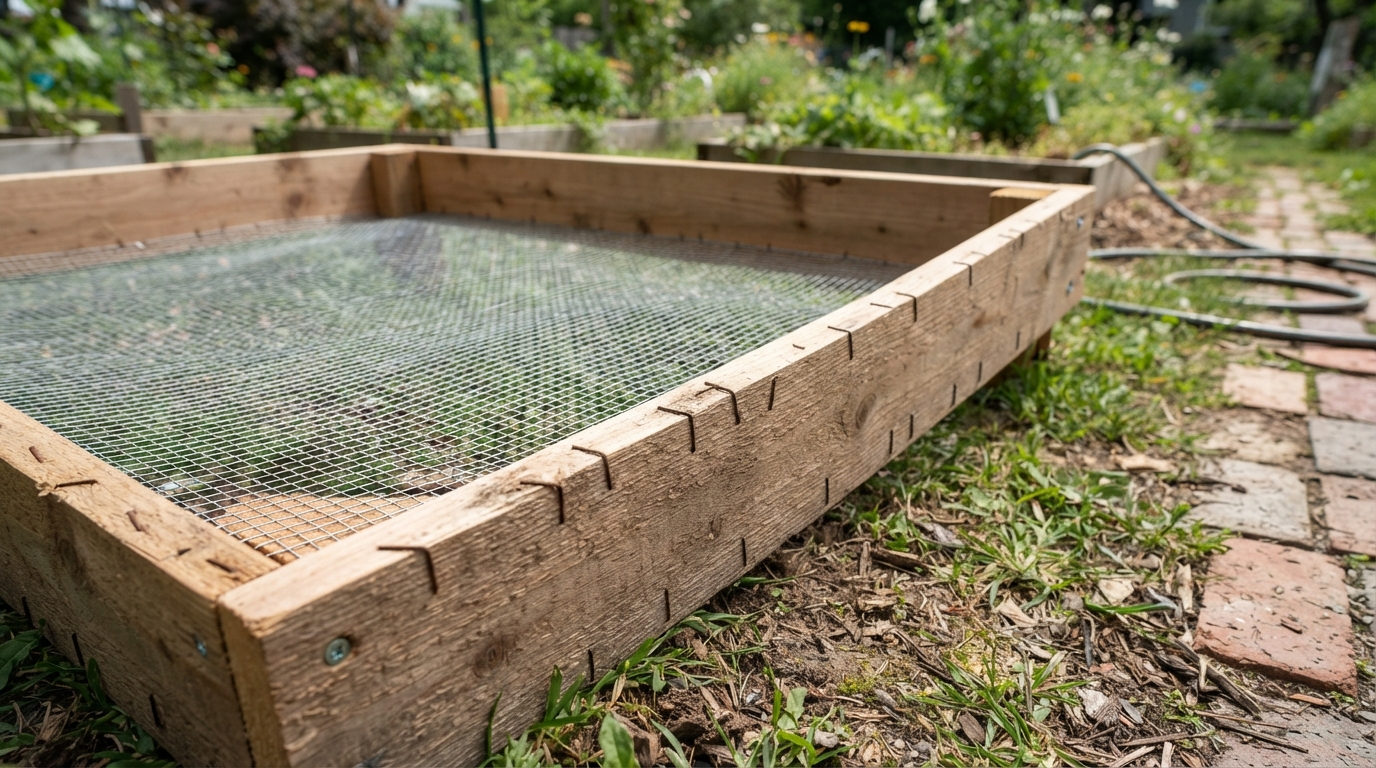
This is a one-time installation step done during bed construction (or retrofitted by temporarily removing soil from an existing bed), and it pays off for years, since it’s addressing a failure point most people don’t think to check until damage has already happened.
Best for: New raised bed builds, or existing beds with a history of unexplained root damage.
3. Protect the Vulnerable Window With Cloches and Row Covers
The overwhelming majority of chicken-related garden damage happens to plants in their first three to four weeks — tender seedlings and fresh sprouts are far more appealing and far more fragile than established plants with tougher stems and more developed leaves. Rather than protecting an entire garden permanently, concentrating protection on this specific vulnerable window is more efficient and less visually intrusive.
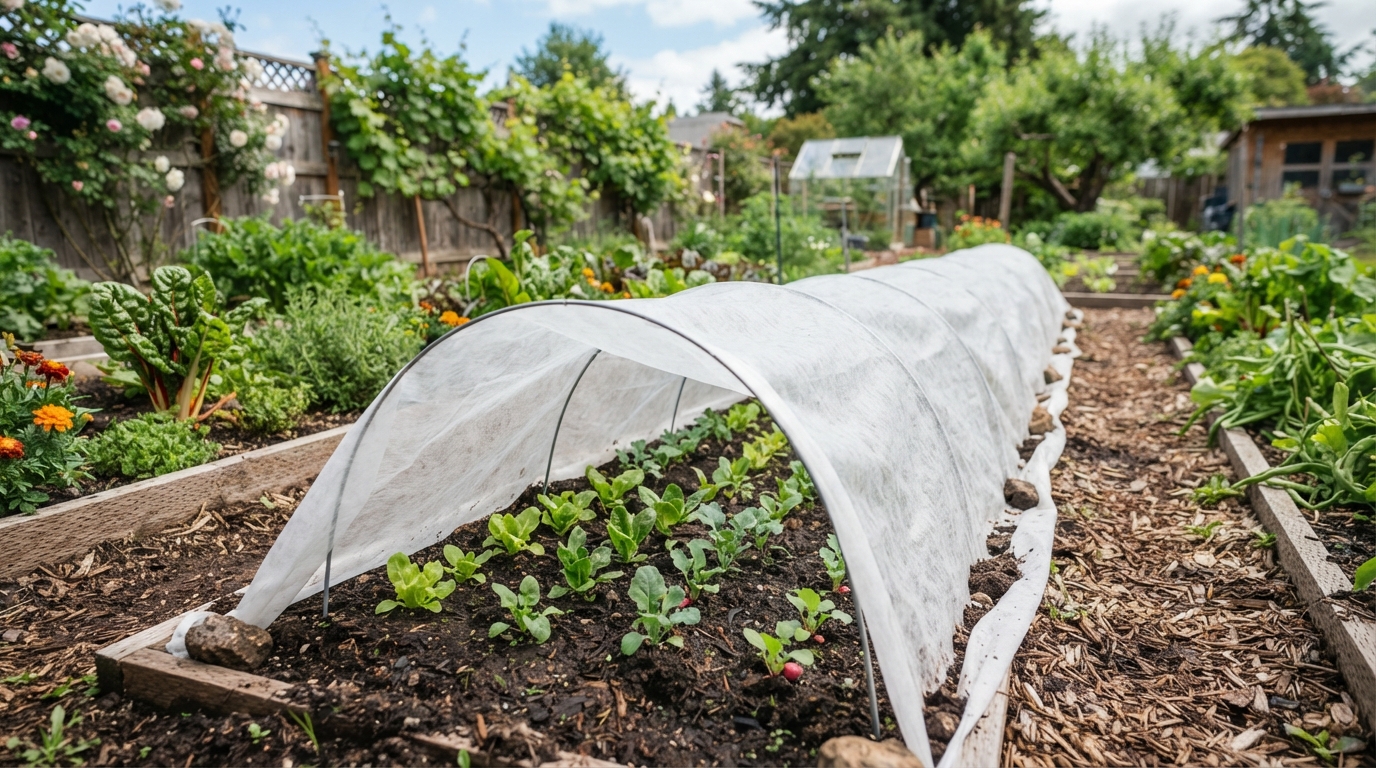
Individual cloches (small clear or mesh domes placed over single plants) work well for widely spaced crops like tomatoes or peppers, while floating row cover fabric draped over hoops works better for densely planted rows like lettuce or carrots. Row cover fabric also has the side benefit of providing light frost protection in early spring plantings, so it typically earns its keep beyond just chicken deterrence. Once seedlings have several sets of true leaves and a sturdier stem, covers can generally come off — most plants are far more resilient to an occasional curious peck by that stage.
Best for: Spring and early summer plantings, before plants have toughened up.
4. Give Chickens a Dedicated Dust Bath to Redirect a Core Instinct
A significant amount of what looks like “garden destruction” isn’t chickens eating your plants at all — it’s chickens dust bathing in loose, freshly tilled soil, which happens to be exactly the texture they instinctively seek out to manage mites, lice, and skin oils. This is a hardwired behavior, not a choice, and blocking access to a garden without giving chickens an alternative just means they’ll keep testing the barrier until they find a way back in.
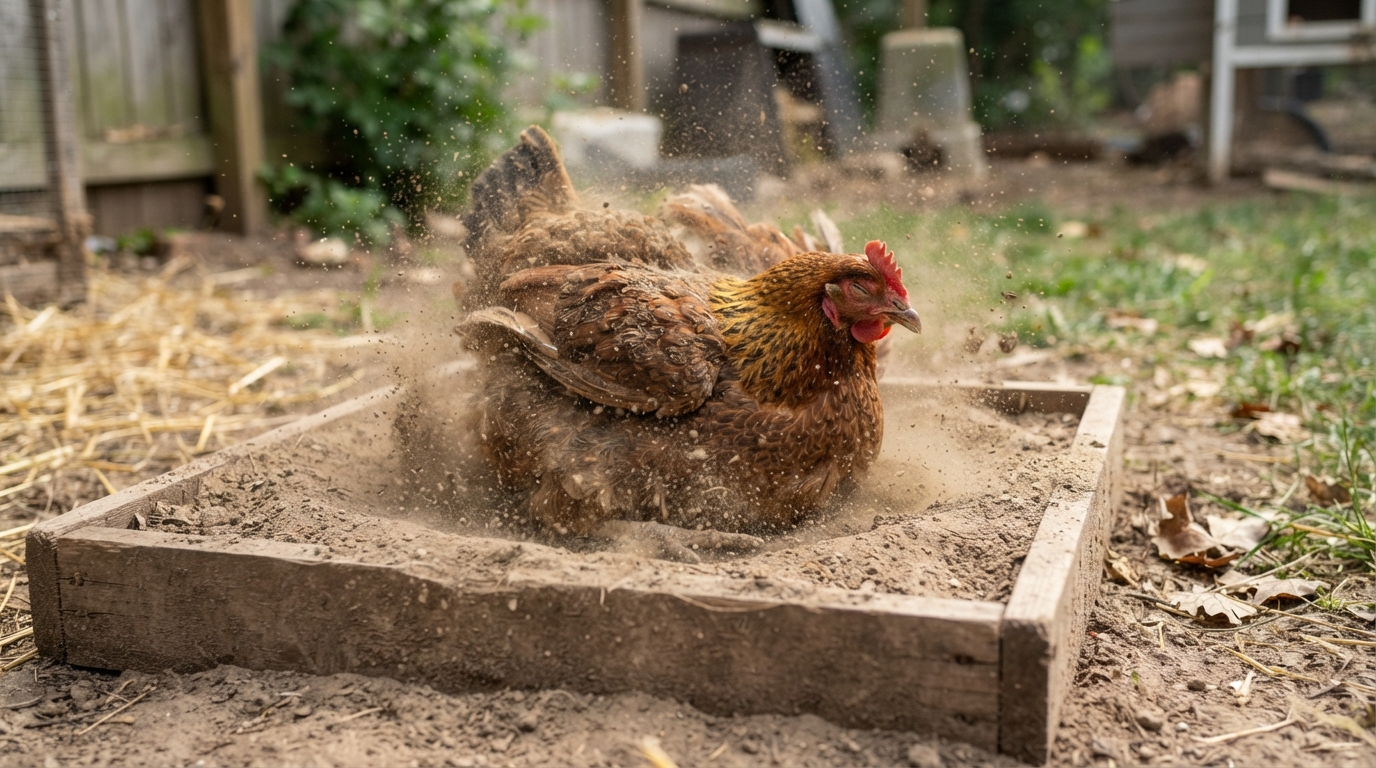
A proper dust bath area doesn’t need to be elaborate: a shallow box, an old tire, or a designated dirt patch roughly 2 feet by 3 feet, filled with a mix of dry dirt, coarse sand, and a light dusting of wood ash (which has natural parasite-deterring properties), placed somewhere convenient within the run or free-range area. Chickens will use a well-placed dust bath enthusiastically once they discover it, and flocks with a satisfying dust bath option are measurably less motivated to seek one out elsewhere.
Best for: Addressing the root cause of scratching damage rather than only the symptom.
5. Structure Free-Range Time Instead of Leaving It Unsupervised
Unsupervised, all-day free-ranging directly next to an unprotected garden is essentially guaranteed to end with the garden explored eventually — chickens are curious, persistent, and have all day to find every gap in a routine. Structuring free-range access, rather than eliminating it, preserves the benefits of free-ranging (pest control, reduced feed costs, healthier birds) while limiting the opportunity for damage.
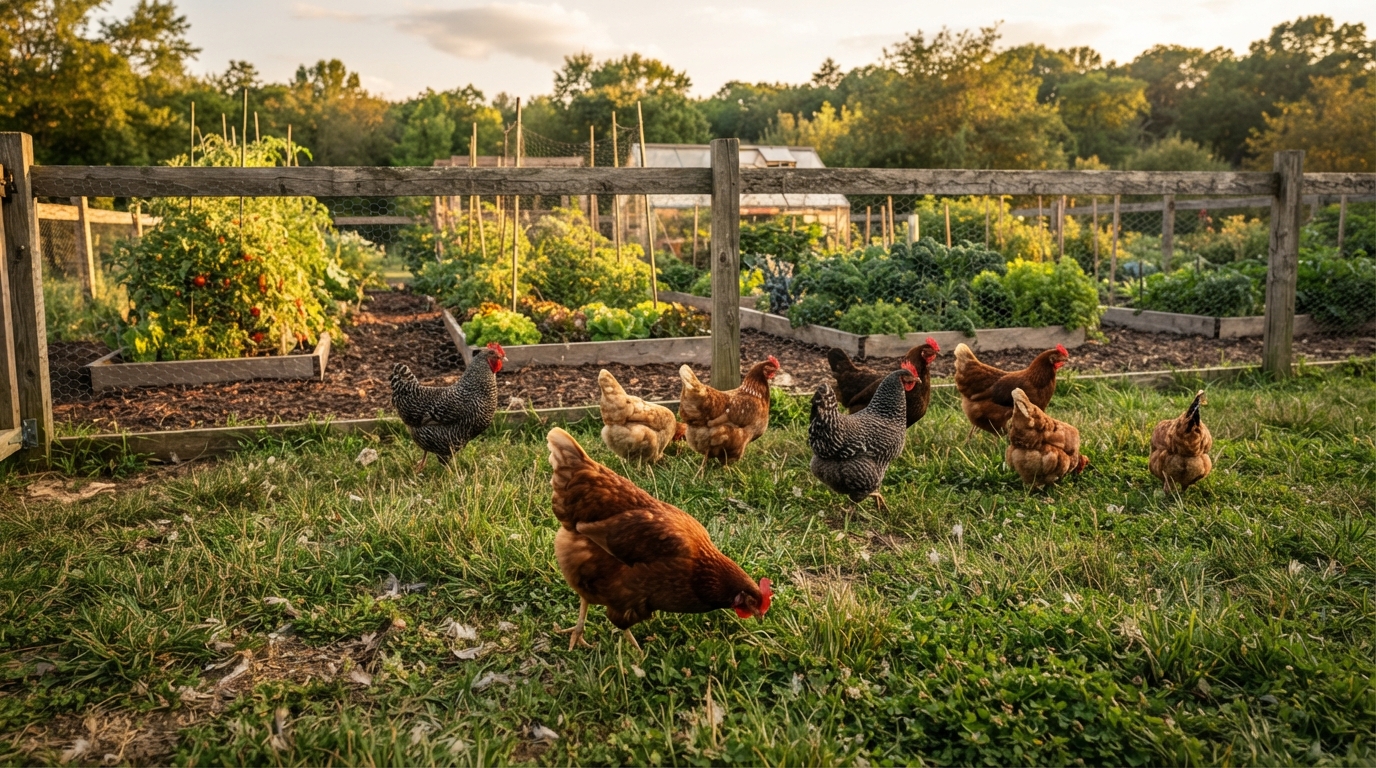
Many keepers find success free-ranging in the late afternoon after the day’s garden work is finished, since there’s less freshly disturbed soil and fewer newly watered, appealing beds at that point. Others rotate free-range access to a separate, already-fenced section of yard on a schedule, giving the garden a genuine rest period. A portable electric poultry netting section, moved every few days, can also create a rotating “free-range zone” that never overlaps with garden beds at all.
Best for: Keepers who want the benefits of free-ranging without constant garden risk.
6. Plant a Dedicated Forage Area So Chickens Have Somewhere to Destroy on Purpose
Rather than fighting the foraging instinct entirely, planting a separate area specifically for the flock — hardy greens like kale, Swiss chard, clover, or comfrey that can handle repeated pecking and regrow reliably — gives chickens a legitimate, unrestricted outlet. This is one of the more effective long-term strategies because it doesn’t rely on the flock not wanting to forage; it just redirects where that foraging happens.
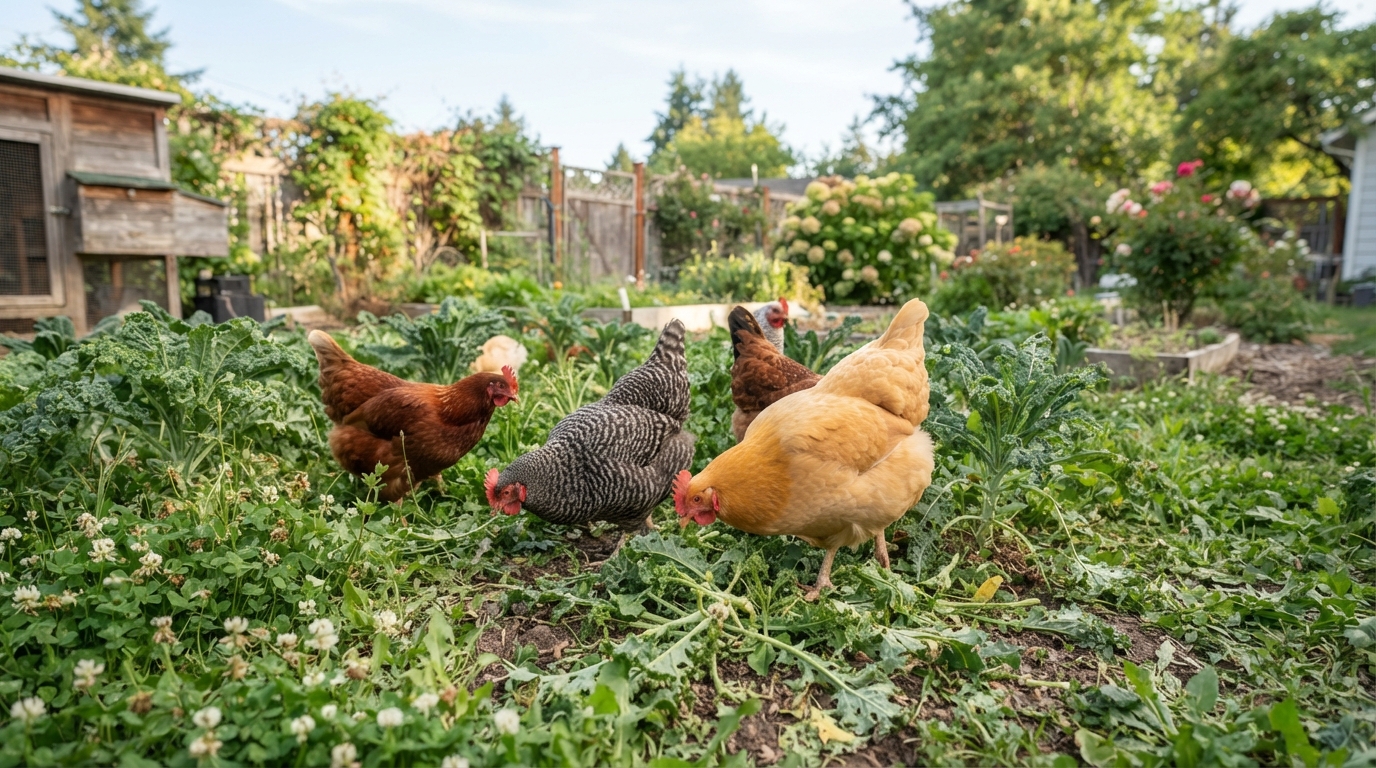
A forage patch doesn’t need much space — even a 4×4 foot area of hardy greens can meaningfully occupy a small flock’s attention. Because the plants in this area are chosen specifically for their ability to bounce back from heavy grazing, there’s no ongoing maintenance battle the way there would be with a “real” garden bed under the same pressure.
Best for: Flocks that free-range regularly and need a legitimate outlet for foraging behavior.
7. Choose Border Plants Chickens Tend to Avoid, and Know What’s Actually Unsafe for Them
While no plant is fully chicken-proof, chickens generally steer clear of strongly aromatic herbs and plants with prickly, fuzzy, or bitter qualities. Planting a border of these around a garden bed’s perimeter — in combination with a physical barrier, not as a replacement for one — adds a mild additional layer of deterrence, since chickens have to push past an unappealing plant to reach anything more tempting behind it.
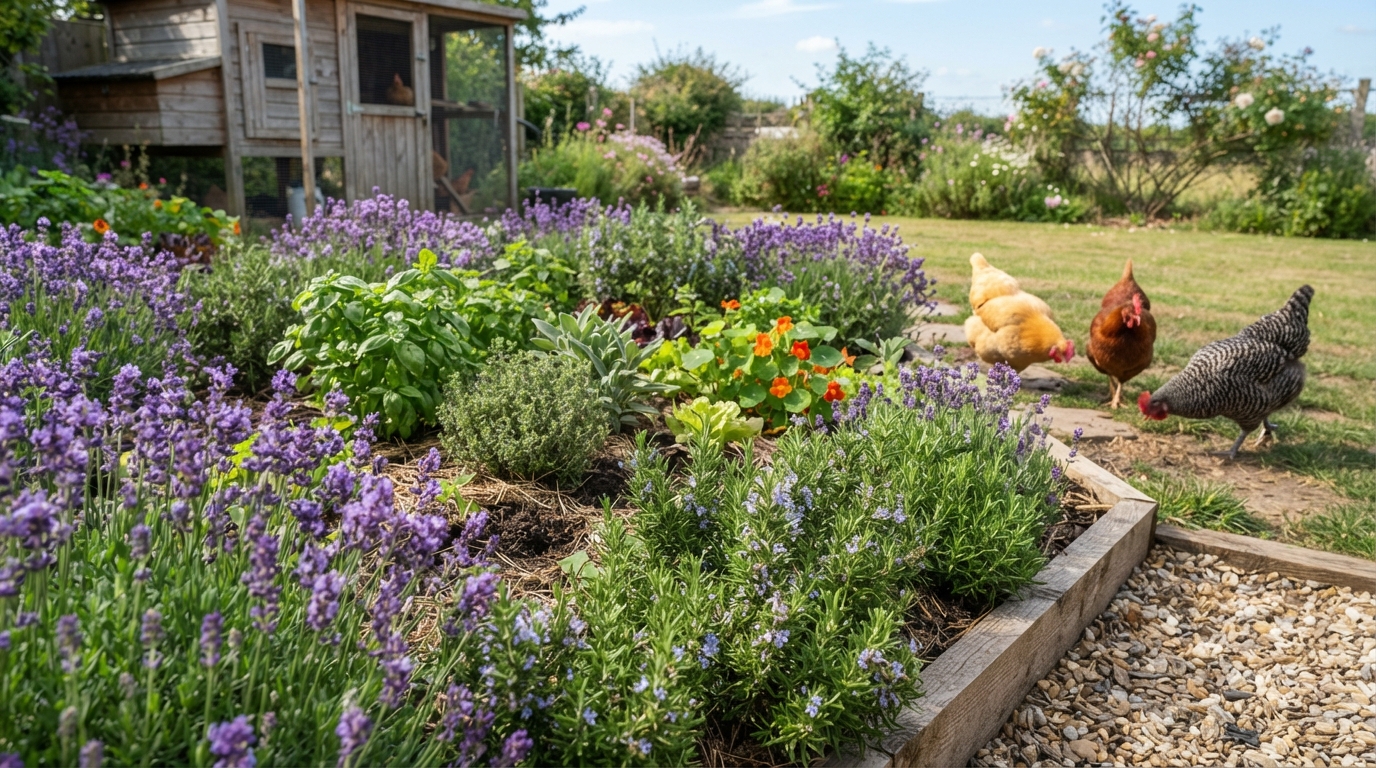
It’s also worth knowing which common garden plants aren’t safe for chickens to eat in any real quantity, both to keep the flock healthy and to know which beds are worth fencing off most urgently.
| Chickens Tend to Avoid (Deterrent Border Plants) | Not Safe for Chickens in Quantity |
|---|---|
| Lavender | Tomato and potato leaves/stems (nightshade family) |
| Rosemary | Onion and garlic (alliums, in large amounts) |
| Mint | Rhubarb leaves |
| Sage | Avocado (skin and pit especially) |
| Mature squash leaves (prickly texture) | Raw dried beans |
| Marigolds | Chocolate or anything with caffeine |
Best for: Adding a secondary layer of protection and knowing which beds need the most secure fencing.
8. Use Motion-Activated Deterrents for Persistent Individual Offenders
Most flocks have one or two particularly bold or curious birds who test boundaries far more than the rest of the flock, and for these persistent individuals, a physical barrier alone sometimes isn’t quite enough if there’s any weak point at all. A motion-activated sprinkler or a motion-triggered ultrasonic deterrent placed near a garden’s most vulnerable entry point adds a startling, harmless negative association that chickens learn from quickly — they’re smart enough to avoid a spot that’s surprised them more than once.
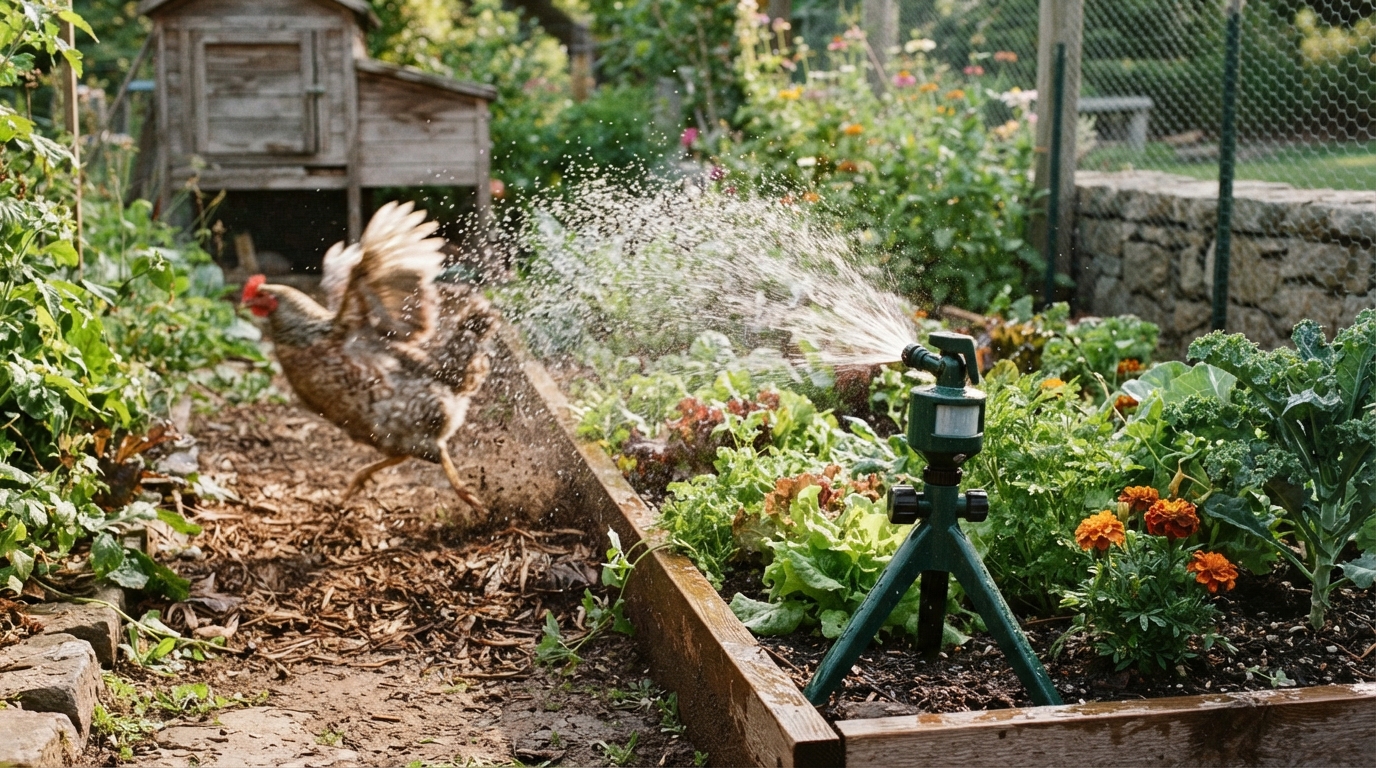
This tool works best as a supplement layered on top of a fence, not as a standalone solution, since it only deters chickens who are actively approaching that specific spot rather than blocking access outright.
Best for: Flocks with one or two particularly determined “escape artist” birds.
9. Time Garden Access Around the Season’s Actual Growth Stages
Garden vulnerability isn’t constant throughout the year — it’s highest right after planting and lowest once crops are established and, eventually, after harvest when beds are naturally winding down. Rather than maintaining maximum-security fencing year-round, many keepers ease up on restrictions once the growing season’s most vulnerable windows have passed, giving chickens legitimate access to post-harvest beds where their scratching and pecking actually helps by clearing old plant matter and fertilizing soil for the next season.
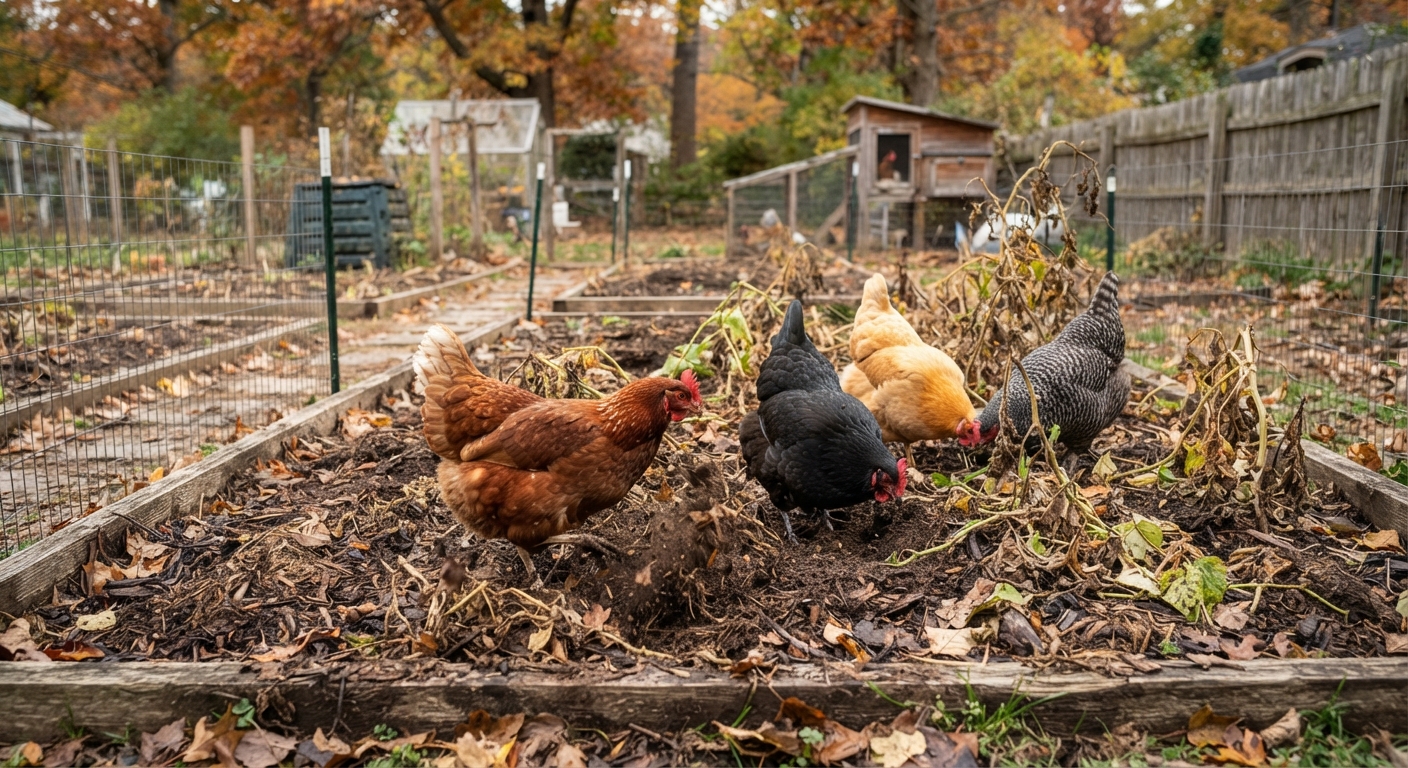
This seasonal approach turns chickens from a liability into a genuine gardening asset at the right time of year, since their natural behaviors — scratching up old roots, eating overwintering pest larvae, depositing manure — are exactly what a bed benefits from between growing seasons.
Best for: Anyone willing to adjust their fencing strategy seasonally rather than keeping one fixed setup year-round.
10. Accept That Some Damage Is Normal, and Plan Buffer Crops Accordingly
Even with every strategy above in place, a small amount of occasional chicken-related damage is a realistic expectation for anyone keeping a flock near a garden — birds escape enclosures, gates get left open, and determined individuals occasionally find a gap. Rather than treating any damage as a failure of the system, planting a bit more of especially chicken-vulnerable crops than you’d otherwise need (a buffer of extra lettuce starts, for instance) absorbs minor losses without meaningfully affecting your harvest.
This mindset shift matters because chasing a completely damage-free garden with a free-ranging flock nearby is rarely realistic, and building in a small margin is far less frustrating than expecting perfection and being disappointed repeatedly.
Best for: Long-term peace of mind for anyone keeping both a flock and a garden seriously.
🎨 IMAGE PROMPT: A photorealistic outdoor photograph of a thriving vegetable garden with slightly extra lettuce and greens planted in one section as a buffer crop, chickens visible safely on the other side of a fence, natural daylight, realistic garden abundance, backyard setting, horizontal composition, sharp focus, no text or logos.
Putting It All Together
The most effective approach combines several of these strategies rather than relying on just one — a solid physical barrier (Tips 1 and 2) handles the baseline protection, a dedicated dust bath and forage area (Tips 4 and 6) address the underlying instincts driving most of the damage, and seasonal flexibility (Tip 9) turns your flock into a genuine gardening tool rather than a constant threat. Start with the barrier, since it solves the most damage with the least ongoing effort, then layer in the behavioral redirection strategies as time allows.