A fresh egg may look simple when you collect it from the nesting box, but producing that egg places significant nutritional demands on a hen. She must build the shell, albumen, yolk, membranes, and other components while also maintaining her own muscles, feathers, bones, immune system, and everyday body functions. If her diet consistently falls short, the consequences may eventually appear in egg production, shell quality, body condition, feathering, or general flock health.
That is why good laying-hen nutrition is less about finding one special ingredient and more about maintaining the right overall balance. Backyard chickens may happily eat corn, kitchen scraps, grass, insects, mealworms, sunflower seeds, and almost anything else that catches their attention, but enthusiasm is not evidence that a food provides a complete diet. Commercial poultry feeds are formulated specifically to supply protein, energy, amino acids, vitamins, and minerals in appropriate proportions for a particular stage of a chicken’s life. Oregon State University Extension describes manufactured poultry feed as a complete diet and notes that additional nutrient supplementation is generally unnecessary when an appropriate complete feed is used as intended.
The nutritional demands also change as a chicken grows. A chick needs a different feed from a developing pullet, and a pullet that has not begun laying should not simply be treated nutritionally like an adult hen. Once egg production starts, calcium requirements increase substantially because hens must repeatedly build eggshells without exhausting the mineral reserves in their own bodies. Layer feed is designed specifically around that reproductive demand.
The most useful way to feed a backyard flock is therefore to make the complete ration the nutritional foundation and treat everything else as secondary. Oyster shell can provide optional additional calcium for laying hens, insoluble grit assists birds that consume whole grains or other coarse foods, and treats can provide enrichment, but none of those should replace a balanced feed.
Once that distinction is clear, hen nutrition becomes much easier to understand.
Start With a Complete Layer Feed
For most backyard keepers, the simplest feeding strategy is also the strongest: use a commercially formulated layer ration as the primary diet once hens reach laying age. A good layer feed is designed to provide energy, protein, essential amino acids, vitamins, minerals, and the elevated calcium required during egg production in proportions that work together.
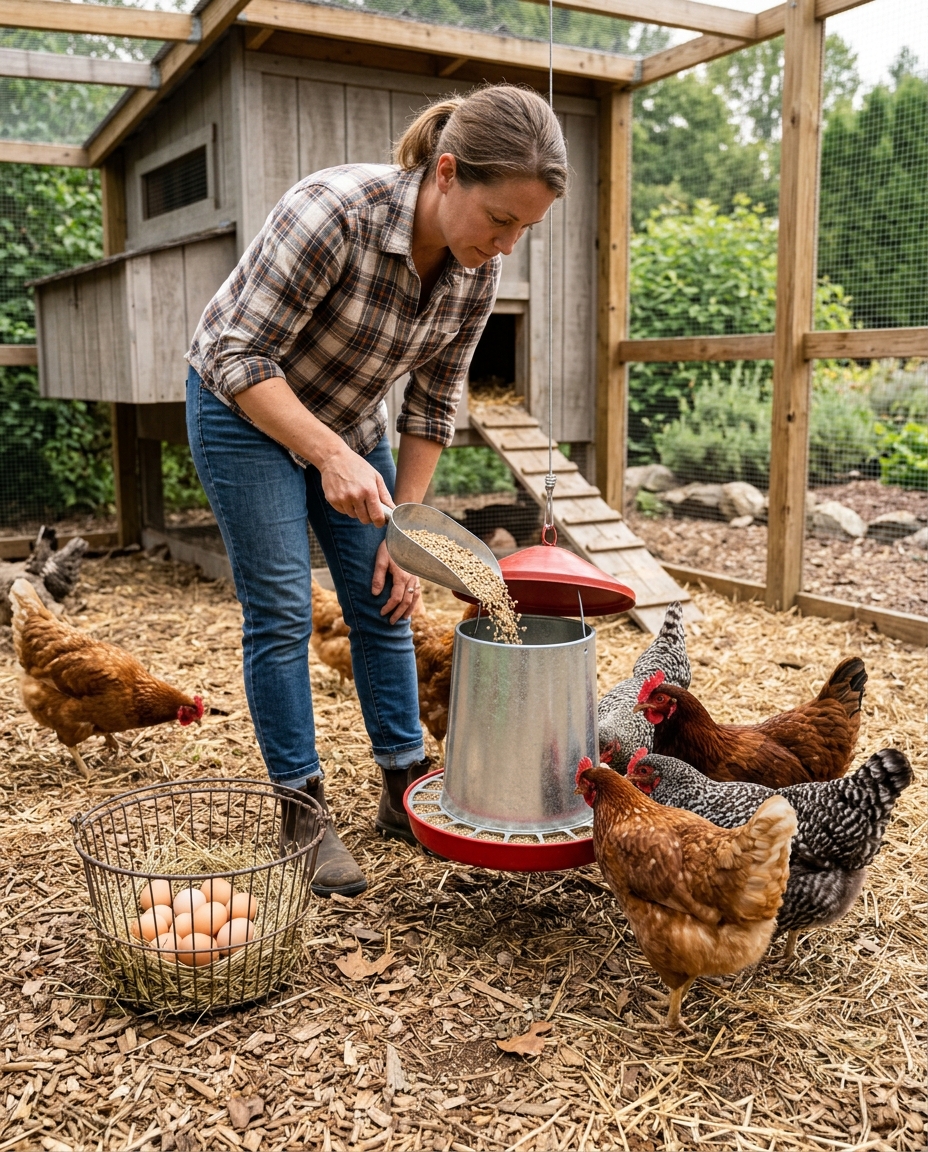
This matters because nutrition is not simply a checklist of individual ingredients. Adding corn because hens need energy, mealworms because they contain protein, and oyster shell because hens need calcium does not automatically create a balanced diet. Each ingredient changes the proportion of everything else the bird consumes. A hen can eat plenty of calories while still receiving inadequate amino acids, vitamins, or minerals if too much of her appetite is occupied by foods that dilute the formulated ration.
Oregon State Extension recommends beginning layer feed at approximately 18–20 weeks of age or when the first egg is laid, whichever occurs first. Its guidance describes layer feeds as containing around 16% protein with roughly 3–4% calcium, while Penn State’s small-flock guidance similarly uses a 16–18% protein range for laying hens and recommends a calcium source such as oyster shell. Exact formulations vary by feed manufacturer and production system, so the feed label remains important.
There is no major nutritional advantage to continually adding ingredients to a well-formulated complete layer ration just because they seem healthy individually. Mississippi State Extension specifically warns that extra grains and supplements can upset the nutrient balance of a complete poultry feed.
Typical Nutritional Progression
| Life Stage | Common Feed Type | Approximate Protein Guidance |
|---|---|---|
| Young chicks | Chick starter | About 18–20% or higher depending on formulation |
| Growing pullets | Grower/developer | About 14–16% |
| Actively laying hens | Layer ration | Around 16–18% |
| Non-laying mixed situations | Depends on flock | Follow feed label/veterinary or Extension guidance |
The percentages should not be treated as a homemade recipe. They are useful for understanding why feed changes as birds mature, while the actual ration should be selected according to its label and intended use.
Why Protein Matters for Laying Hens
Protein receives a lot of attention among backyard chicken keepers, but hens do not simply need “more protein.” They need the right amount and balance of amino acids within an appropriately formulated diet. Protein contributes to muscles, feathers, enzymes, tissues, and egg production, which means inadequate intake can become particularly noticeable when the bird is simultaneously maintaining her body and producing eggs.
A typical layer ration contains around 16% protein, although formulations vary and some feeds run somewhat higher. Penn State recommends approximately 16–18% protein for laying hens, while Oregon State describes typical layer feeds at about 16%.
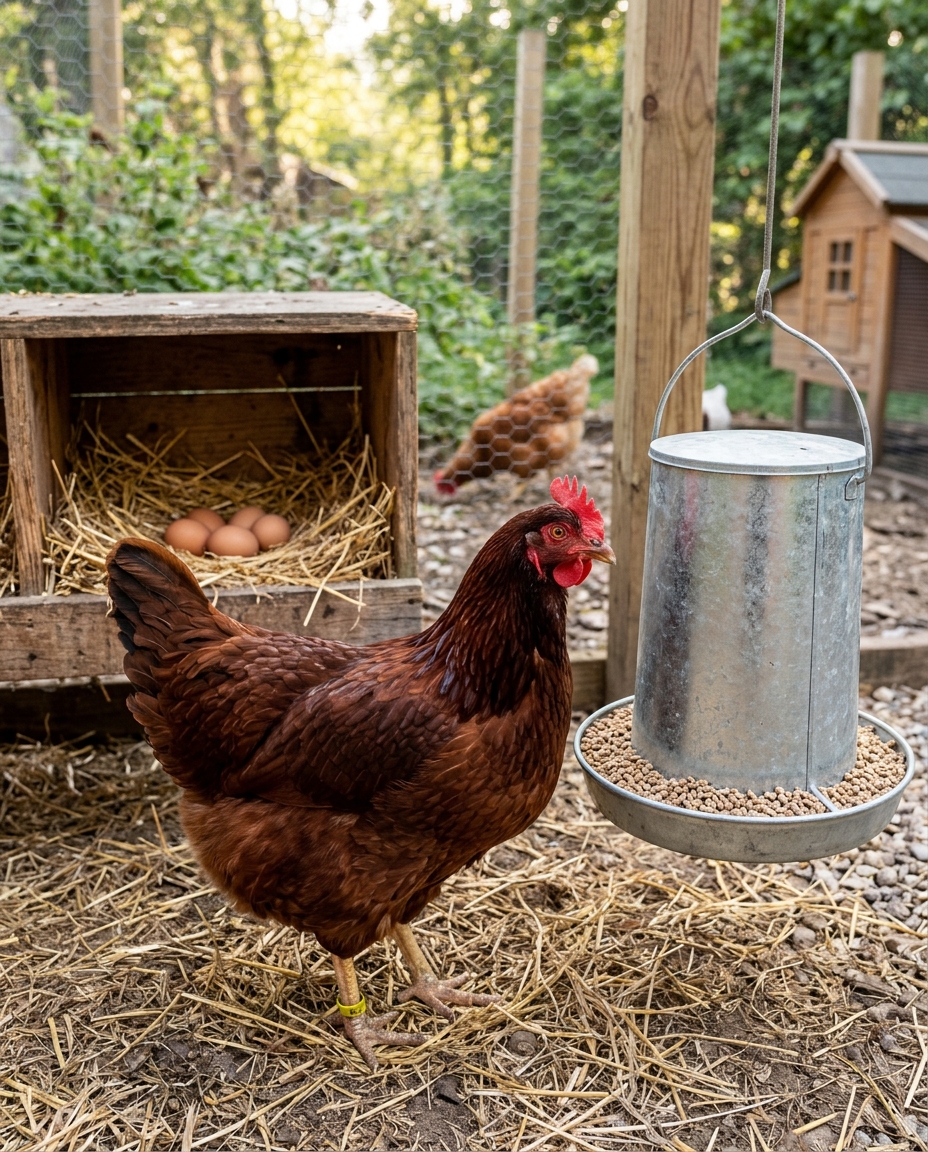
The mistake backyard keepers sometimes make is assuming that if protein is important, adding large quantities of high-protein treats must improve production. That is not how a balanced ration works. A treat may contain a high percentage of protein while still lacking the vitamin, mineral, amino-acid, and energy balance of a complete feed. If hens fill themselves with enough treats, the overall diet can actually become less balanced despite consuming additional protein-rich foods.
Protein requirements and feed intake can also become more noticeable during feather replacement. Feathers contain substantial protein, and hens going through molt may look temporarily rough and stop or reduce laying while their bodies prioritize new feather growth. Rather than improvising a highly concentrated supplement program, use an appropriate complete ration for the birds’ condition and seek local poultry or veterinary guidance if body condition, molt, or egg production becomes abnormal.
Calcium Is Essential, but More Is Not Automatically Better
Eggshell formation creates an enormous calcium demand. A laying hen repeatedly deposits calcium into shells while also needing to protect her own skeletal reserves, which is why layer feed contains much more calcium than chick or grower feed.
Oregon State describes standard layer feeds as containing approximately 3–4% calcium, while Penn State’s small-scale egg-production guidance specifies at least 3.5% calcium in laying-hen mash. Mississippi State also identifies inadequate calcium, phosphorus, and vitamin D as nutritional factors associated with thin or soft shells.
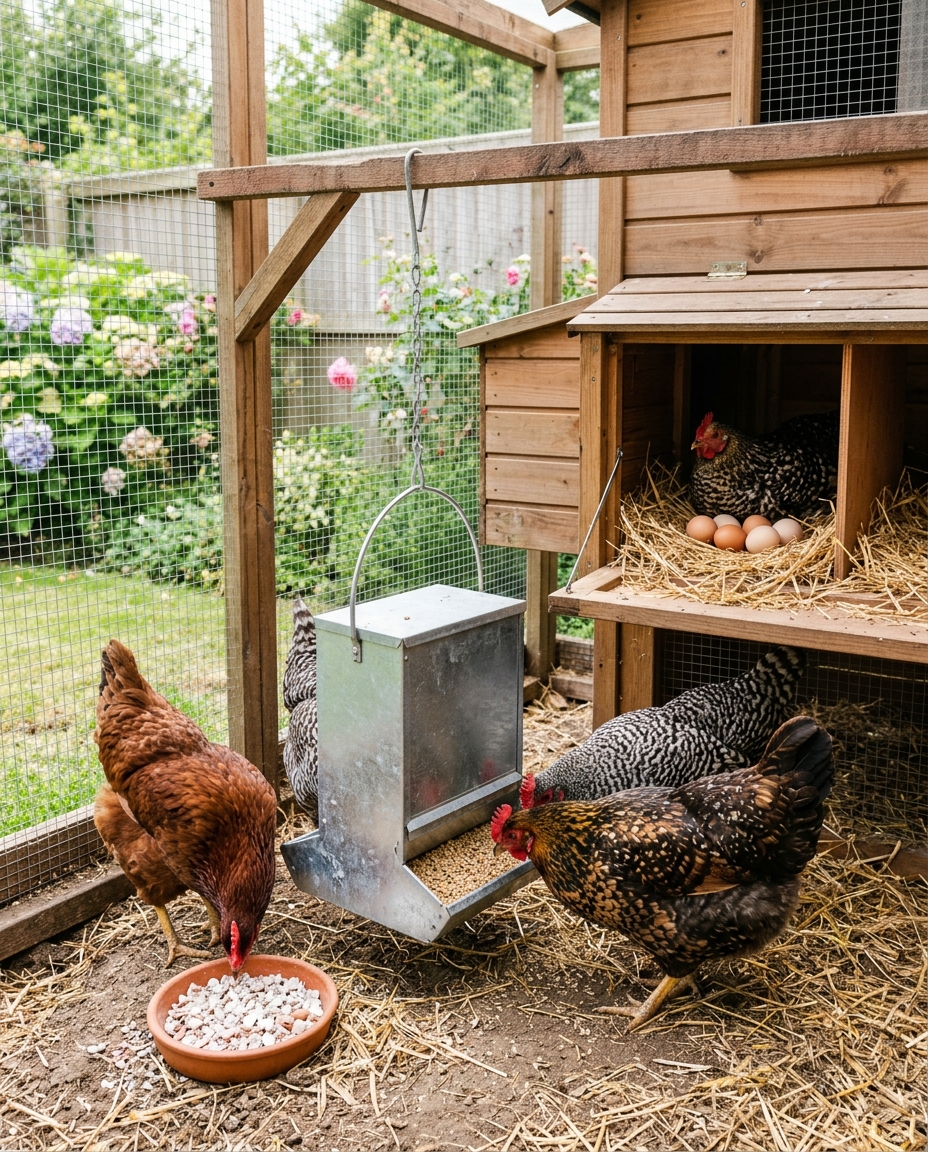
This does not mean you should simply mix large amounts of calcium supplement into every feeder. A complete layer ration is already formulated with calcium. If additional calcium is needed, oyster shell is commonly offered free choice in a separate container, allowing laying hens to consume it independently rather than changing the nutrient concentration of the main feed. Oregon State specifically recommends this free-choice approach when supplemental oyster shell is used.
Keeping oyster shell separate becomes even more important when a flock contains birds with different calcium requirements. Growing birds should not simply be placed on high-calcium layer feed long before they begin laying. Mississippi State’s recent backyard-poultry guidance cautions against feeding layer ration before egg production because its calcium level is too high for non-laying young birds and may harm their kidneys.
Shell quality can provide useful clues, but it should not be treated as a perfect nutritional diagnostic tool. Thin shells can have nutritional causes, yet age, heat stress, health problems, and other factors can also influence shell quality. Persistent abnormalities deserve a broader assessment rather than automatically adding more calcium.
Calcium Basics
| Question | Practical Answer |
|---|---|
| Does layer feed already contain calcium? | Yes, it is formulated for laying hens |
| Can oyster shell be offered? | Yes, commonly free-choice in a separate feeder |
| Should oyster shell replace layer feed? | No |
| Is oyster shell the same as grit? | No |
| Should young non-laying pullets receive layer-level calcium? | Generally no; use the age-appropriate ration |
Oyster Shell and Grit Do Two Completely Different Jobs
Oyster shell and grit are often mentioned together, which can make them sound interchangeable. They are not.
Oyster shell is primarily a calcium source. It dissolves as it moves through the digestive system and contributes calcium that laying hens can use for shell formation and other physiological needs.
Insoluble grit serves a mechanical digestive function. Chickens do not have teeth, so coarse feed is ground in the muscular gizzard. Small hard particles such as appropriate poultry grit remain in the gizzard and help break down whole grains, fibrous plant material, and other coarse foods.
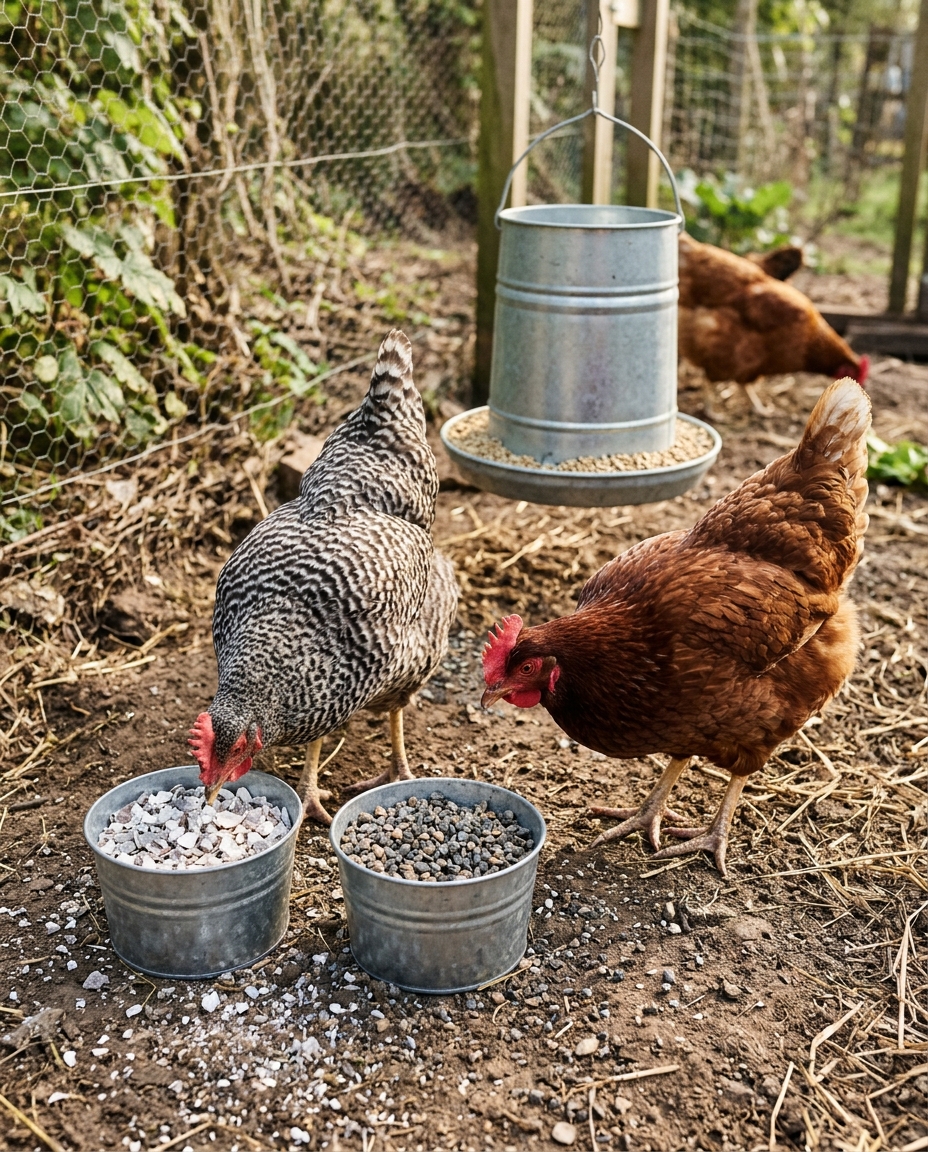
Oregon State states directly that oyster shell cannot substitute for grit because oyster shell is too soft to perform the same grinding function. Birds with regular access to suitable ground may find small stones naturally, while confined chickens eating scratch, greens, or other coarse materials may need appropriately sized commercial grit.
Hens eating only a finely ground or formulated complete feed may have different grit needs from birds receiving whole grains and forage, so the rest of the diet and environment matter. The important lesson is that adding oyster shell does not solve a lack of insoluble grit, and adding grit does not provide the calcium of oyster shell.
Water Is Part of the Diet, Not an Afterthought
Feed receives most of the attention when people discuss egg production, yet water can become limiting much faster than many nutrients. Eggs themselves contain a large amount of water, and hens need water for digestion, circulation, temperature regulation, and nearly every physiological process involved in staying alive and productive.
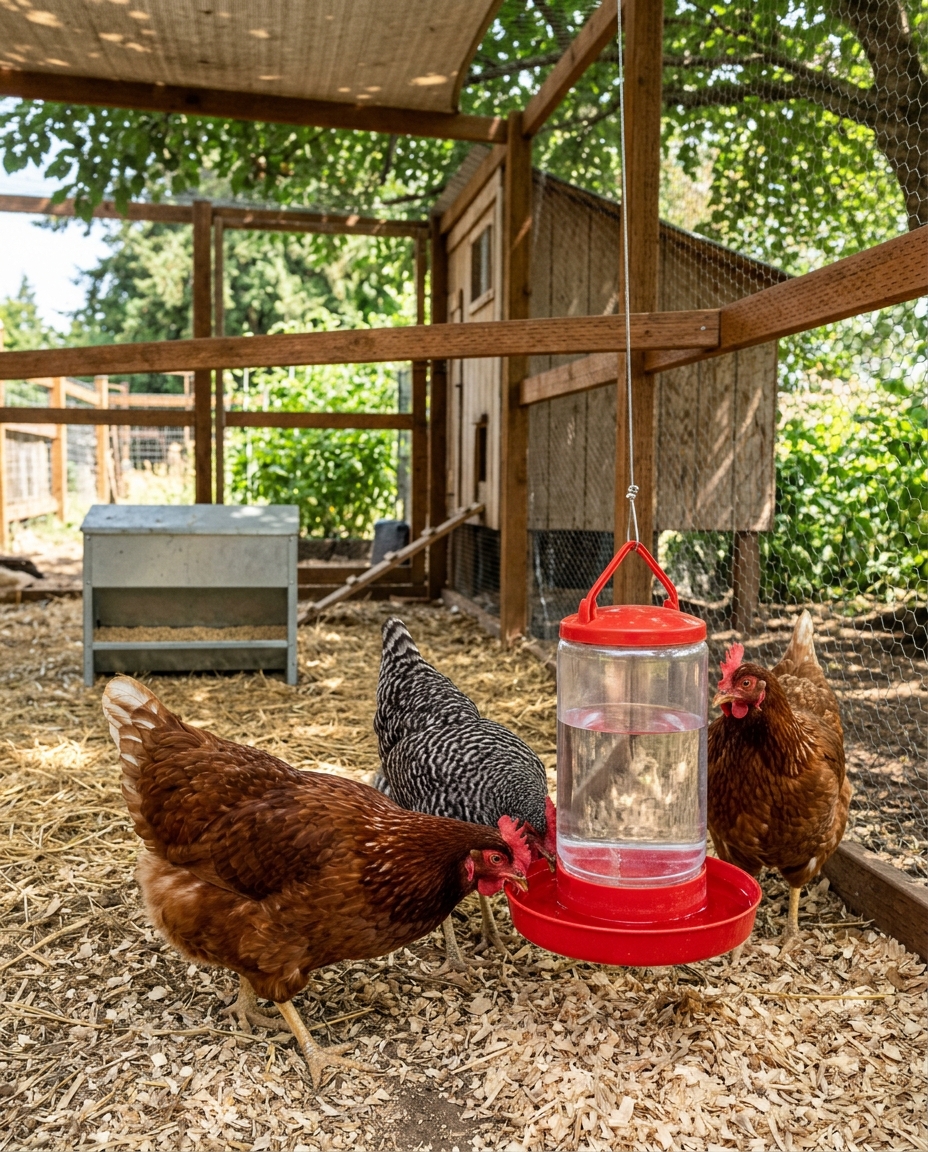
Oregon State reports that chickens may drink roughly two to three times as much water by weight as the feed they consume, with intake increasing during warm weather. University of Minnesota likewise emphasizes continuous access to clean, fresh water, particularly in summer when chickens rely on panting to regulate body temperature.
Penn State warns that depriving laying hens of water for extended periods can lead to a drop or cessation in egg production. This is why checking the waterer should be treated as one of the first daily flock-care tasks rather than something done only after feed is distributed.
Cleanliness matters as much as volume. Chickens quickly contaminate open water with bedding, dirt, droppings, and food, while leaking drinkers create wet litter that can contribute to additional management problems. Raising conventional waterers to an appropriate height or using properly managed nipple systems can help reduce contamination and waste.
During hot weather, check water more frequently rather than assuming a container that lasts all day in spring will do the same in midsummer.
How Much Feed Does a Laying Hen Eat?
Actual intake varies with body size, breed, temperature, production level, feed energy concentration, and other factors, so there is no single portion that fits every hen. Mississippi State estimates that an average laying hen may consume around one-quarter to one-third of a pound of feed per day, while University of Minnesota gives an example of roughly three pounds per week for a six-pound hen.
Those figures are better used as planning estimates than rigid daily limits. Laying hens are generally fed with access to their complete ration rather than being given a tiny controlled meal once or twice per day. Both Mississippi State and Oregon State warn that overly restricting feed can reduce egg production.
A flock of ten hens therefore goes through feed much faster than new keepers sometimes expect. Planning feed storage around realistic consumption helps prevent the temptation to stretch the ration with large amounts of inexpensive grain.
Monitor actual use over several weeks. If feed disappears unusually quickly, investigate spillage, rodents, wild birds, wet feed, poorly adjusted feeders, or another source of waste before assuming the hens suddenly need much more food.
Approximate Feed Planning
| Flock Size | Approximate Daily Feed at ¼–⅓ lb per Hen |
|---|---|
| 4 hens | About 1–1⅓ lb |
| 6 hens | About 1½–2 lb |
| 10 hens | About 2½–3⅓ lb |
| 12 hens | About 3–4 lb |
| 20 hens | About 5–6⅔ lb |
These figures are planning ranges rather than prescribed ration limits. Climate, hen size, feed formulation, and production can change actual consumption.
Treats Should Stay Treats
Giving chickens treats is enjoyable for both the keeper and the flock. Scratch grain encourages natural foraging behavior, garden greens provide enrichment, and small amounts of appropriate kitchen produce can add variety. Problems begin when extras stop being occasional and start replacing meaningful amounts of complete feed.
Scratch grain is a good example. Chickens usually love cracked corn, oats, wheat, and other grains, but those ingredients do not provide the same nutritional balance as layer ration. Oregon State warns that scratch can dilute the nutrient concentration of the complete diet and suggests limiting scratch to roughly 10–15% of total daily food intake, or only what the flock can clean up relatively quickly.
The same principle applies to mealworms, fruit, vegetables, bread, and table scraps. The question is not whether an individual food contains something beneficial. The question is whether feeding enough of it reduces consumption of the diet that was formulated to meet the hen’s complete nutritional needs.
If you enjoy giving treats, offer them after the flock has had plenty of opportunity to eat its regular feed rather than beginning the morning with a large bowl of extras. Keep portions small enough that uneaten food does not remain around the run attracting rodents or spoiling.
A Practical Hierarchy
| Food | Role in the Diet |
|---|---|
| Complete layer ration | Nutritional foundation |
| Fresh water | Essential and continuously available |
| Free-choice oyster shell | Optional supplemental calcium for laying hens |
| Grit | Digestive aid when needed |
| Greens/safe produce | Small enrichment treat |
| Scratch grain | Occasional treat |
| Mealworms/insects | Enrichment or modest supplement |
| Kitchen scraps | Limited extras, not a ration replacement |
Scratch Grain Is Not Chicken Feed
The words scratch feed cause some confusion because the product is sold beside complete poultry feeds. Scratch is generally a grain mixture rather than a nutritionally complete laying ration, and its primary value is enrichment and additional energy rather than complete nutrition.
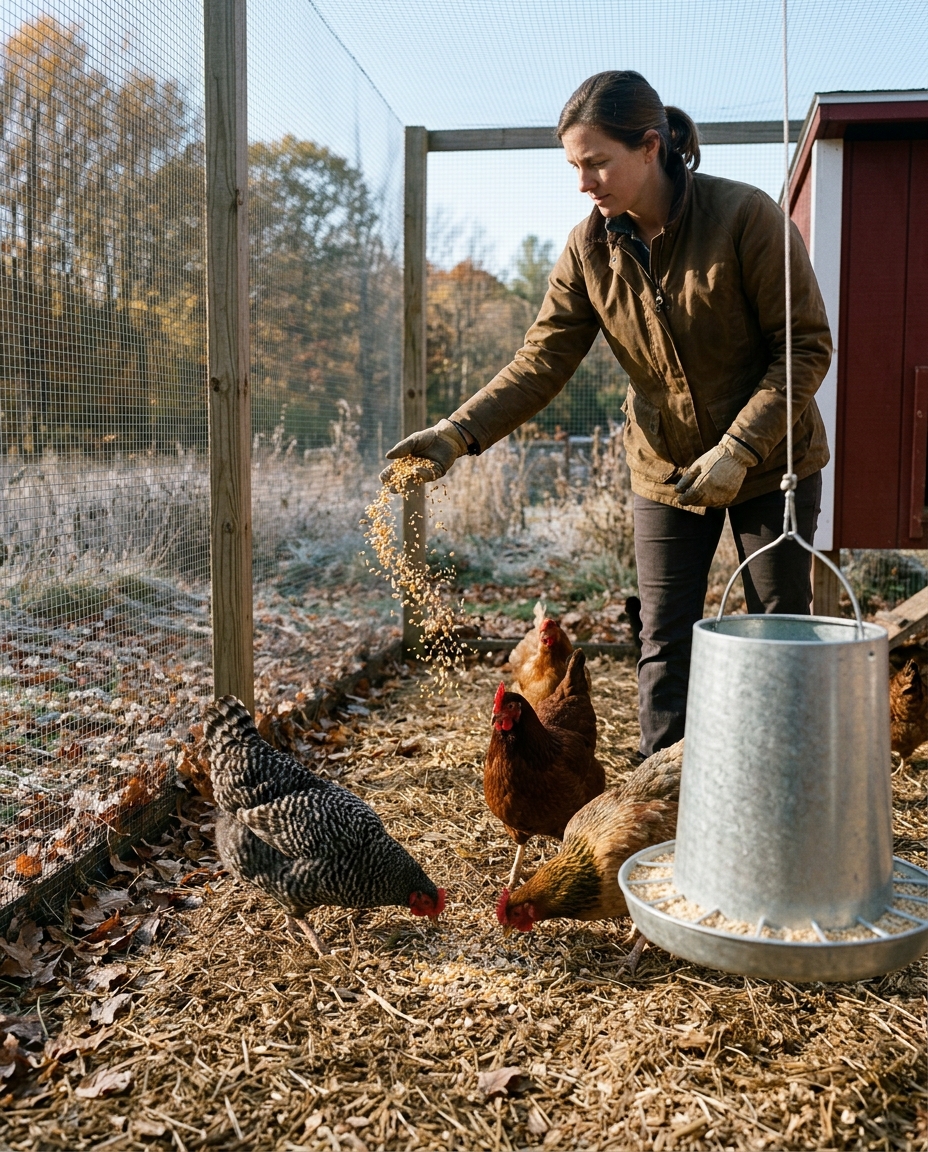
Oregon State notes that scratch grains tend to be relatively low in protein compared with a formulated layer diet and can dilute the carefully balanced nutrient levels of prepared feed when too much is provided. A flock given unlimited scratch may eagerly fill up on grain while consuming less of the food that provides adequate calcium, amino acids, vitamins, and trace minerals.
That does not make scratch inherently bad. Tossing a modest amount into litter or a run encourages chickens to scratch and forage, providing activity and behavioral enrichment. The problem is quantity, not the existence of the treat.
In colder weather, many owners assume large amounts of corn are needed to “keep chickens warm.” Chickens certainly require enough energy, and feed intake can rise in cooler weather, but a balanced ration should remain the primary source of those calories rather than replacing it with grain.
Why Young Pullets Should Not Be Fed Like Laying Hens
It is easy to move an entire flock onto layer feed simply because the pullets are approaching adult size, but physical size does not mean their nutritional stage has changed. Layer feed is designed specifically around the calcium demands of egg production.
Oregon State recommends chick starter through roughly the first six weeks, followed by grower or developer feed until birds approach the beginning of lay around 18–20 weeks. Mississippi State’s guidance similarly separates pullet starter and developer rations from adult layer feed.
The main difference that causes concern is calcium. Layer feed contains substantially more calcium than grower diets because actively laying hens need it for shells. Young birds that are not producing eggs do not have that same requirement, and routinely feeding them a high-calcium ration is unnecessary and potentially harmful.
Mixed-age flocks can therefore complicate feeding. If chicks or developing pullets live with laying hens, a feed intended for the whole flock may be more appropriate, with calcium made available separately to the active layers. Follow the specific feed label and obtain poultry-veterinary or local Extension advice when the flock includes birds with significantly different nutritional needs.
Pellets, Crumbles, or Mash: Does the Form Matter?
Layer rations are commonly available as pellets, crumbles, and mash. The nutritional value depends on the formulation rather than whether the feed has been pressed into one physical shape, so the guaranteed analysis and intended life stage matter more than choosing a feed because pellets somehow seem healthier than mash.
Pellets are compressed pieces that tend to produce relatively little fine waste. Some keepers find them easier to manage because birds cannot sort individual visible ingredients as readily, and spilled pellets are easier to notice around feeders.
Crumbles are broken pellets and are smaller in size, making them familiar to birds transitioning from starter or grower crumble. Mash is finely ground and is also widely used in laying systems, but fine particles can be wasted if feeder design is poor.
Whichever form you choose, avoid constantly changing feeds simply because the flock appears excited by a new texture. Chickens need consistency more than novelty. A fresh, properly stored, appropriate complete ration is far more important than whether it arrives as mash, crumble, or pellet.
Feed Storage Can Change the Quality of the Diet
Buying good feed does little good if it becomes damp, moldy, contaminated, or stale before the birds finish eating it. Poultry feed contains fats and vitamins that can deteriorate over time, and damp storage creates conditions where mold can grow.
Oregon State recommends keeping feed cool and dry, storing it in enclosed containers that reduce rodent access, and avoiding long storage periods; its small-flock guidance suggests roughly two months as a maximum storage period.
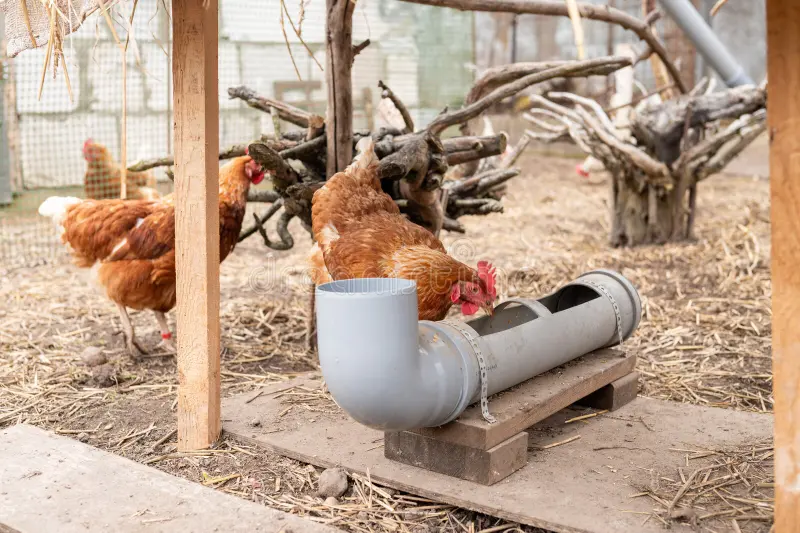
A sealed feed bin should protect the ration from rain and pests, but the feed itself should still enter storage dry. Do not repeatedly pour new feed on top of old material indefinitely because older crumbs and dust can accumulate at the bottom.
Rotate feed so the oldest usable ration is consumed first, and discard feed that smells moldy, has become wet, or shows obvious contamination. If several hens suddenly refuse a ration they previously ate readily, inspect the feed itself as part of your troubleshooting.
Heat Can Change How Hens Eat
Hot weather can reduce feed intake at the same time that hens continue requiring nutrients for body maintenance and egg production. University of Minnesota notes that chickens generally eat less during summer heat, while Mississippi State points out that shell-quality problems are often more noticeable during hot weather.
Water becomes particularly critical under these conditions because chickens cool themselves largely through respiratory evaporation and need ready access to clean water. Positioning water in shade where possible, checking it more frequently, and keeping drinkers clean are much more important than searching for a special summer treat.
Avoid allowing large volumes of low-nutrient extras to displace layer feed during a period when hens are already eating less. If a hen’s total intake has fallen because of heat, filling part of that reduced appetite with scratch grain or fruit can further dilute the nutrients she receives.
Severe or persistent declines in appetite, egg production, or behavior should not automatically be blamed on weather. Heat stress can become dangerous, and abnormal birds may need more direct intervention or veterinary advice.
Cold Weather May Increase Feed Consumption
During cold weather, chickens use additional energy to maintain body temperature, and feed consumption may increase. University of Minnesota specifically notes greater consumption in winter compared with hot weather.
The best response is to keep an appropriate complete ration available rather than replacing it with large amounts of cracked corn or scratch. Energy is only one part of the hen’s requirement, and a balanced layer ration supplies calories alongside protein, minerals, and vitamins.
Dry housing and accessible water remain critical in winter. A frozen waterer means a flock can lose access to water even when plenty of feed is available, which can quickly interfere with normal production and health.
Treats can still be used for enrichment, particularly when birds spend more time inside a run, but the nutritional hierarchy should remain unchanged throughout the season: complete feed first, treats second.
Can Free-Range Hens Live Mostly on Forage?
Chickens are enthusiastic foragers and may consume grasses, seeds, insects, worms, and other materials while ranging. That behavior is valuable for enrichment and can contribute nutrients, but it is difficult to know exactly what each bird is consuming or whether forage provides everything required for consistent egg production.
University of Minnesota recommends prepared balanced feed even while acknowledging that chickens eat grains, vegetables, fruits, and insects. A pasture that looks lush also changes dramatically across seasons, and insect abundance can fluctuate with weather.
Forage should therefore be viewed as a useful addition to a balanced feeding program rather than a predictable replacement for one. Keep complete feed available even when hens spend much of the day ranging.
This becomes even more important with high-producing modern laying breeds, which have substantial nutritional demands. A hen may happily forage all afternoon and still need significant quantities of formulated feed to support repeated egg production.
What Eggshells Can Tell You About Nutrition
Eggshells can provide useful information, but interpreting them requires context. Persistently thin or soft shells may be associated with inadequate calcium or other nutritional issues, and Mississippi State identifies calcium, phosphorus, and vitamin D as important for shell formation.
However, not every unusual egg means the feed is deficient. Young hens beginning to lay may produce unusual eggs while their reproductive systems settle into a routine, and older hens may show changes in shell quality. Heat, stress, illness, and reproductive problems can also influence what appears in the nest box.
If shell quality declines across much of the flock, first confirm the basics. Check that the birds are actually consuming a complete layer ration, that treats are not displacing large amounts of feed, that clean water is continuously available, and that appropriate supplemental calcium is accessible if you provide it.
Repeated soft shells, abnormal production, weight loss, lethargy, or other health changes deserve more than dietary guesswork. Nutrition is important, but it is not the explanation for every egg abnormality.
Feeding Problems That Can Reduce the Value of a Good Layer Ration
A high-quality ration cannot help birds that cannot reach it. Feeder management therefore belongs in any discussion of nutrition.
Crowding around a feeder can allow dominant hens to eat comfortably while timid flock members are repeatedly displaced. Oregon State recommends enough feeder space for birds to eat without excessive competition and suggests adjusting feeders to around back height to reduce waste.
Feeders placed directly beneath roosts can become contaminated with droppings, while poorly protected feeders may be visited by rodents and wild birds. Wet feed should be removed rather than allowed to remain in the trough.
Spillage deserves attention as well. If a large quantity of feed appears on the ground every evening, raising or changing the feeder may save more money than buying cheaper feed. The goal is not only to purchase a balanced ration but also to make sure most of it actually enters the chickens.
Common Hen-Feeding Mistakes
One of the most common mistakes is offering too many treats. The flock may appear delighted, which makes the feeding routine feel successful, but every large serving of scratch, bread, mealworms, or scraps leaves less appetite for the balanced ration.
Another problem is moving pullets to layer feed too early simply because they look grown. Their calcium requirements remain different until they enter egg production, so the correct feed stage matters more than body size alone.
Keepers also sometimes confuse calcium and grit. Oyster shell cannot perform the mechanical digestive role of insoluble grit, while granite grit does not provide the same useful calcium source as oyster shell.
Water is another frequent blind spot. A keeper may spend hours comparing feed labels while allowing a waterer to become empty, dirty, frozen, or overheated. Nutrition only works when the birds can drink enough water to use the feed properly.
Finally, avoid changing several things at the same time whenever egg production falls. Hens naturally respond to daylight, molt, heat, age, stress, health, and other conditions as well as diet. If you replace the feed, add several supplements, change treats, and alter management simultaneously, it becomes almost impossible to identify what actually mattered.
A Simple Daily Feeding Routine
A straightforward routine removes much of the guesswork. Begin each day by checking that clean water is available and functioning correctly. Then make sure the complete layer ration is accessible, dry, and free from contamination.
Observe the flock briefly while the birds eat. A hen repeatedly standing away from the group, struggling to reach the feeder, appearing unusually thin, or showing little interest in food is worth investigating even when the rest of the flock seems normal.
Keep oyster shell available separately if that is part of your management system and check whether the container has become contaminated with bedding or rain.
Treats can be offered later and in modest quantities after the birds have had access to their complete ration. At the end of the day, remove large amounts of uneaten perishable food and inspect for feed spilled around the feeder.
A simple routine like this provides consistency while giving you an opportunity to notice changes early.
What a Laying Hen Actually Needs
| Nutritional Need | Practical Source | Why It Matters |
|---|---|---|
| Balanced protein/amino acids | Complete layer ration | Eggs, feathers, tissues, maintenance |
| Energy | Balanced layer ration | Activity, body maintenance, production |
| Calcium | Layer feed + optional free-choice oyster shell | Eggshells and skeletal needs |
| Phosphorus + vitamins/minerals | Complete ration | Metabolism, bone and egg production |
| Water | Continuously available clean water | Digestion, cooling, egg formation |
| Grit when needed | Insoluble poultry grit/natural suitable stones | Grinding coarse foods in gizzard |
| Enrichment foods | Limited scratch/greens/safe treats | Behavior and variety, not primary nutrition |
The key pattern is obvious: most essential nutrients should arrive together through the complete ration rather than being assembled separately through supplements.
A Practical Feeding Example for a Small Backyard Flock
Imagine a flock of six actively laying adult hens. Their main feeder contains a commercial layer ration formulated for laying birds, and the feeder remains available throughout the day. A separate small container holds oyster shell so hens can consume additional calcium if needed.
The flock spends part of the day in a secure run and sometimes forages outside, picking through grass and searching for insects. Those activities add enrichment and dietary variety, but the feeder remains available rather than being removed because the hens are “free-ranging.”
A suitable grit source is available because the birds receive occasional whole grains and coarse plant material. Clean water is checked each morning and again during warm weather.
Later in the day, the keeper scatters a modest amount of scratch through the run or offers a small quantity of appropriate vegetable scraps. The treats disappear quickly and do not replace a substantial portion of the layer ration.
That feeding system is not complicated, and that is the point. Good laying-hen nutrition rarely requires a shelf full of supplements.
When Nutrition May Not Be the Reason Hens Stop Laying
A reduction in egg production naturally makes owners look at feed first, but nutrition is only one possible explanation. Seasonal daylight changes, molt, age, broodiness, heat, stress, predation pressure, disease, parasites, and changes in routine can all influence laying.
Nutrition becomes more suspicious when the feed itself recently changed, hens are receiving large quantities of extras, birds cannot reliably access the feeder, water has been inconsistent, or the ration is inappropriate for their life stage.
Body condition provides additional context. A flock that appears healthy and maintains weight but gradually reduces laying as days shorten presents a different picture from hens that are losing weight, eating poorly, developing weak shells, and producing fewer eggs.
When reduced production occurs alongside lethargy, respiratory signs, diarrhea, marked weight changes, reproductive problems, or other illness indicators, diet should not become a substitute for veterinary assessment.
A Quick Hen Nutrition Checklist
| Question | What You Want to See |
|---|---|
| Is the main feed intended for laying hens? | Yes, for actively laying adult birds |
| Is feed available consistently? | Yes |
| Is water clean and always accessible? | Yes |
| Are treats limited? | Yes |
| Is oyster shell separate if supplied? | Yes |
| Is grit available when the diet requires it? | Yes |
| Are pullets on an age-appropriate ration? | Yes |
| Is feed stored cool and dry? | Yes |
| Can every bird reach the feeder? | Yes |
| Are shells and body condition monitored? | Yes |
If those fundamentals are in place, there is usually little reason to complicate the feeding program with numerous powders, grains, and supplements.
Final Thoughts
Feeding laying hens well does not need to become a complicated exercise in mixing dozens of ingredients. In most backyard flocks, the nutritional foundation should be a fresh, appropriately formulated complete layer ration offered consistently to hens that have reached egg-producing age.
That ration supplies far more than protein and calcium. It provides energy, essential amino acids, vitamins, minerals, and other nutrients in proportions designed to work together. When large quantities of scratch, scraps, or other treats replace it, the problem is not necessarily that those foods are individually “bad.” The problem is that they dilute the balance of the overall diet.
Calcium deserves attention because laying hens have a substantial requirement for eggshell formation, but supplemental oyster shell is best understood as an additional free-choice calcium source rather than a replacement for properly formulated layer feed. Grit serves an entirely different digestive role and should not be confused with calcium supplementation.
Water belongs at the center of the feeding program as well. Chickens may consume several times as much water by weight as feed, and access becomes particularly important during hot weather. Even a perfectly balanced ration cannot support normal egg production if hens cannot drink adequately.
Keep the system simple enough that you can monitor it every day. Provide the right complete feed, clean water, appropriate calcium and grit when needed, reasonable feeder access, careful feed storage, and modest treats. Then watch the birds themselves—their appetite, body condition, feathers, behavior, and the eggs appearing in the nest.
Fresh eggs begin long before the hen enters the nesting box.
They begin with what she eats and drinks every day.