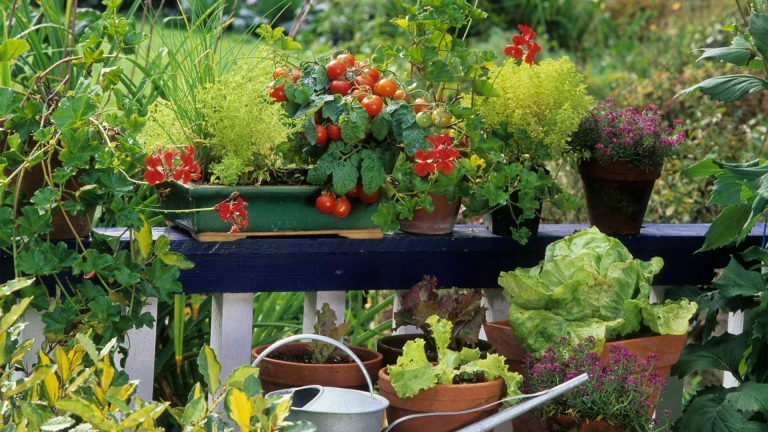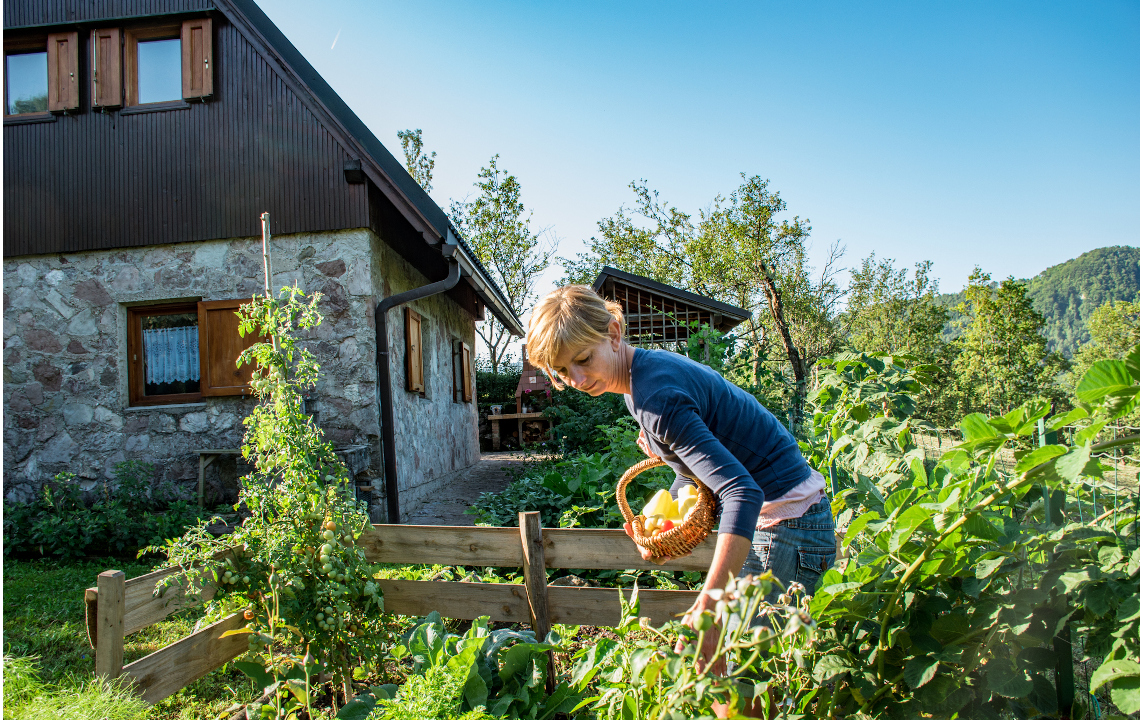
The word homestead often brings to mind several acres of land, a large barn, sprawling vegetable rows, livestock pastures, and enough room to disappear from your neighbors completely. That version of homesteading certainly exists, but it is far from the only way to build a more productive, self-reliant home. A surprisingly useful homestead can fit into a suburban backyard.
When space is limited, the goal changes. Instead of trying to reproduce a farm on a miniature scale, a small homestead works best when every area has a clear purpose. A raised bed grows vegetables intensively instead of occupying an enormous row. A dwarf fruit tree produces upward rather than spreading across half the yard. Chickens can contribute eggs, manure, and compost material from one carefully planned corner, while herbs near the kitchen provide something useful almost every day from only a few square feet.
This kind of homesteading is less about acreage and more about systems. Food scraps become compost. Compost feeds the garden. The garden produces vegetables and herbs. Fallen leaves become mulch. Rainwater may supplement irrigation where collection is appropriate and permitted. Fruit trees produce food while also adding shade or structure to the landscape. One part of the backyard begins supporting another rather than functioning as an isolated project.
That interconnected approach matters because a small property leaves little room for wasted space or overly complicated systems. If a project requires constant work but produces very little value for your household, it may not deserve prime backyard space. On the other hand, something as simple as a herb bed outside the kitchen door may be harvested several times every week and become one of the most productive areas on the property.
You also do not need to build everything at once. A strong backyard homestead can begin with one garden bed and a compost bin, then expand gradually as you learn what you actually use, enjoy, and have time to maintain. Here are ten practical backyard homestead ideas that can work on less than an acre — including much smaller suburban properties.
1. Build an Intensive Raised-Bed Vegetable Garden
If food production is one of your main homesteading goals, a well-designed vegetable garden is one of the most useful places to begin. Raised beds are particularly effective on smaller properties because they organize the growing area, make soil improvement easier to control, and allow vegetables to be planted more deliberately than they often are in large traditional rows.
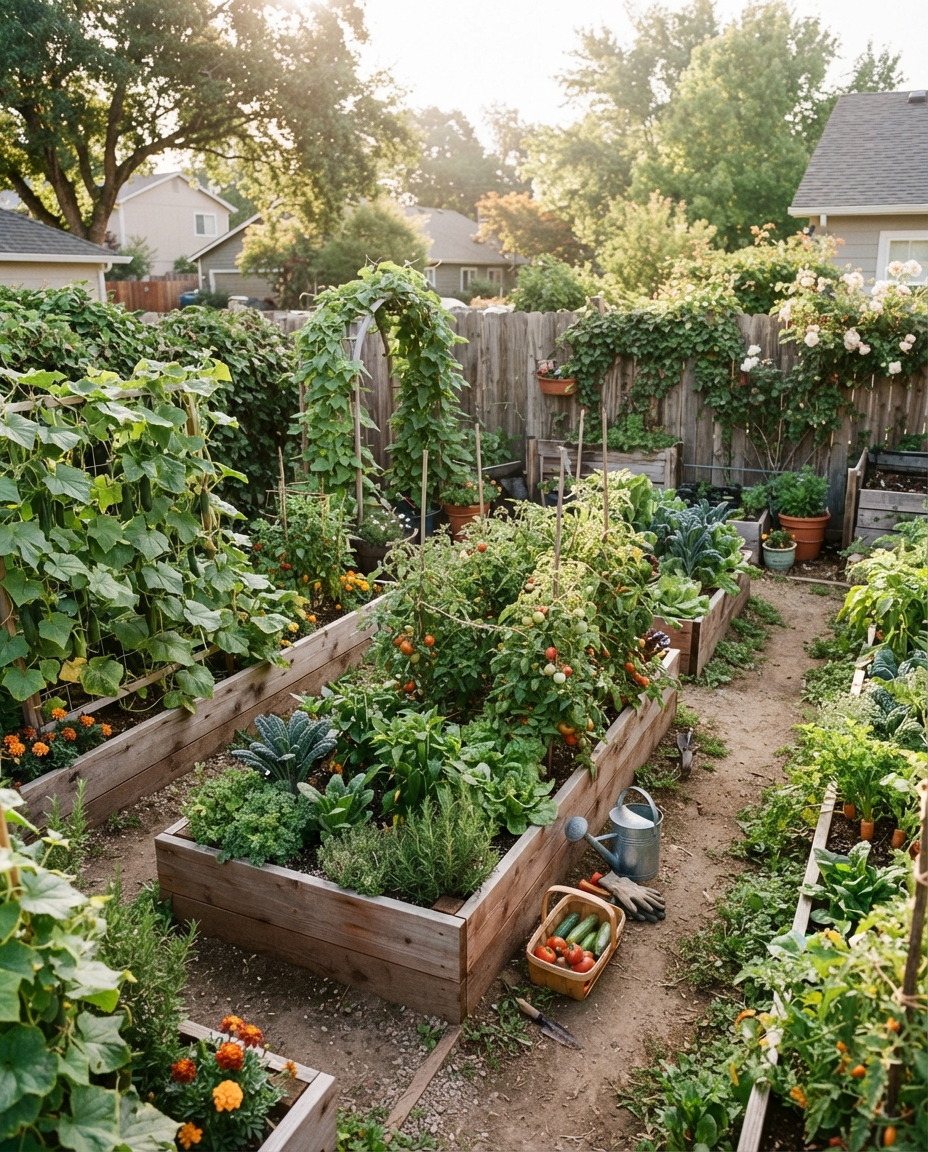
The key is not simply building as many beds as the backyard can physically hold. A productive layout leaves enough room for sunlight, access, irrigation, and mature plant size. Beds that can be reached from both sides should remain narrow enough that you never need to step into the growing soil, while beds against fences should generally be narrower because they can only be approached from one direction.
Within those beds, combine plants according to how they use space. Tall tomatoes can be supported vertically while basil or compact greens grow below. Cucumbers and pole beans can climb trellises rather than sprawl across pathways. Fast-growing radishes or lettuce can sometimes occupy space early in the season before slower crops become large enough to need it.
Succession planting makes a small garden considerably more productive. Instead of planting the entire bed once and allowing it to sit empty after harvest, prepare the next crop in advance. A section that grows spring lettuce might later hold bush beans, then return to greens when cooler weather arrives, depending on your climate.
A few well-managed beds can provide more practical food than a much larger garden that becomes too difficult to maintain.
Best for: Vegetables, fresh herbs, small properties, beginner homesteaders, and anyone who wants a high-value first project.
Start-small approach: Build one or two beds first, learn how much you actually enjoy maintaining them, and expand only when the existing space is consistently productive.
2. Grow Upward With Trellises and Vertical Structures
On a small homestead, horizontal space disappears quickly. Vertical space is usually far less competitive, which makes trellising one of the simplest ways to increase production without continually adding new beds. Pole beans, peas, cucumbers, and many indeterminate tomatoes can all be supported upward. Instead of allowing a cucumber vine to occupy several feet of soil surface, training it onto a sturdy trellis leaves more usable ground around the base for appropriately sized plants. The same principle can be applied along fences, shed walls, or the back edge of raised beds.
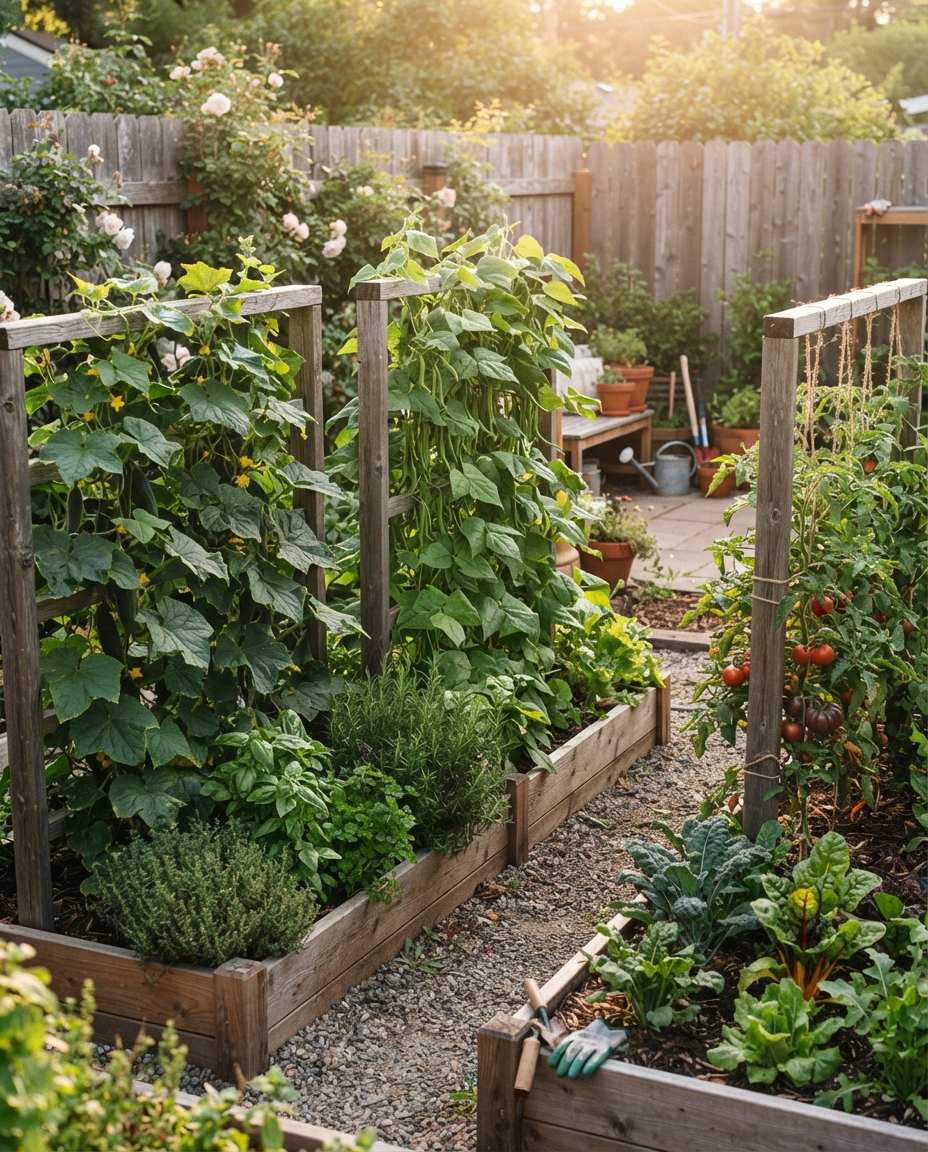
A vertical structure can also improve organization. Fruit becomes easier to see, harvesting can be simpler, and vines are less likely to disappear into neighboring crops. Good airflow around foliage may also be easier to maintain when plants are supported rather than allowed to collapse into a dense mass.
The structure itself should match the crop. Lightweight netting may be sufficient for peas, while vigorous cucumber vines or mature tomatoes need something substantially stronger. Build for the plant at its largest, not the seedling you see when the season begins.
Placement deserves attention as well. A mature wall of vines can cast significant shade, so think about where the sun moves across the yard before installing permanent supports. When vertical growing is planned deliberately, however, it can make a tiny vegetable plot feel much larger.
Best for: Narrow backyards, fence lines, cucumbers, pole beans, peas, tomatoes, and anyone trying to increase production without expanding the garden footprint.
3. Keep a Small Flock of Laying Hens Where Local Rules Allow
For many backyard homesteaders, chickens are the first livestock that makes a small property feel like a true working homestead. A modest flock does not require acres of pasture, and hens can contribute fresh eggs, manure for composting, and a steady supply of personality to the backyard.
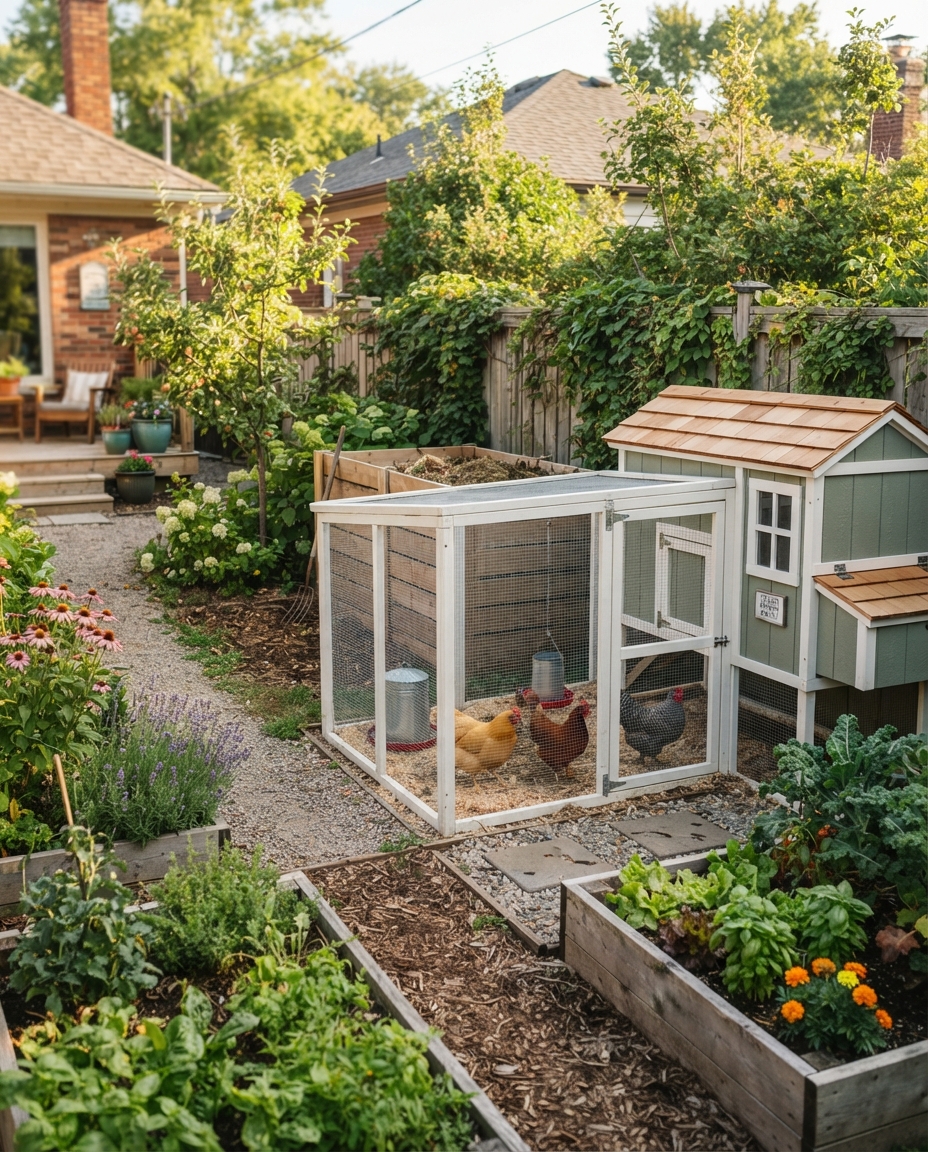
The important word is modest. A small yard rarely benefits from trying to keep the largest flock that can technically fit. More birds mean more feed, more bedding, more manure, more cleaning, more noise, and considerably greater pressure on the ground. It is usually better to keep a smaller flock comfortably than to crowd too many birds into the available space.
Housing should be planned around predator protection, ventilation, shade, dryness, and ease of cleaning rather than aesthetics alone. A beautiful coop that is difficult to maintain or insecure at night is not a successful homestead structure. Likewise, the run needs enough usable space that birds are not forced to live continually on muddy, heavily compacted ground.
Manure and bedding can become valuable garden inputs when composted appropriately rather than being treated purely as waste. This creates one of the classic small-homestead loops: kitchen and garden scraps supplement permitted flock treats, bedding and manure enter the compost system, and finished compost eventually returns nutrients to the garden.
Before buying birds, check local ordinances, HOA rules if applicable, and any restrictions involving flock size, coop placement, or roosters. Planning those details before the chickens arrive is considerably easier than solving them afterward.
Best for: Egg production, gardeners interested in integrated homestead systems, and households prepared for daily animal care.
4. Plant Dwarf Fruit Trees and Berry Bushes
Perennial food plants are especially valuable on a small homestead because they can produce for years without requiring the garden to be rebuilt each season. The challenge is choosing plants whose mature size actually fits the property.
Dwarf and semi-dwarf fruit trees can make far more sense than standard-sized trees in a small backyard. Apples, pears, peaches, plums, citrus in suitable climates, and other fruit trees may be available on rootstocks or in varieties that remain more manageable, although final size still varies significantly by species, rootstock, climate, and pruning.
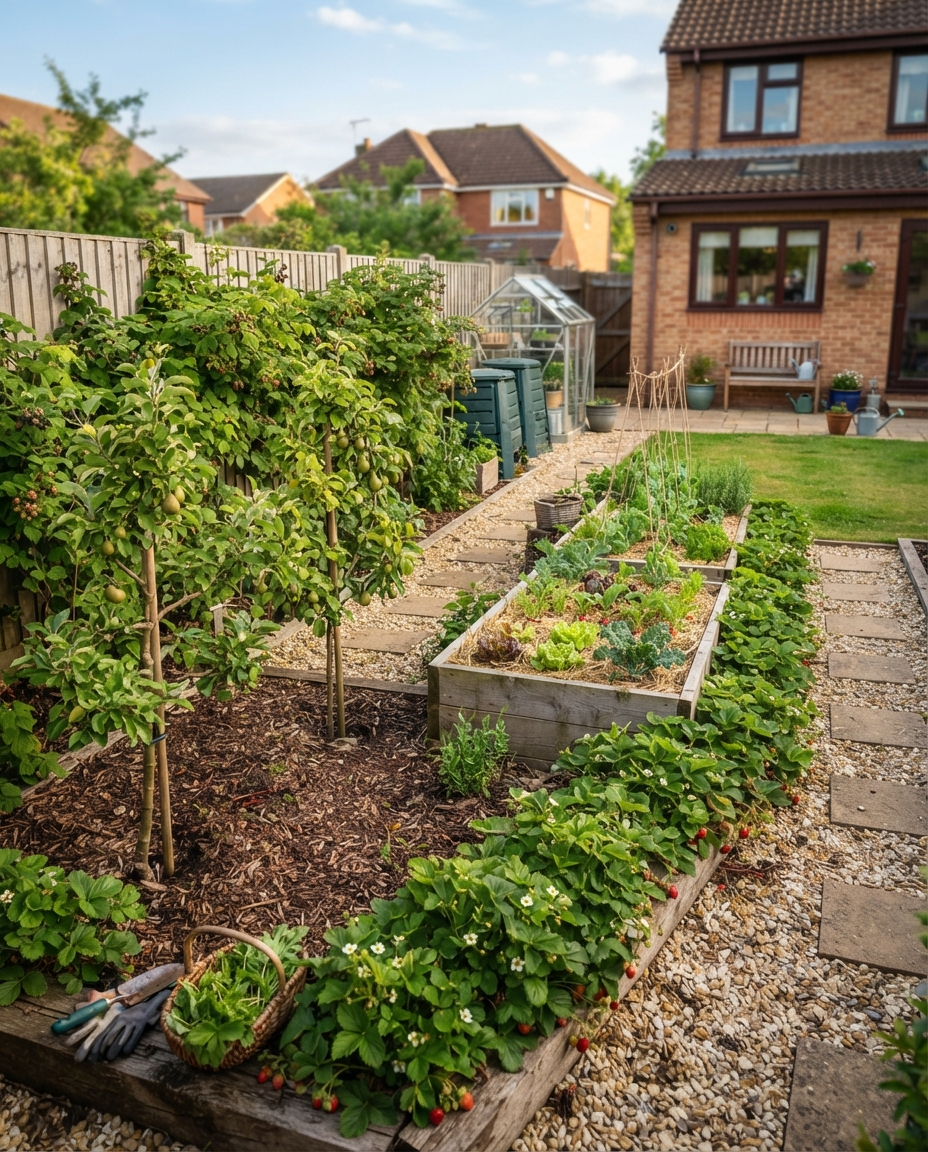
Think about the tree’s mature canopy before deciding where it belongs. A tiny nursery tree can make a corner look empty when planted, but it may eventually cast enough shade to change the growing conditions around several nearby garden beds.
Berry plants are another efficient use of space. Blueberries, raspberries, blackberries, currants, gooseberries, or strawberries may work depending on climate and local conditions. Some can be planted along property lines or trained onto supports rather than occupying the center of the yard.
Perennial crops also reward patience differently from annual vegetables. A tomato can produce within the same season, while a young fruit tree requires time to establish before reaching meaningful production. That makes early planting particularly worthwhile when you expect to stay in the same home for several years.
Best for: Long-term food production, edible landscaping, fence lines, and gardeners who want crops that return season after season.
5. Create a Compost System That Turns Waste Into Garden Fertility
A productive homestead constantly generates organic material. Vegetable trimmings, fallen leaves, old garden plants, grass clippings, chicken bedding where appropriate, and many kitchen scraps can either leave the property as waste or become part of a composting system.
On less than an acre, composting does not require a giant farm pile. A two-bin or three-bin setup can keep the process organized, while enclosed tumblers or compact bins may fit better in very small yards. The best system is the one you can access easily enough to use consistently.
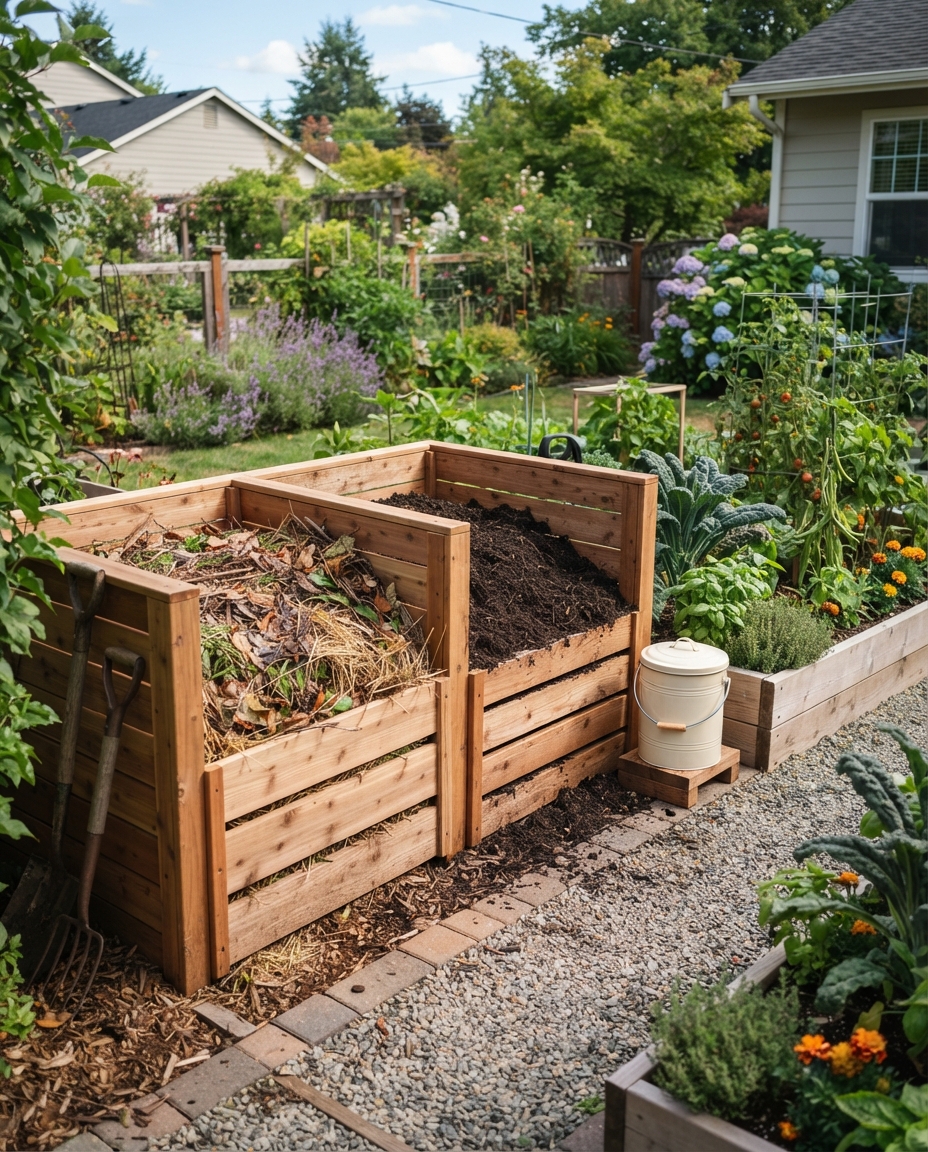
Composting works particularly well as part of the larger homestead rather than as an isolated project. Beds produce plant debris. Trees produce leaves. The kitchen produces vegetable scraps. These materials are combined and eventually returned to growing areas as finished compost, reducing the need to continually import every bit of organic matter from outside the property.
Location makes a difference. A compost area hidden so far from the house that nobody wants to carry kitchen scraps to it will probably be underused. At the same time, placing an unmanaged pile directly beside a patio is unlikely to make the backyard more enjoyable. A convenient but slightly screened corner is often ideal.
Good compost should be managed rather than treated as a place to dump everything organic. Balance carbon-rich and nitrogen-rich materials, maintain suitable moisture, and avoid adding materials that are inappropriate for your chosen composting method.
Best for: Gardeners, chicken keepers, leaf-heavy properties, and anyone who wants a more circular backyard system.
6. Build a Kitchen Herb Garden Close to the House
Herbs occupy relatively little space, yet they can be among the most frequently harvested crops on a backyard homestead. That makes their location particularly important.
Instead of placing every herb in the main vegetable garden simply because there is room there, consider creating a small dedicated bed or collection of containers near the kitchen. When basil, parsley, chives, thyme, rosemary, mint, cilantro, oregano, sage, and other frequently used herbs are only a few steps away, they become much easier to incorporate into everyday cooking.
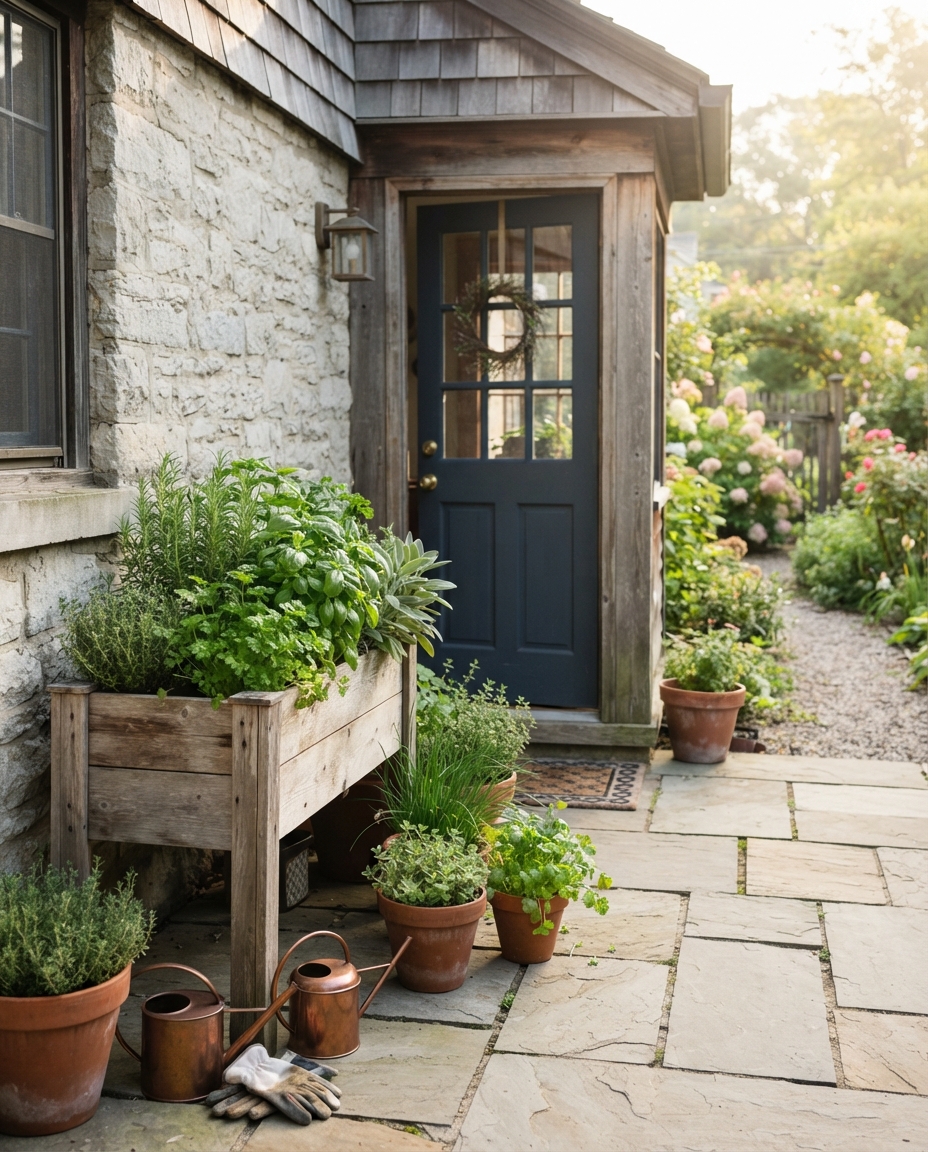
Different herbs have different growing requirements, so avoid assuming they all need identical treatment. Some prefer more moisture, while Mediterranean herbs such as rosemary and thyme generally appreciate well-drained conditions. Mint is notorious for spreading aggressively and is often easier to manage in its own container.
A kitchen herb garden can also occupy locations that would be too small for a major vegetable bed. A narrow strip beside a patio, a waist-high planter against the house, or several attractive pots can produce an impressive amount of usable harvest without consuming valuable lawn or play space.
The important measure of productivity is not weight. A small quantity of fresh herbs used repeatedly throughout the week can provide more household value than a larger crop that nobody regularly eats.
Best for: Home cooks, patios, tiny yards, beginners, and homesteaders looking for maximum usefulness from minimal space.
7. Collect Rainwater for Garden Use Where Appropriate
Water is one of the most important resources on a homestead, and even a small roof can direct a surprising amount of rain into gutters during a storm. Where local rules and conditions allow, rain barrels or similar collection systems can store some of that water for later use in the garden.
A basic system usually diverts water from a downspout into a covered container. The cover is important because open standing water can become a safety and mosquito problem. Overflow also needs to be directed somewhere appropriate so that a full barrel does not simply release water against the house foundation.
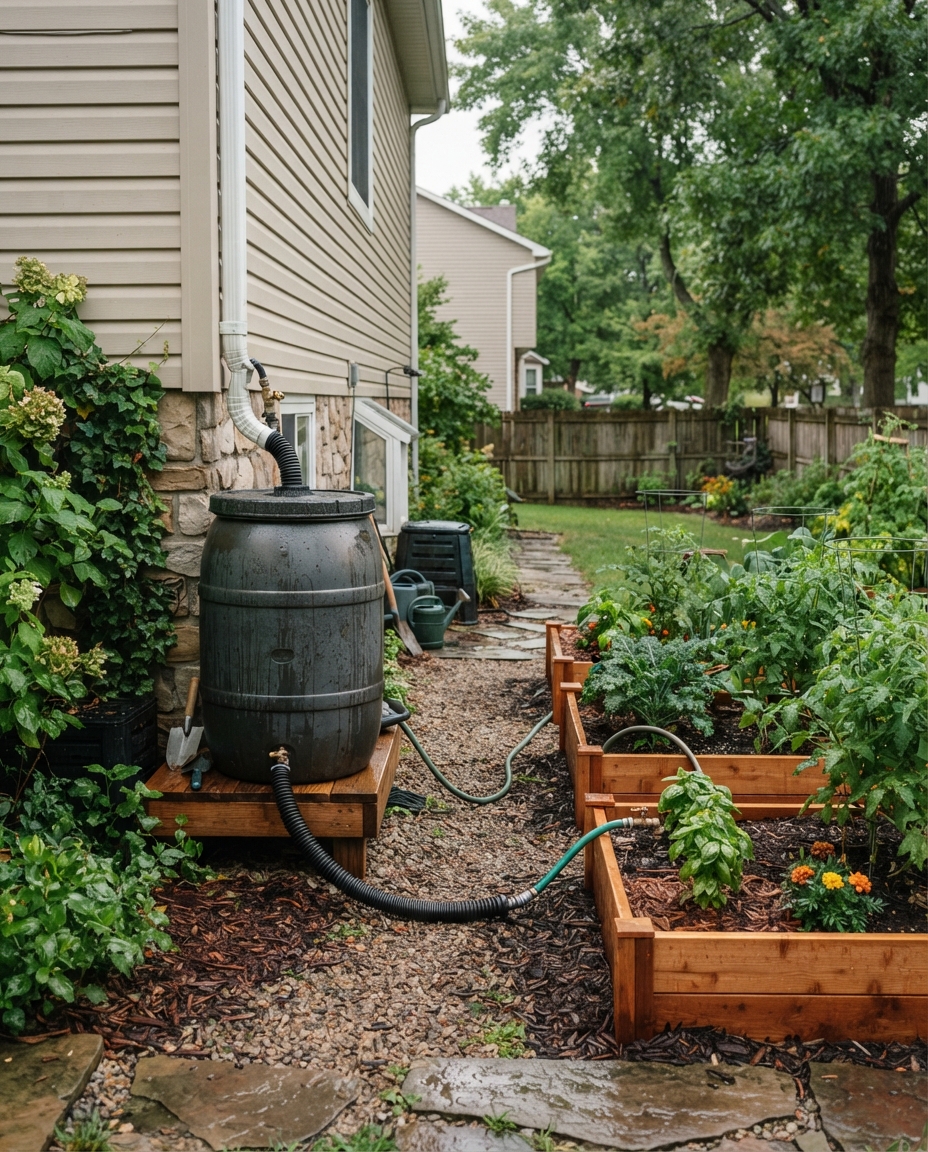
The usefulness of rainwater collection depends heavily on local rainfall patterns, storage capacity, garden size, and seasonal demand. A small barrel will not make a garden independent of municipal water through a long dry summer, but it can still supplement irrigation or provide water for containers and individual beds.
It also encourages closer attention to water use. Pairing stored rainwater with mulch, drip irrigation, and soil rich in organic matter can help the garden use available moisture more efficiently.
Because regulations differ by location, check local requirements before installing a system, particularly if you are planning substantial storage rather than a simple garden barrel.
Best for: Garden irrigation, dry periods between storms, small vegetable plots, and homesteaders trying to make better use of resources already falling on the property.
8. Use a Mini Greenhouse, Cold Frame, or Seed-Starting Area
Growing your own seedlings can give a small homestead far more control over what enters the garden. Instead of relying entirely on whatever transplants happen to be available locally, you can start specific vegetable varieties, stagger planting dates, and prepare replacement crops for succession planting.
You do not need a full-size greenhouse to make this useful.
A small shelving greenhouse, cold frame, protected seed-starting bench, or indoor seed-starting setup with suitable lighting may be enough for a backyard property. The purpose is not to create a commercial propagation system; it is to keep the next generation of plants ready while the existing garden is still producing.
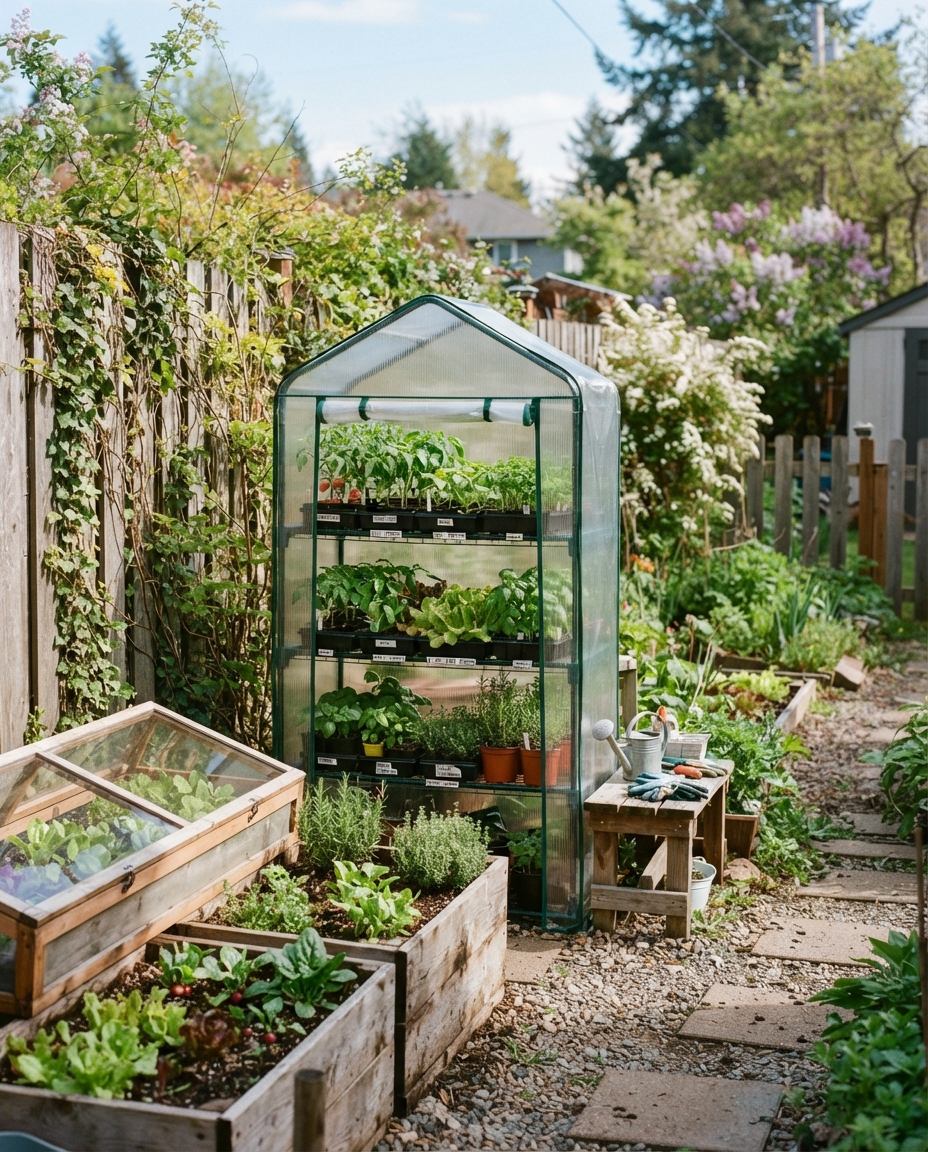
This becomes particularly useful in a small space because empty soil represents lost opportunity. If a bed of lettuce is nearly finished and you already have young transplants ready, the transition to the next crop can happen quickly rather than leaving the area unused for weeks.
Cold frames and other simple season-extension structures may also help protect certain crops during cooler conditions, although what works depends strongly on local climate.
A compact propagation area turns time into another resource the homestead can manage. Instead of treating each garden bed as a single annual planting, you can begin thinking in overlapping seasons.
Best for: Succession planting, gardeners who grow from seed, small-space vegetable production, and anyone wanting a longer or more organized growing season.
9. Grow a Pollinator-Friendly Strip Instead of Leaving Every Edge Empty
A backyard homestead does not need to devote every square foot exclusively to food crops. A narrow strip of flowering plants can support a more diverse garden while making the property more attractive.
Flowers that provide nectar and pollen can bring bees, butterflies, hoverflies, and other beneficial insects into the garden. Which plants are most useful depends on your region, so locally appropriate species and flowering times matter more than simply buying a packet labeled “pollinator mix.”
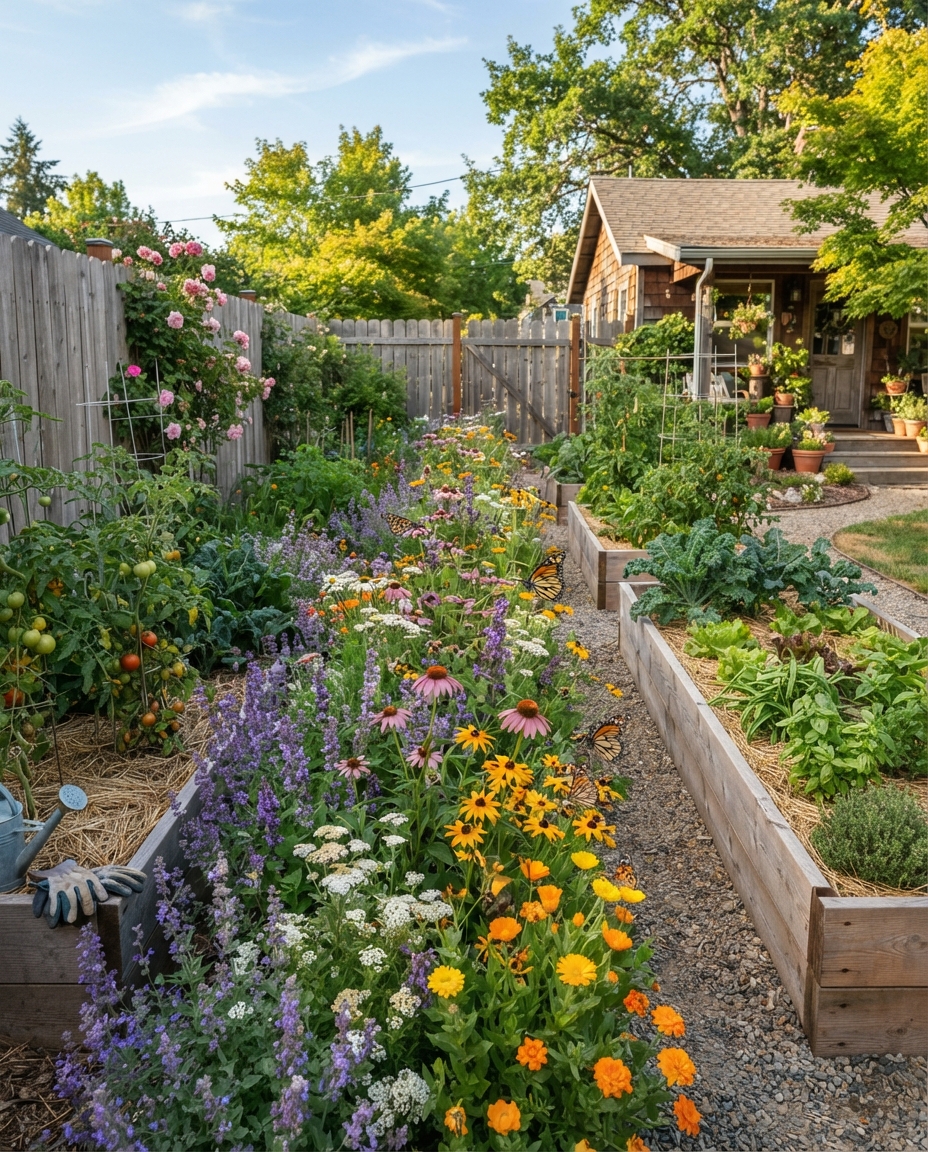
The best planting provides flowers across as much of the growing season as practical rather than producing one short explosion of bloom. Different flower shapes and heights can also make the strip more useful to a wider range of insects.
In a tiny backyard, the pollinator area does not need to become a separate meadow. A narrow border along a fence, flowers at the ends of raised beds, or flowering herbs allowed to bloom can all contribute without consuming the main vegetable-growing zone.
Some edible plants can perform both roles. Herbs such as thyme, oregano, chives, and others can produce useful flowers when allowed to bloom, while nasturtiums and calendula may fit beautifully into productive garden designs where suitable.
A homestead is more resilient when it is not simply a collection of isolated crops. Creating habitat, even on a small scale, adds another layer to the system.
Best for: Vegetable gardens, edible landscapes, gardeners who want more biodiversity, and small yards where ornamental and productive planting need to coexist.
10. Create a Small Harvest-and-Preservation Station
Growing food is only part of a productive homestead. Once the garden begins producing heavily, the next challenge is handling what you harvest before it becomes waste.
A small outdoor or utility-area harvest station can make that process much easier. It might be nothing more than a sturdy table near the garden where vegetables can be sorted, baskets stored, dirty roots brushed off, and produce prepared before it enters the kitchen.
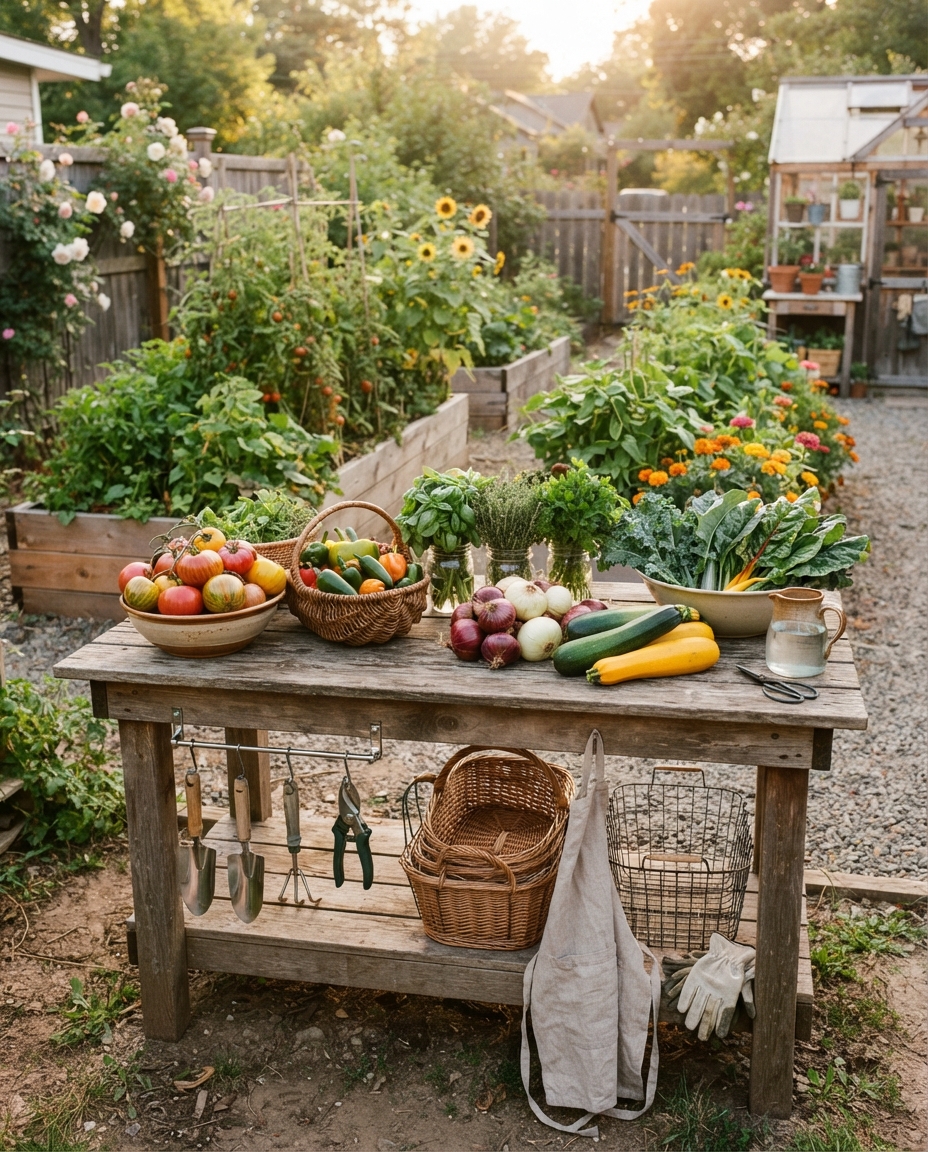
Inside the home, designate a shelf, cabinet, or pantry area for the homestead harvest. Dried herbs, properly preserved foods, onions, garlic, winter squash, seeds, jars, and harvest baskets become much easier to manage when they have a consistent place.
Food preservation should match what you actually eat and your willingness to follow safe methods. Freezing and drying can be practical starting points for many households. If you choose home canning, follow tested recipes and current food-safety guidance from a reliable authority rather than improvising processing times or ingredient ratios.
This part of homesteading is easy to overlook because a pantry shelf is less visually impressive than a vegetable garden. But production only becomes truly useful when the household can eat, store, or preserve what the backyard produces.
A smaller garden whose harvest is used completely can be more successful than a huge garden that produces more than the household knows what to do with.
Best for: Gardeners expanding beyond casual growing, families preserving seasonal harvests, and homesteaders who want less food waste.
How Much Land Do You Actually Need for a Backyard Homestead?
There is no minimum acreage that suddenly turns a household into a homestead.
A quarter-acre property, a typical suburban lot, or even a much smaller backyard can support meaningful food production when the available space is organized carefully. What changes with property size is not whether homesteading is possible but which systems are realistic.
Large livestock, significant grain production, and extensive orchards obviously require more land. Vegetables, herbs, berries, dwarf fruit trees, composting, seed starting, and a small permitted poultry flock can operate at a completely different scale.
The more useful question is therefore not, “Do I have enough land?” but, “Which homestead activities create the greatest value within the land I actually have?”
A family that cooks with fresh vegetables every day may gain tremendous value from four carefully managed raised beds. Someone who rarely eats vegetables but uses eggs constantly may find that a small chicken flock contributes more to their household. Another gardener may care most about fruit, herbs, composting, or preserving seasonal food.
Homesteading becomes much easier when it is designed around real household habits rather than a checklist of things a homestead is supposedly required to include.
How to Divide a Small Homestead Into Zones
A productive small property benefits from thinking in zones of frequency.
The things you use most often should generally be easiest to reach.
Herbs harvested while cooking belong close to the kitchen. Compost should be convenient enough that adding scraps does not feel like a chore. The vegetable beds you inspect almost every day should have a clear path from the house.
Less frequently used areas can sit farther away. Fruit trees, pollinator plantings, storage, or compost that is already finishing may not require constant daily access.
Animal areas need special consideration because they involve regular feeding, watering, cleaning, and security checks. Placing a chicken coop in the most distant inconvenient corner simply to hide it may seem attractive initially, but the location becomes much less appealing when you need to walk there every morning and evening in bad weather.
Think about movement between systems as well. If the compost pile receives garden waste and chicken bedding, locating it reasonably near both areas reduces unnecessary hauling. If rainwater will irrigate garden beds, the storage system should be placed where water can actually be moved efficiently.
The goal is not to fit the largest number of features into the property.
It is to reduce the amount of effort required for the features you choose to maintain.
What Should You Start With First?
The strongest small homesteads usually grow gradually.
Starting with ten new systems at once can turn an exciting project into an expensive list of unfinished chores. Each new activity creates its own maintenance schedule, learning curve, equipment needs, and potential problems.
For many households, a vegetable garden is a logical first project because it teaches several foundational skills at once: soil management, irrigation, planting schedules, pest observation, harvesting, and seasonal planning. Adding a compost bin alongside the garden creates an immediate second system that supports the first.
Herbs and berries can come next because they occupy relatively little space. Fruit trees are worth planting early if you know where you want them, since they require time to establish.
Animals should usually come after you have thought seriously about the daily commitment. Plants can survive an occasional schedule change more easily than livestock. Chickens still need secure housing, food, water, and attention whether you are busy, tired, traveling, or dealing with bad weather.
A useful progression might be:
Year one: vegetables, herbs, compost, and irrigation.
Then: berries, fruit trees, seed starting, and season extension.
Later: poultry or other systems once the property layout and your available time are better understood.
There is no prize for building the entire homestead in one weekend.
A smaller system that actually works is more valuable than a larger one that becomes impossible to maintain.
How to Make a Tiny Homestead More Productive Without Making It Crowded
Productivity and density are not the same thing. A backyard can be packed with beds, trellises, fruit trees, chicken runs, rain barrels, compost bins, and containers yet still function poorly because there is no room left to move, harvest, prune, clean, or simply enjoy the space.
Every homestead feature needs an operational footprint in addition to its physical footprint. A raised bed may be four feet wide, but you also need a path beside it. A fruit tree occupies the area where its trunk is planted, but the mature canopy requires much more room. A chicken coop needs access for cleaning. A compost bin needs enough space to turn or remove finished material.
Plan using mature dimensions rather than how small everything appears when first installed. Vertical growing, succession planting, dwarf varieties, and multipurpose zones are usually more effective than continually adding structures. One trellis that doubles the usefulness of an existing bed is often smarter than building another bed that eliminates the last comfortable walkway.
Keep some open space. A homestead is still a home, and a backyard that remains pleasant to use is much easier to maintain for years than one that has been filled to its absolute physical limit.
Turning Waste Streams Into Useful Homestead Inputs
One of the most satisfying parts of small-scale homesteading is discovering how many ordinary household and garden materials can serve another purpose before leaving the property. Autumn leaves can become mulch or compost carbon. Vegetable scraps can enter an appropriate compost system. Pruned plant material may be composted when suitable. Chicken bedding can eventually contribute to compost after proper management. Cardboard may have limited garden uses when it is clean, appropriate, and used thoughtfully.
The point is not to keep every possible material. A homestead should not become a storage yard for things that might theoretically be useful someday. The goal is to identify predictable waste streams that can safely and realistically become inputs for systems you already maintain.
This circular approach reduces hauling and purchasing while making the property feel more interconnected. You begin noticing that the garden is not merely producing vegetables. It is producing plant material for compost. The compost is not merely disposing of scraps. It is producing organic matter for the beds. The trees do not simply drop leaves. Those leaves may become part of the next season’s soil-building process. Even on less than an acre, those small cycles can add up.
Don’t Forget Local Rules Before Adding Animals or Structures
Small homesteading still happens within local regulations. Before building permanent structures or bringing livestock onto the property, check the rules that apply where you live. Municipal regulations may address chickens, roosters, bees, accessory structures, setbacks, fencing, rainwater systems, composting, or the number and type of animals permitted.
Homeowners associations may impose additional restrictions where they exist. This research is much easier to complete before spending money on a coop, greenhouse, shed, or flock. Even when something is legal, neighbors are worth considering. Clean animal areas, thoughtful placement, good odor control, secure feed storage, and reasonable noise management help a backyard homestead coexist with a suburban environment. The goal is to create a productive property without making it unpleasant for the people living immediately around it.
A Simple Less-Than-an-Acre Homestead Layout
Imagine a modest suburban backyard rather than an idealized farm. The sunniest section contains three or four raised vegetable beds with trellises running along the side least likely to shade shorter crops. A drip line connects those beds to the main water source, while mulch helps reduce rapid soil drying. A narrow herb planter sits near the kitchen door.
The rear fence carries berries and perhaps one or two appropriately sized fruit trees with enough room to reach mature dimensions. One corner contains a compact compost station screened by plants or fencing. If local rules and available space make chickens practical, their secure coop and run occupy another carefully selected section with enough access for regular cleaning. Flowers weave through the borders rather than occupying a separate ornamental garden. A small rain barrel collects appropriate roof runoff where permitted, and a mini greenhouse or seed-starting area prepares replacement plants for the vegetable beds.
The goal is not to make every visible square foot prove its productivity. It is to create a backyard in which several small systems work together without making the property feel like a collection of equipment. That is what makes a small homestead sustainable in the practical sense: you can actually live there while it produces.
FINAL THOUGHTS
You do not need five acres to start homesteading. You need a clear idea of what you want your home to produce and a realistic understanding of the space, time, and energy you can give it. On less than an acre, that might mean vegetables climbing trellises above carefully planned raised beds. It might mean collecting eggs from a small flock each morning. It could mean strawberries beside the patio, herbs outside the kitchen, a few dwarf fruit trees along the fence, compost quietly turning yesterday’s scraps into tomorrow’s soil, and seedlings waiting for their turn in the garden.
None of those systems are enormous. Together, however, they can change how productive a home feels. The strongest backyard homestead is not the one with the longest list of projects. It is the one where the systems are used consistently, the harvest actually reaches the kitchen, the workload remains manageable, and the property becomes a little more useful each season.
Start with one thing that genuinely matters to your household. Get it working well. Then add the next piece. A homestead does not need to begin with acreage. Sometimes it begins with one raised bed outside the back door.