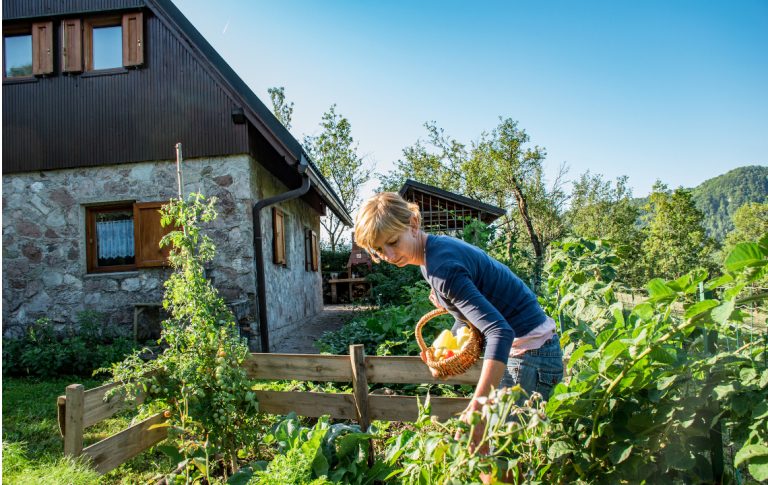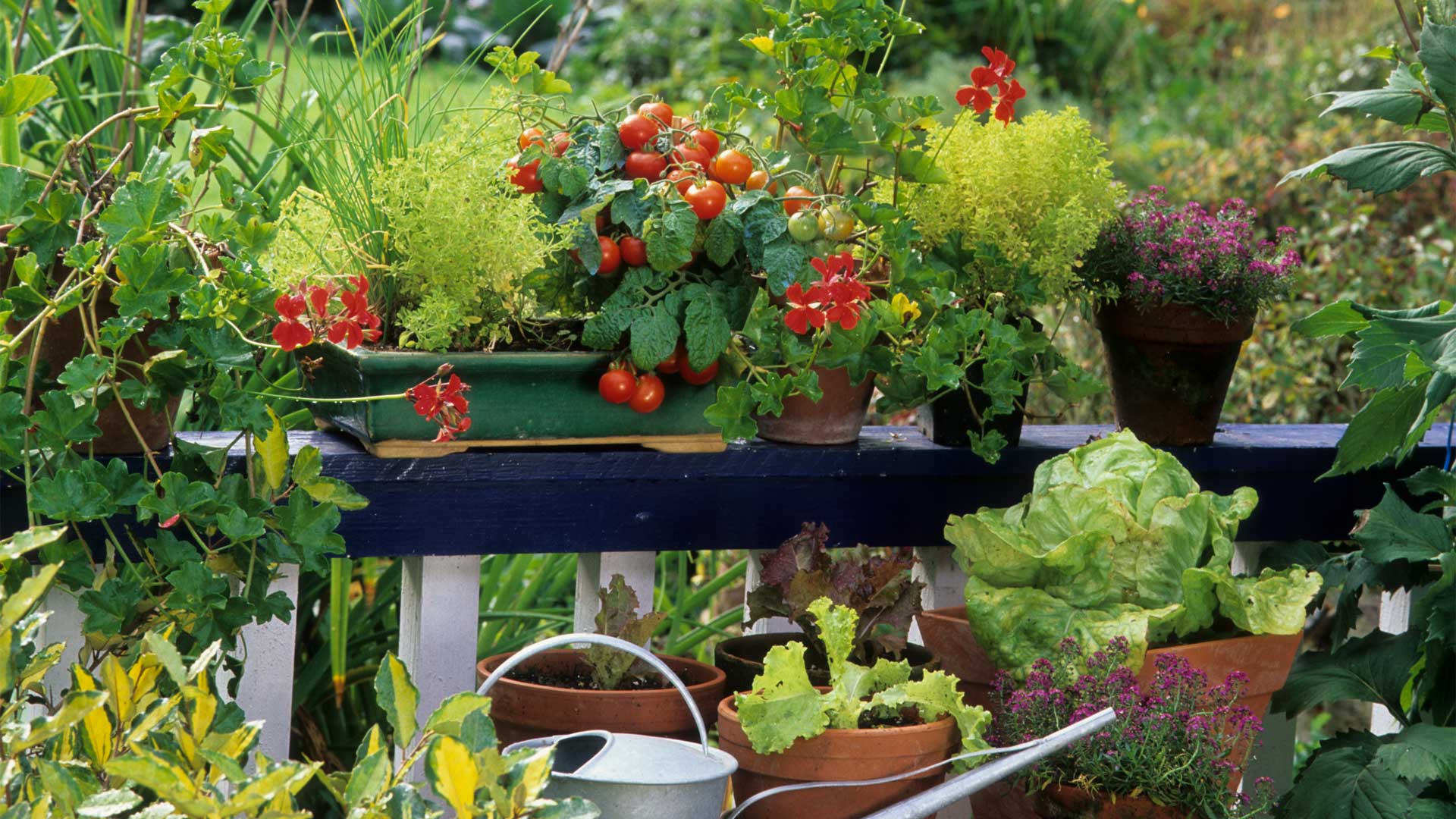
A self-sufficient backyard does not need to look like a miniature farm. You do not need acres of land, a barn, livestock pastures, an enormous orchard, or enough vegetable beds to feed an entire neighborhood. On a small property, self-sufficiency works differently. The goal isn’t to produce everything your household needs. The goal is to reduce how much you need to buy, make better use of the resources already available at home, and create a backyard where several small systems support one another.
That distinction matters because trying to force a full-scale homestead into a small suburban yard usually creates more frustration than independence. Beds become overcrowded. Fruit trees are planted too close together. Chickens occupy more space than expected. Compost piles become difficult to manage, and the property slowly fills with projects that require more maintenance than the household can realistically provide. A stronger approach is to focus on efficiency.
A four-foot raised bed that produces salad greens, herbs, peppers, and beans throughout several parts of the year may contribute more to everyday meals than a much larger garden filled with crops nobody regularly eats. One well-placed dwarf fruit tree may be more useful than three standard trees planted too closely. A compost bin can turn kitchen and garden waste into material that supports the vegetable beds. Rainwater collected from a roof may reduce how much treated water is needed for irrigation. A small flock of hens, where permitted, can provide eggs while contributing bedding and manure to a properly managed compost system. This is what makes a backyard more self-sufficient: connections between systems.
Instead of thinking about a vegetable bed, compost pile, fruit tree, rain barrel, chickens, herbs, and food storage as separate hobbies, think about how they can support one another. Fallen leaves can become compost or mulch. Finished compost can improve garden soil. The garden produces food and plant residues. Herbs near the kitchen reduce the need to buy small bunches that often go unused. Surplus produce can be frozen or preserved rather than wasted. Seed from suitable open-pollinated crops can sometimes become part of the next season’s garden.
A small property will always have limits, but those limits can encourage smarter decisions. Every square foot should have a reason for being there, and every system should justify the time, money, water, and space it requires. The fifteen ideas below are designed around that principle. Some increase food production. Others reduce waste, conserve resources, or help the household depend less on constant outside inputs. Together, they can turn an ordinary backyard into a much more productive and resilient part of the home.
1. Build a High-Value Vegetable Garden Instead of Trying to Grow Everything
The fastest way to make a backyard more self-sufficient is usually to grow some of the food your household already buys regularly. The mistake is assuming that every vegetable deserves equal space. Small gardens become much more productive when crops are chosen according to household value rather than tradition.
If your family buys bags of salad greens every week, lettuce, arugula, spinach, kale, and green onions may deserve more space than a crop you eat twice a year. If tomatoes, peppers, basil, and cucumbers are constantly used in the kitchen, those crops can replace a meaningful amount of grocery-store produce during the growing season.
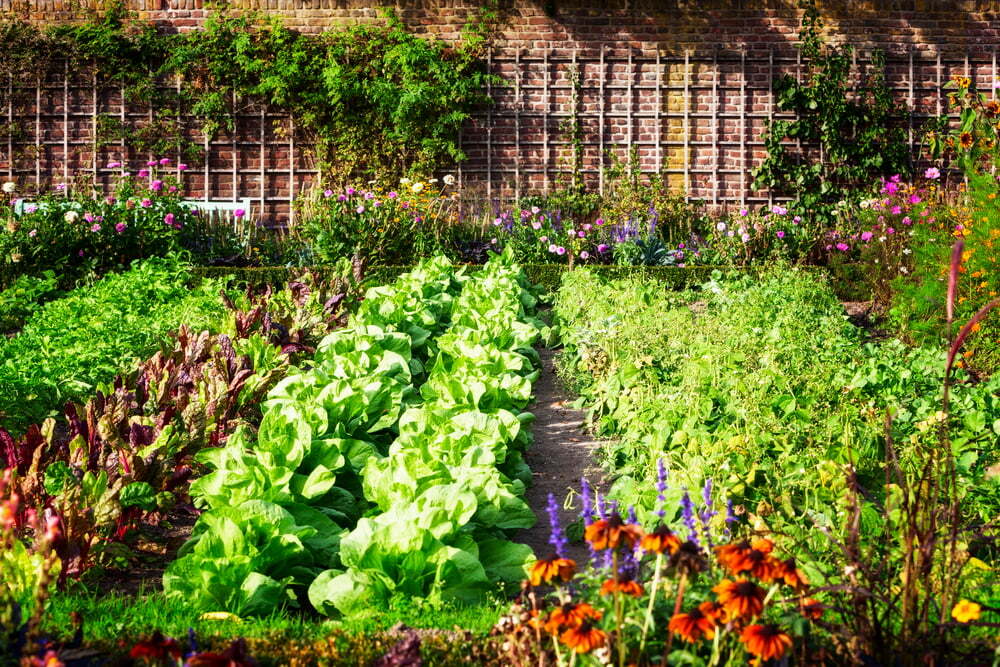
Value also includes how much food a plant can produce from a given footprint. Pole beans use vertical space efficiently. Indeterminate tomatoes can produce over a long period when supported well. Herbs can be harvested repeatedly from a small area. By contrast, crops that take months to produce one relatively inexpensive item may be less attractive when space is extremely limited.
This does not mean you should calculate every vegetable according to supermarket prices. Enjoyment matters. If growing potatoes or pumpkins is one of the reasons you love gardening, that has value too. But if the goal is self-sufficiency, the core of the garden should usually be built around foods that are useful, productive, and realistic for your climate.
Succession planting makes this strategy even stronger. Instead of treating each bed as one crop per year, replant sections when earlier vegetables are harvested. Cool-season greens may be followed by beans, then replaced with another cool-season crop later if the climate allows.
High-Value Crop Comparison for Small Gardens
| Crop | Space Efficiency | Repeat Harvest Potential | Self-Sufficiency Value |
|---|---|---|---|
| Leaf lettuce | High | High with repeated sowing | Excellent for frequent salads |
| Pole beans | Very high | High | Uses vertical space well |
| Tomatoes | High when trellised | High | Useful fresh and for preservation |
| Peppers | High | High | Compact and productive |
| Culinary herbs | Very high | Very high | Replaces frequently purchased small quantities |
| Cucumbers | High when trellised | High | Productive from limited soil area |
| Zucchini | Moderate-low | Very high | Productive but large plant |
| Pumpkins | Low | Low | Require substantial vine space |
| Potatoes | Moderate | One main harvest | Useful but need more bed area |
Best approach: Begin with the vegetables you buy most often, then prioritize varieties that fit the space and climate.
2. Grow Vertically Before Adding More Garden Beds
When the backyard is small, the first response should not always be building another raised bed. Many crops can use the air above the garden far more efficiently than the soil beside them. Pole beans, cucumbers, peas, and indeterminate tomatoes are especially well suited to vertical systems. A cucumber vine allowed to spread naturally can consume several feet of bed and path space, while the same plant trained onto a sturdy trellis concentrates much of its foliage vertically.
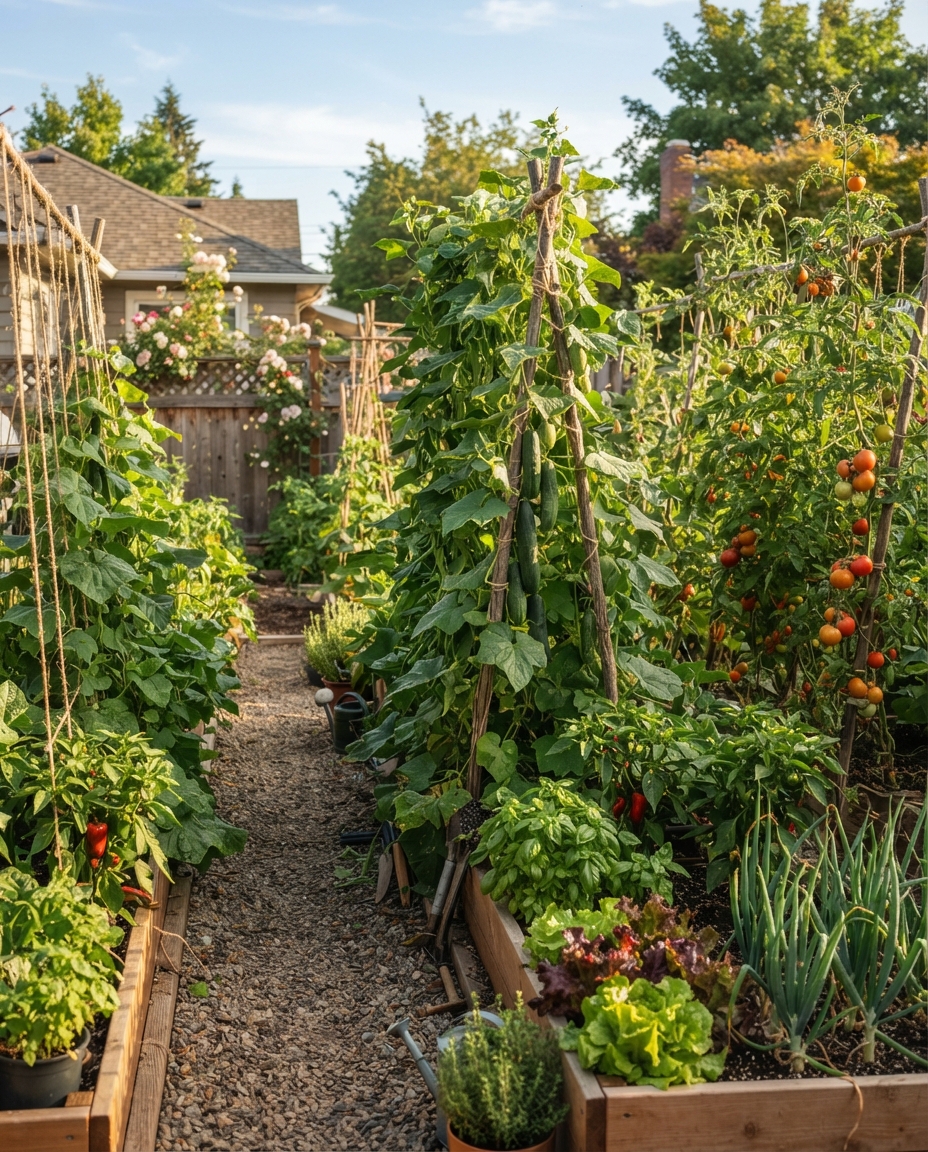
Vertical growing does more than free space. It makes many crops easier to inspect and harvest, keeps vines from disappearing into pathways, and creates opportunities to grow shorter crops nearby as long as sunlight and root competition are considered. Trellis placement should be deliberate. A mature cucumber or bean wall may be several feet tall and dense enough to cast significant shade. In many Northern Hemisphere gardens, placing taller structures toward the north side of a growing area can reduce shade across shorter crops, although real backyard conditions should always be observed directly.
Strength also matters. Lightweight netting can support peas but may not be appropriate for a mature tomato or heavy squash vine. A trellis should be designed for the crop at peak-season weight, including foliage, fruit, wind, and rain.
Good Vertical Crops for Small Backyards
| Crop | Best Support | Training Required |
|---|---|---|
| Pole beans | String, wire mesh, arch | Low |
| Peas | Netting or mesh | Low |
| Cucumbers | Rigid mesh or A-frame | Moderate at first |
| Indeterminate tomatoes | String, stake, panel | High |
| Small gourds | Reinforced mesh | Moderate |
| Some melons | Strong trellis | Moderate; fruit may need support |
Self-sufficiency advantage: Vertical growing increases the productive capacity of existing beds before more land is sacrificed.
3. Create a Dedicated Kitchen Herb Garden Near the House
Herbs are one of the best examples of a crop whose usefulness is much greater than its physical size. A small herb bed can replace dozens of supermarket bunches across a season while occupying only a fraction of the space required by many vegetables. Basil, parsley, chives, thyme, rosemary, oregano, cilantro, dill, sage, and mint can all be valuable depending on how your household cooks.
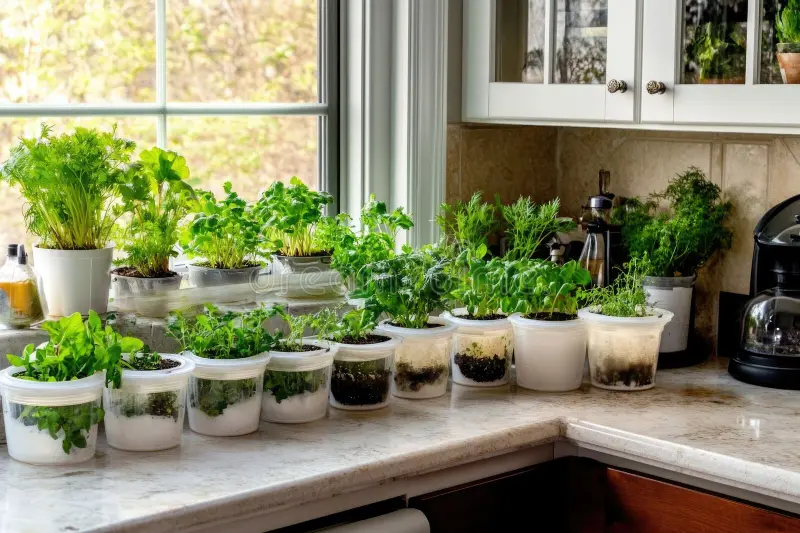
Location is critical. An herb garden in the farthest corner of the property may technically produce plenty, but it is much less likely to be used regularly. Herbs harvested during meal preparation should ideally be close enough to the kitchen that gathering a handful takes less than a minute.
Different herbs should not automatically be treated as though they need identical conditions. Mediterranean herbs such as rosemary and thyme often prefer well-drained conditions, while parsley or cilantro may tolerate and sometimes prefer more consistent moisture. Mint spreads aggressively and is usually easier to control in a container rather than planted freely into a small garden bed.
Herbs are also excellent candidates for containers, vertical planters, patio borders, and narrow beds where full vegetable crops would be impractical. Their self-sufficiency value comes from frequency of use. A small amount of parsley harvested three times a week can be more valuable to a household than a larger crop harvested once and forgotten.
Best for: Cooks, small patios, narrow backyard edges, and anyone looking for high productivity from very little space.
IMAGE PROMPT
Photorealistic kitchen herb garden positioned directly beside a back door, narrow raised planter and several terracotta containers filled with basil, parsley, chives, rosemary, thyme, oregano, cilantro, dill, and sage, realistic small home patio, warm morning light, convenient productive layout, elegant practical homestead aesthetic, vertical 4:5, no text or logos.
4. Plant Dwarf Fruit Trees Instead of Full-Size Trees
Fruit trees can transform a backyard into a long-term food-producing landscape, but the wrong tree can overwhelm a small property. Standard fruit trees may eventually develop large canopies and root systems that compete with garden beds, shade large portions of the yard, or create maintenance challenges. Dwarf and semi-dwarf trees can provide a much better balance between production and size, although the final dimensions still depend on species, rootstock, climate, pruning, and growing conditions.
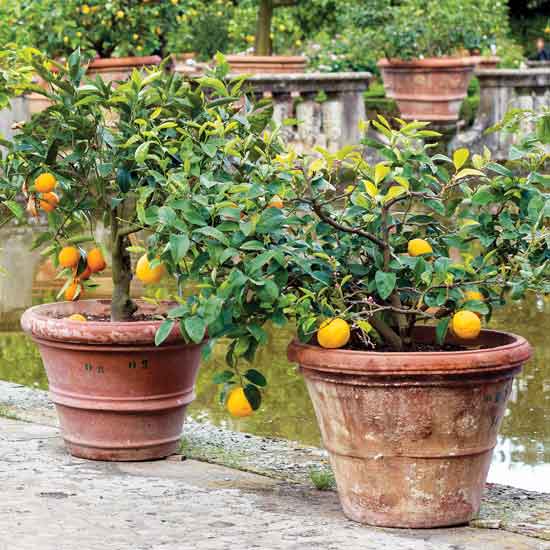
Apples, pears, peaches, plums, figs, citrus in appropriate climates, and other fruits may all be available in smaller forms. Before buying, investigate the mature dimensions rather than trusting the word “dwarf” alone. Pollination requirements matter as well.
Some fruit trees are self-fertile, while others produce more reliably when a compatible pollination partner is nearby. A small property cannot afford to discover several years later that a tree was planted without the pollination conditions it needs. Fruit trees also create opportunities for layered growing. The sunny area beneath or around an appropriately managed tree may support herbs, strawberries, flowers, or other low-growing plants depending on the tree, root competition, and available light.
The key is long-term planning. A young fruit tree occupies little space, but the correct location should be chosen according to what the canopy may look like five or ten years later.
Questions to Ask Before Buying a Fruit Tree
| Question | Why It Matters |
|---|---|
| What is the mature size? | Determines whether the tree fits long-term |
| Is it self-fertile? | May affect whether a second variety is needed |
| Is the climate suitable? | Influences flowering and fruiting |
| How much sun does it need? | Determines placement |
| When does it fruit? | Helps stagger harvests |
| What pruning is required? | Affects long-term maintenance |
IMAGE PROMPT
Photorealistic small backyard edible landscape with two compact, well-pruned dwarf fruit trees integrated near raised vegetable beds, realistic small apple or peach tree carrying modest fruit, berry bushes along fence, open lawn and patio still visible, warm spring sunlight, balanced productive suburban homestead design, vertical 4:5, no text or logos.
5. Add Berry Bushes Along Fences and Property Edges
Berry crops are particularly useful in a small self-sufficient backyard because many can occupy edges rather than the central garden. Raspberries, blackberries, blueberries, currants, gooseberries, strawberries, and other berries may work depending on climate and soil. Some grow as shrubs, others produce canes, and strawberries can function almost like ground-level edible borders.
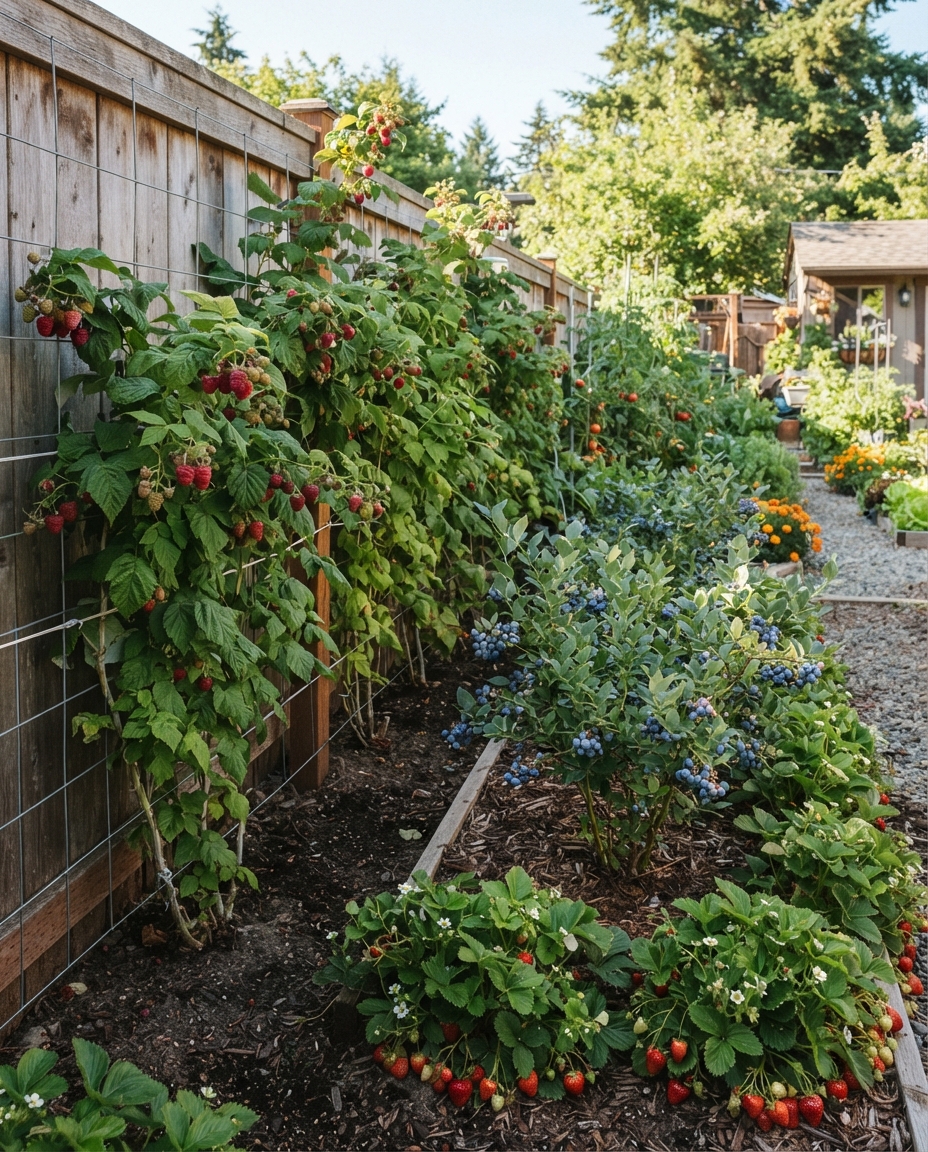
The key is choosing the right crop for the site. Blueberries have specific soil acidity requirements that should not be ignored simply because they look attractive at the garden center. Raspberries and blackberries can spread vigorously and may need strong management or dedicated supports. Strawberries remain low but can produce runners that slowly move beyond their original planting area.
Where appropriate, berry plants can turn a sunny fence line into a perennial food-producing zone without consuming the central vegetable garden. Their harvest can also be used in several ways. Berries may be eaten fresh, frozen, dried where appropriate, or preserved using safe methods. This flexibility increases their value in a household that wants to extend the usefulness of seasonal food.
Self-sufficiency advantage: A permanent berry planting can produce repeatedly from land that might otherwise remain ornamental or unused.
6. Build a Compost System That Feeds the Garden
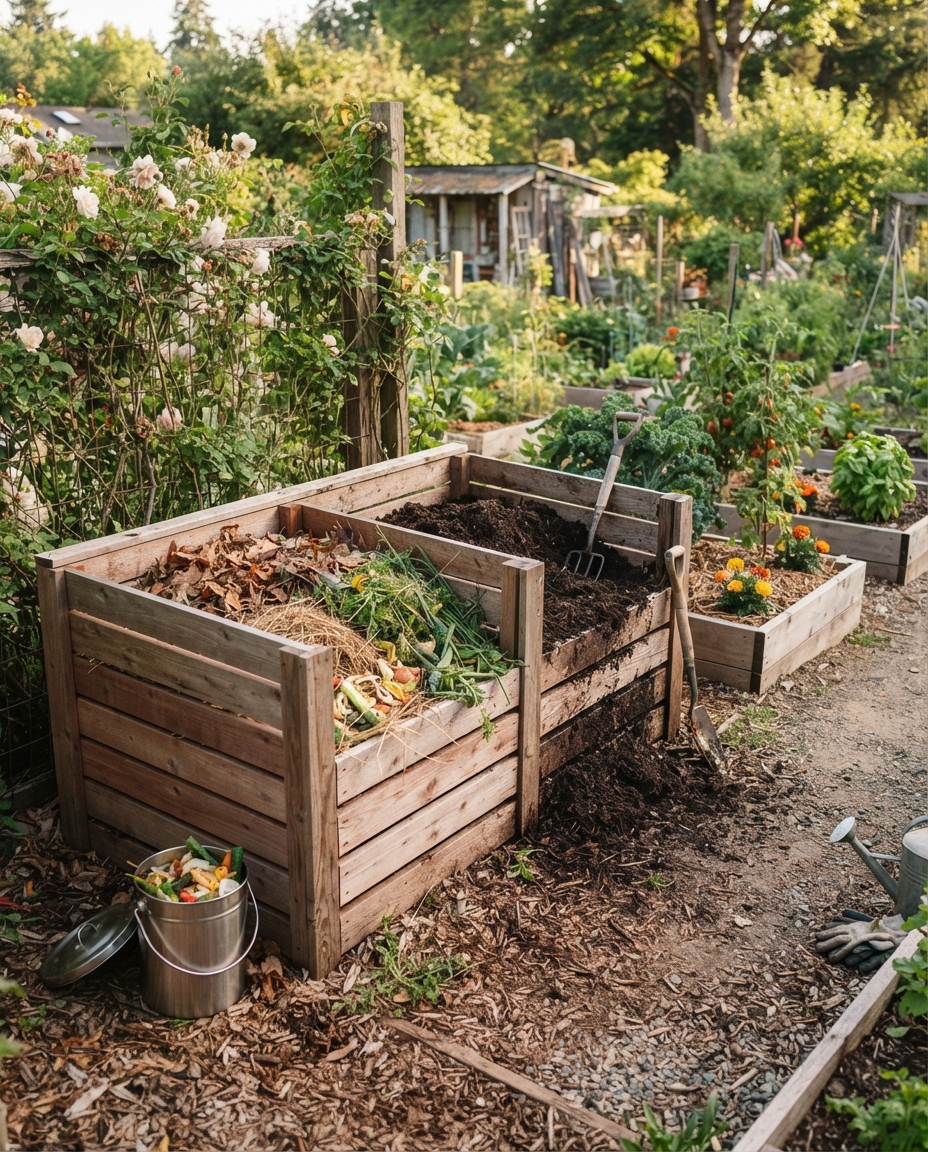
A self-sufficient backyard becomes much stronger when organic waste stops leaving the property and starts cycling back into the soil. Vegetable scraps, leaves, garden trimmings, spent annual plants, some grass clippings, and other appropriate organic materials can become compost rather than trash. Finished compost can then return organic matter to raised beds, fruit trees, berry plantings, and ornamental areas.
The goal is not to throw everything biodegradable into one pile. Successful composting depends on balance. Carbon-rich materials such as dry leaves provide structure, while nitrogen-rich materials such as fresh green garden waste contribute to decomposition. The pile also needs enough moisture and oxygen for microbes to work effectively.
A two-bin or three-bin system is useful in a productive backyard because materials can be separated according to stage. One bin receives fresh additions, another contains actively decomposing material, and a third may hold finished compost. Small yards may be better suited to an enclosed bin or tumbler, although these systems differ in capacity and management.
Compost Materials at a Glance
| Material Type | Examples | Function |
|---|---|---|
| Carbon-rich | Dry leaves, shredded cardboard where appropriate, dry stems | Adds structure and carbon |
| Nitrogen-rich | Vegetable scraps, fresh grass, green plant material | Supports microbial activity |
| Moisture | Water, moist food scraps | Necessary for decomposition |
| Air | Turning, loose structure | Supports aerobic microbes |
Do not treat compost as a disposal system for materials that are unsafe or unsuitable for your method.
7. Collect and Use Autumn Leaves as a Free Garden Resource
Many households bag fallen leaves every autumn and send them away, then purchase mulch or soil amendments later. A self-sufficient backyard can often use some of those leaves instead. Shredded leaves make an excellent seasonal mulch for many garden areas because they cover exposed soil, slow moisture loss, reduce weed germination, and gradually break down. Whole leaves can also become part of a compost system, where they provide an extremely useful carbon-rich material.
Leaf mold is another possibility. Leaves allowed to decompose primarily through fungal activity eventually form a dark, crumbly material that can improve soil structure and moisture retention. The main caution is volume and preparation.
Very thick layers of whole leaves can mat together, block water movement, or blow around the property. Shredding them first allows the material to settle more evenly and decompose more readily. Avoid using leaves contaminated with inappropriate chemicals or material from questionable sources. The broader principle is important: a backyard becomes more self-sufficient when seasonal biomass is treated as a resource rather than automatically exported.
8. Install Drip Irrigation to Use Water More Efficiently
Watering by hand can work perfectly well in a very small garden, but as the growing area expands, inconsistent irrigation becomes one of the easiest ways to lose productivity. Drip irrigation delivers water close to the root zone through lines or emitters instead of spraying the entire garden from above. This can reduce evaporation, keep pathways drier, and make watering easier to automate where appropriate.
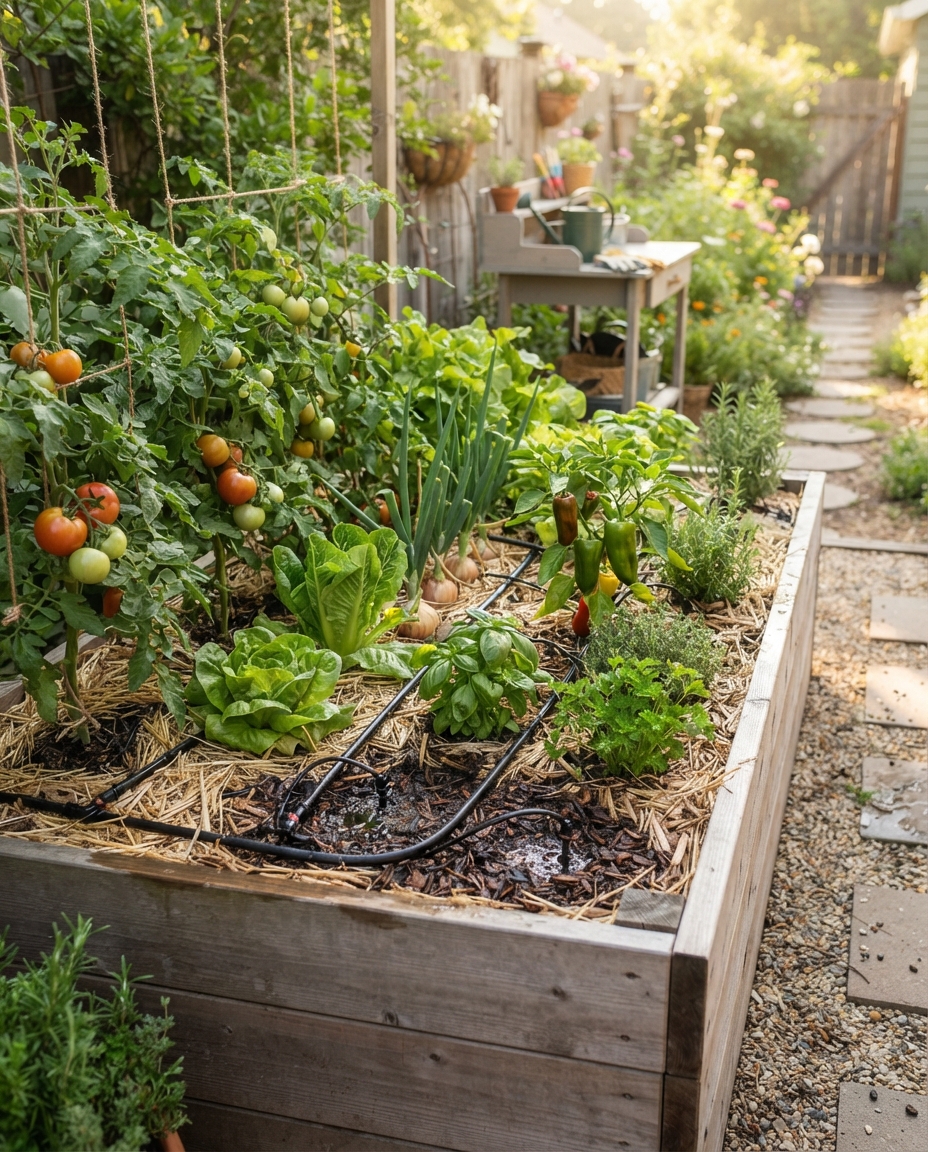
The system should not be treated as a “set it and forget it” solution. Drip lines can clog, emitters can shift, and different crops may require different amounts of water. Soil moisture still needs to be checked occasionally. Mulch makes drip irrigation even more effective because it slows the evaporation of water after it enters the soil. The real self-sufficiency advantage is labor efficiency. A garden that can be watered consistently with less daily effort is more resilient during busy periods, heat waves, or short absences.
Watering Methods Compared
| Method | Efficiency | Labor | Best Use |
|---|---|---|---|
| Watering can | Moderate | High | Very small gardens and containers |
| Hand hose | Moderate | High | Flexible spot watering |
| Soaker hose | Good | Moderate | Straight beds |
| Drip irrigation | Very good | Low after setup | Raised beds and larger gardens |
| Overhead sprinkler | Lower for vegetables | Low | Broad areas but more evaporation |
9. Collect Rainwater Where Local Rules and Conditions Allow
Rainwater harvesting does not make a small backyard independent of outside water, but it can supplement irrigation and help the household make better use of rainfall that would otherwise disappear into drainage. A basic rain barrel receives water from a roof downspout and stores it for later garden use. The container should be covered securely to reduce mosquito access and improve safety, and overflow needs to be directed away from the house foundation.
Storage volume matters. A small rain barrel can fill quickly during a significant storm, but a vegetable garden can also use that water surprisingly quickly during hot weather. Rainwater should therefore be treated as supplemental storage rather than an unlimited supply.
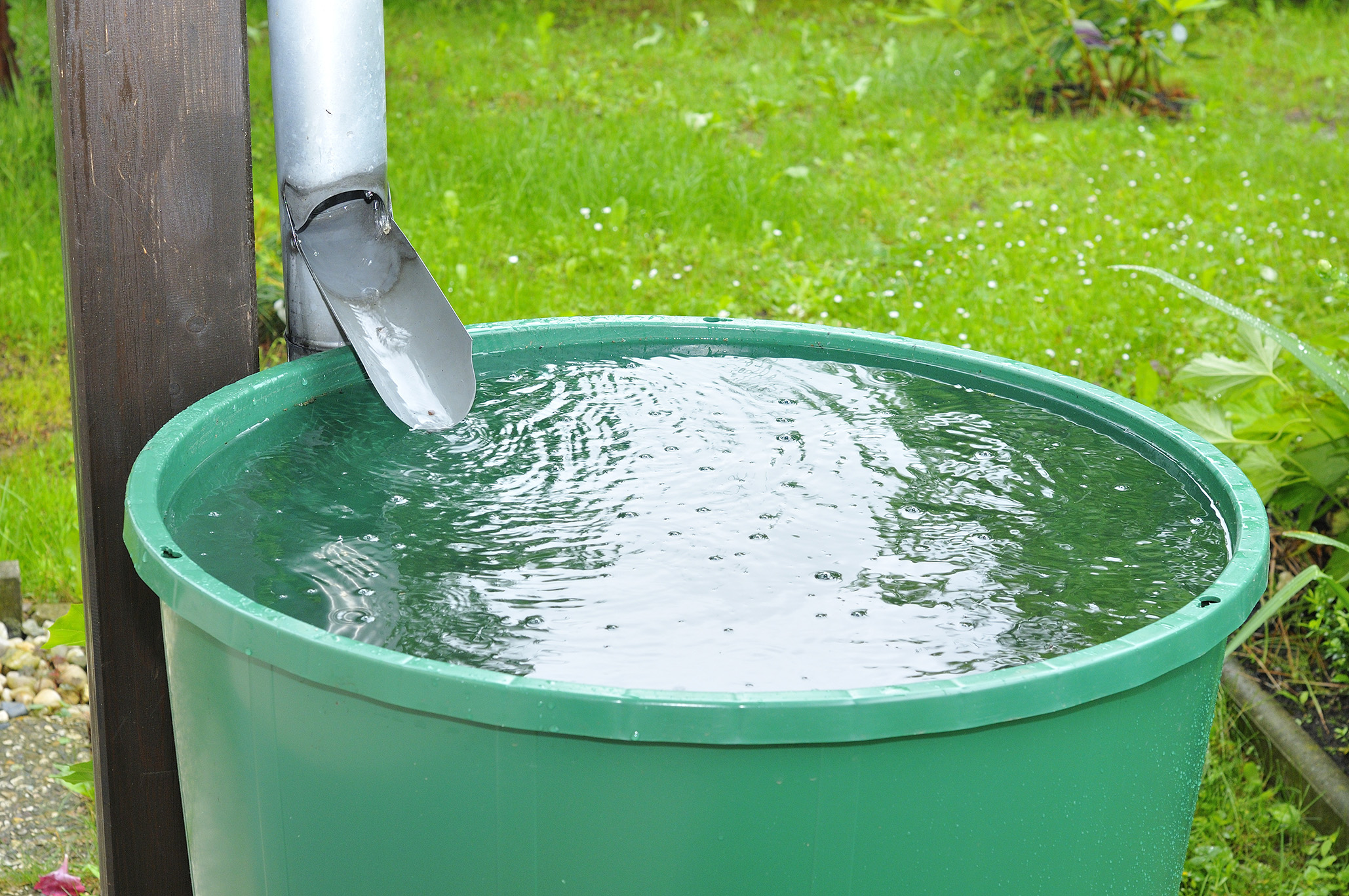
Collection is most effective when combined with efficient irrigation and mulching. If the garden loses large amounts of water to evaporation or runoff, increasing storage alone does not solve the underlying problem. Local regulations differ, so rules should be checked before installing larger systems.
Simple Rainwater Calculation
A useful approximation is:
1 inch of rain on 1,000 square feet of roof can yield roughly 600+ gallons of water before losses.
Actual collected volume will be lower because of roof geometry, gutter losses, first-flush diversion, overflow, and system efficiency.
This illustrates why even small roofs can collect meaningful water during substantial rainfall.
10. Keep a Small Flock of Chickens If the Property and Local Rules Support It
Chickens are one of the most productive additions a small homestead can make, but they should only be added when the household has enough room, time, and legal permission to care for them properly. A small flock can provide eggs while also producing manure and bedding that can eventually contribute to compost after appropriate management. Chickens can also consume some permitted kitchen and garden scraps, although a balanced complete diet should remain the foundation of their nutrition.
The mistake is assuming that a small backyard should hold as many hens as the space can physically contain. More birds create more manure, more feed consumption, more dust, more bedding, more noise, and heavier pressure on the ground. A modest flock that fits comfortably into the property is far more sustainable than an overcrowded run.
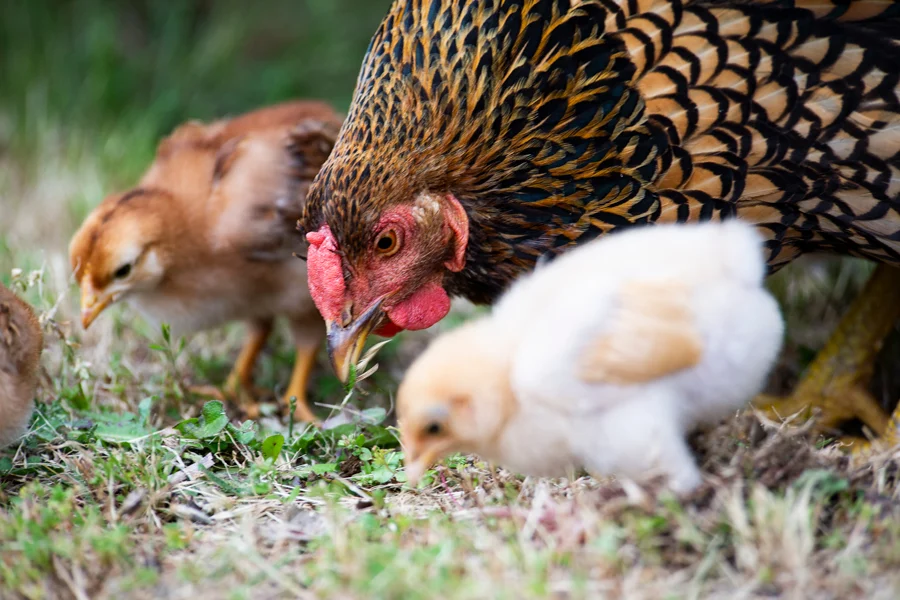
The coop and run should prioritize predator resistance, ventilation, shade, dryness, ease of cleaning, and appropriate space. Local regulations may control flock size, coop placement, setbacks, and whether roosters are permitted. Those rules should be checked before anything is built or purchased.
The goal is not simply to “have chickens.” It is to integrate them into the backyard without making animal care, sanitation, or neighbor relationships harder than the benefit they provide.
11. Grow Some Crops Specifically for Preservation
If every vegetable in the garden is intended to be eaten immediately, the backyard’s contribution drops dramatically when the growing season ends. A more self-sufficient garden includes some crops that can be stored or preserved. Tomatoes can become sauce or be frozen depending on intended use. Beans can be frozen after appropriate preparation. Herbs can be dried or frozen. Peppers can be frozen or dried depending on variety. Storage onions, garlic, potatoes, carrots, and winter squash can remain usable well beyond harvest when grown and stored properly.
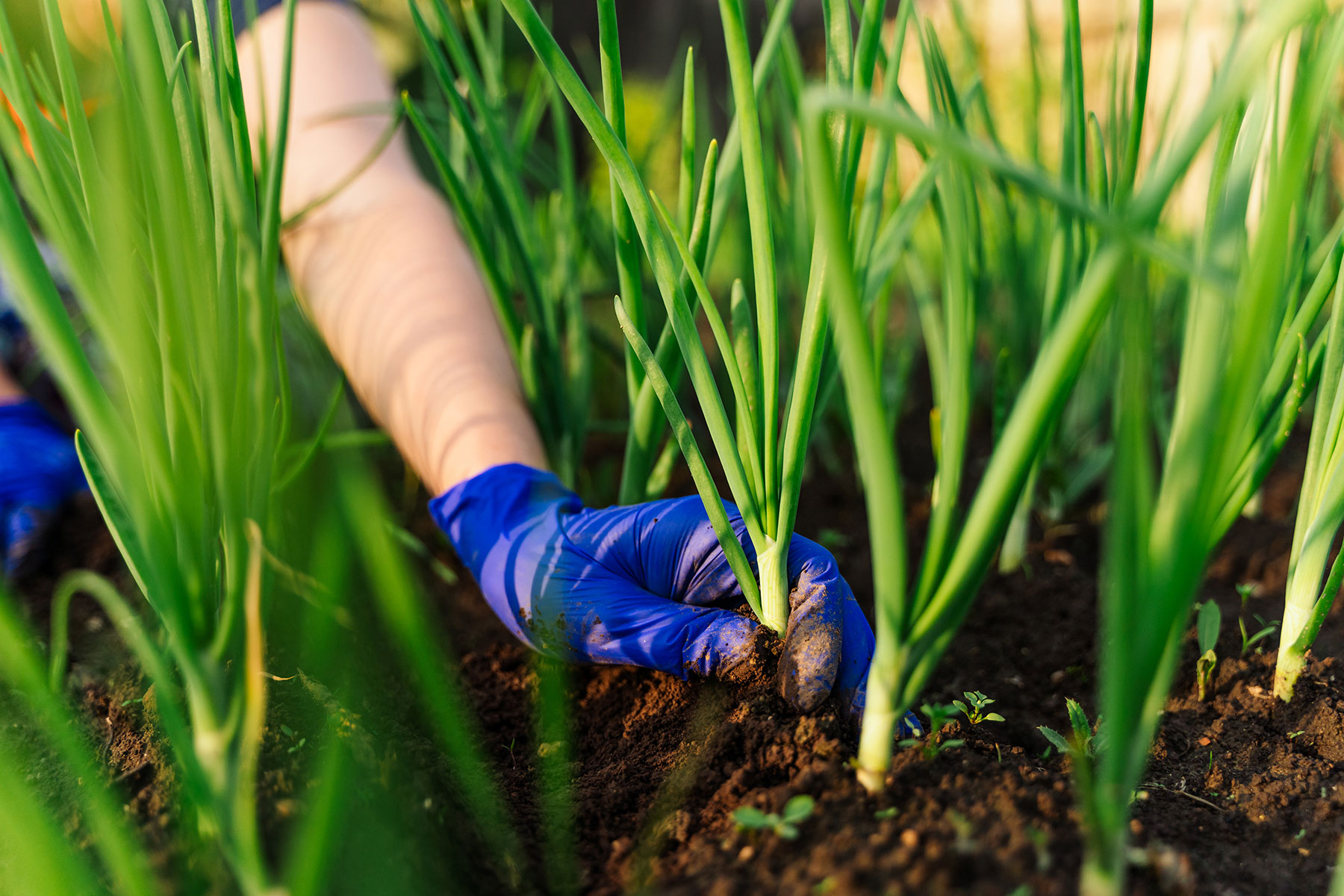
This changes how the garden should be planned. Instead of growing only salad vegetables and summer produce, include crops with different harvest and storage profiles. A household that grows fresh lettuce in spring, tomatoes and peppers in summer, storage onions and winter squash later in the season, and preserved herbs for winter is spreading the value of the backyard across a much longer period.
Preservation should always follow safe methods. Home canning in particular requires tested recipes and correct processing procedures.
Fresh vs. Storage-Oriented Crops
| Crop | Fresh Eating Value | Storage/Preservation Value |
|---|---|---|
| Lettuce | Very high | Low |
| Tomato | Very high | High |
| Pepper | High | High |
| Onion | High | Very high |
| Garlic | High | Very high |
| Winter squash | Moderate | Very high |
| Potato | High | Very high |
| Green beans | High | High |
| Herbs | High | High when dried/frozen |
12. Learn to Save Seed From a Few Appropriate Crops
Seed saving can reduce dependence on purchasing every seed every year, but it requires more understanding than simply collecting seeds from any vegetable. Open-pollinated varieties are generally more suitable for saving because they can reproduce with more predictable characteristics when pollination is controlled appropriately. Hybrid varieties may produce offspring that differ significantly from the original plant.
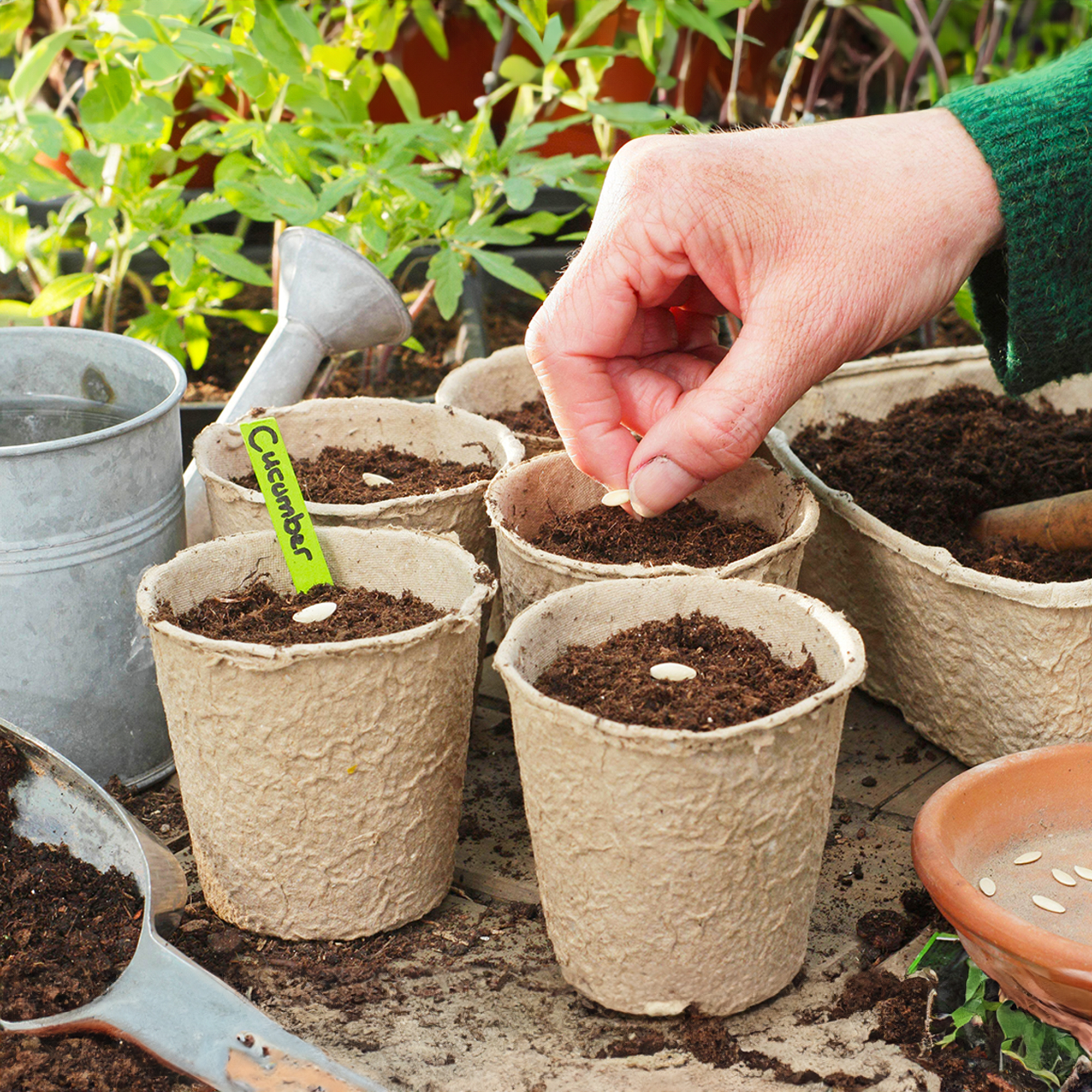
Cross-pollination is another challenge. Beans, tomatoes, lettuce, peppers, squash, cucumbers, and other crops differ in how readily varieties cross with one another. Some are relatively easy for beginners to save seed from, while others require distance, hand pollination, bagging, or other techniques if you want genetic purity. Seed also needs to reach physiological maturity. A cucumber harvested at the normal eating stage, for example, contains immature seed compared with a fruit allowed to mature fully for seed production.
Once collected, seed should be cleaned appropriately, dried thoroughly, labeled, and stored in cool, dry conditions. For a beginner, it is better to save seed successfully from two or three relatively straightforward crops than to attempt every plant in the garden.
Beginner Seed-Saving Considerations
| Crop | Beginner Difficulty | Main Issue |
|---|---|---|
| Beans | Relatively easy | Let pods mature fully |
| Peas | Relatively easy | Allow pods to dry |
| Lettuce | Moderate | Seed is light and can scatter |
| Tomatoes | Moderate | Seed cleaning/fermentation often used |
| Peppers | Moderate | Possible crossing between varieties |
| Squash | More advanced | Cross-pollination common |
| Cucumbers | More advanced | Fruit must mature far beyond the eating stage |
Self-sufficiency advantage: Seed saving can gradually reduce annual inputs while preserving varieties that perform well in your specific garden.
13. Build a Small Seed-Starting and Propagation Area
Buying transplants every year is convenient, but starting some of your own vegetables can increase variety choice and make succession planting much easier. You do not need a large greenhouse. A small indoor shelf with appropriate grow lights, a compact mini greenhouse, cold frame, or protected propagation area may be enough to supply a small backyard garden.
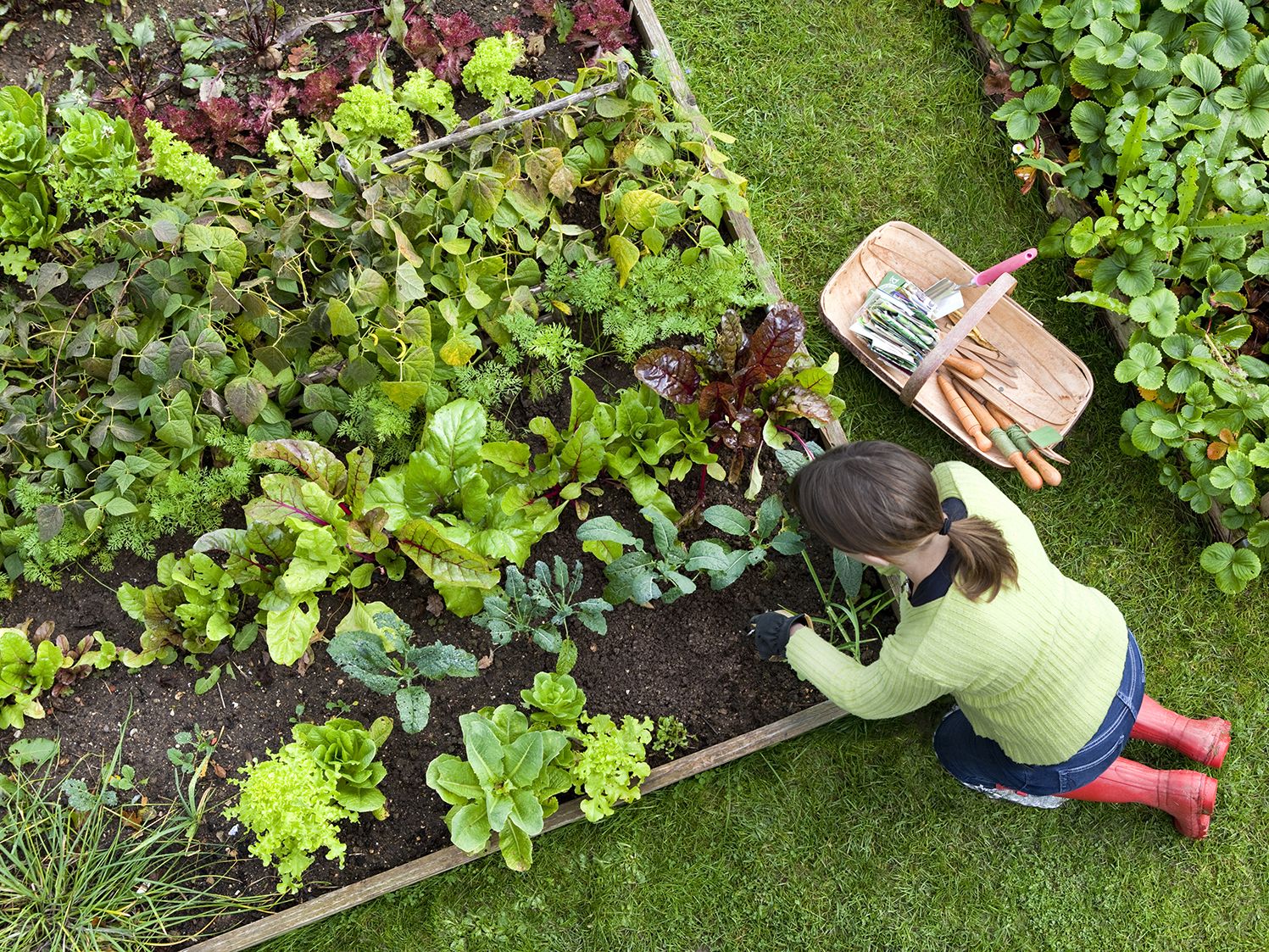
Seed starting becomes especially valuable when you want replacement crops ready before the previous planting is finished. A lettuce bed nearing the end of production can be followed quickly by young transplants rather than sitting empty for weeks. It also allows you to grow varieties that may never appear at local garden centers. The system should remain proportional to the garden. Starting 200 seedlings for a backyard that only holds 30 mature plants creates unnecessary work.
Light is one of the most important factors. Seedlings grown with insufficient light often become thin and elongated. Watering also needs care because constantly saturated seed-starting mix can cause problems, while tiny containers dry much faster than full garden beds. The goal is not to produce professional nursery plants. It is to maintain a reliable pipeline of healthy young plants for the space you actually have.
14. Design the Backyard Around Multiple Uses Instead of Single-Purpose Areas
Small yards become much more self-sufficient when individual spaces perform more than one function. A fence can support berry canes or trellised vegetables. A patio edge can become a herb garden. A fruit tree can provide food, partial shade, and visual structure. A pergola can support climbing crops in summer while creating shade over a seating area.
Raised beds can include vegetables, herbs, and flowers rather than requiring separate zones for each. This does not mean packing every available inch with plants. Multi-use design is different from overcrowding. The goal is to identify spaces that can provide a second function without undermining the first.
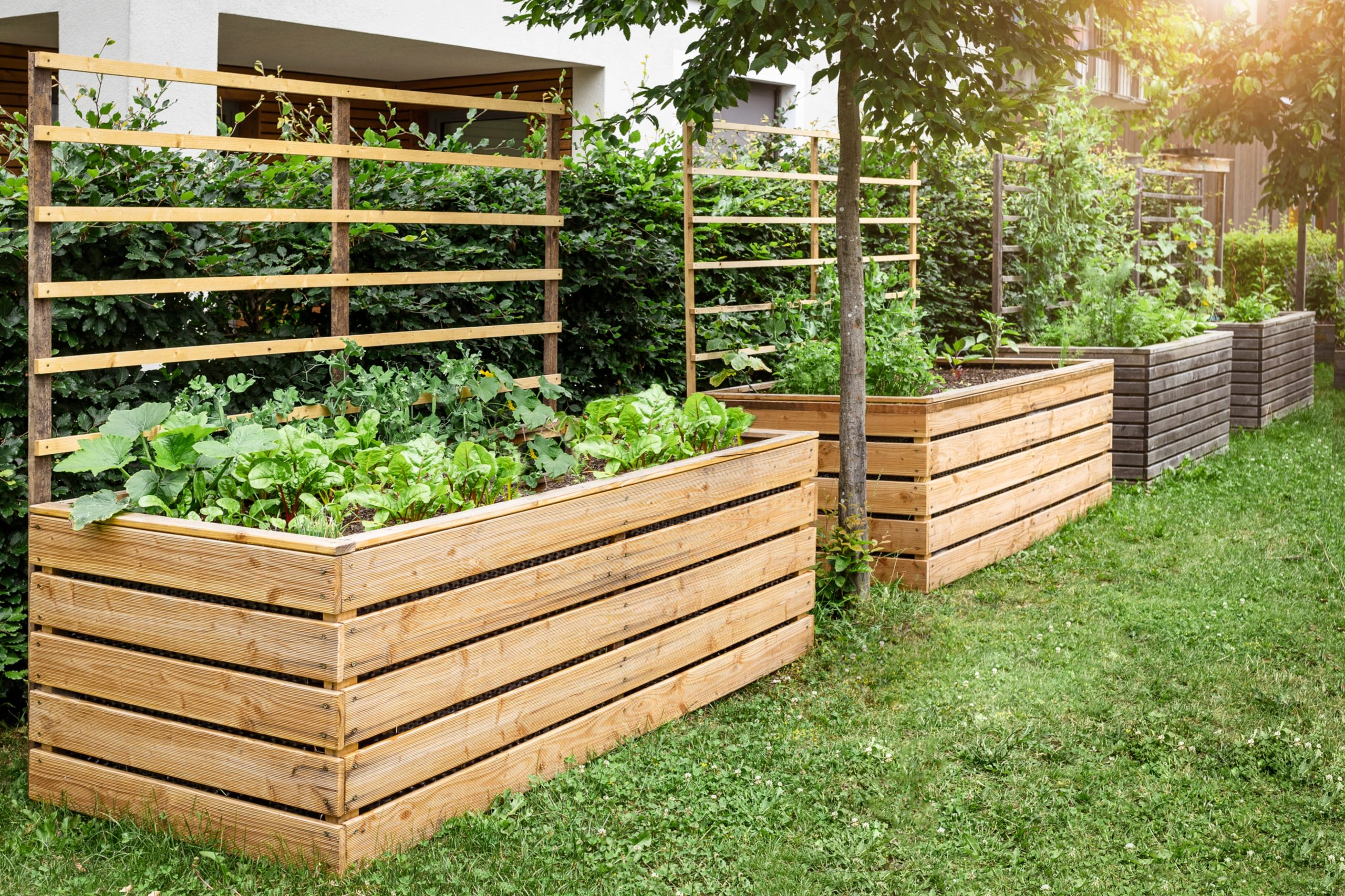
For example, the pathway between two raised beds must remain a usable path, but an arch trellis above it can turn empty air into growing space. The ground around a rain barrel still needs safe access, but nearby containers may benefit from the convenient water source. A small backyard becomes far more productive when space is considered in three dimensions: ground level, vertical structures, and overhead space.
Single-Use vs. Multi-Use Backyard Design
| Backyard Feature | Basic Function | Possible Additional Function |
|---|---|---|
| Fence | Boundary | Trellis or berry support |
| Path between beds | Access | Space beneath arch trellis |
| Patio edge | Border | Herb garden |
| Fruit tree | Fruit production | Shade and landscape structure |
| Chicken bedding | Animal housing material | Compost input after use |
| Fallen leaves | Yard waste | Mulch or compost carbon |
| Roof | Shelter | Rainwater collection surface |
15. Track What the Backyard Actually Produces and Use That Information to Improve It
One of the most overlooked self-sufficiency tools is record keeping. Without even a simple record, it is easy to repeat inefficient decisions every year. You may remember that the tomatoes did well but forget which variety produced the most. You may recall growing plenty of zucchini but not remember that half of it went unused. You may buy seeds for crops the household barely touched while underplanting herbs that were harvested every few days.
A useful backyard record does not need to be complicated. Write down what was planted, roughly how much space it used, whether it grew well, how often it was harvested, and whether the household actually used the food. You can also track approximate harvest weight for major crops if you enjoy data, but even simple notes are enough to reveal patterns.
The goal is optimization. If three tomato plants consistently provide all the fresh tomatoes your household can eat, a fourth may not be the best use of limited space unless you intend to preserve more. If one small herb bed replaces dozens of store purchases, expanding that bed may offer greater practical value than adding another large vegetable crop.
A self-sufficient backyard improves gradually because the gardener learns which systems produce the greatest return for the specific household.
Simple Annual Backyard Review
| Question | What It Helps You Decide |
|---|---|
| Which crops did we eat most often? | What deserves more space |
| Which crops produced too much? | What to reduce next season |
| What failed repeatedly? | Whether to change location/variety |
| Which areas received the best sunlight? | Future bed placement |
| What required the most maintenance? | Whether the benefit justified the labor |
| Which crops stored well? | What to grow more for winter |
| What did we still buy frequently? | Potential future self-sufficiency targets |
What Does a Self-Sufficient Backyard Actually Mean?
Complete self-sufficiency is unrealistic for most small suburban properties. A small backyard is not likely to provide all of a household’s calories, clothing, energy, building materials, animal feed, water, and other needs.
That does not make backyard self-sufficiency meaningless. It is more useful to think of it as reducing dependence in selected areas. A household might grow most of its summer herbs and salad greens.
It might produce some of its eggs. It might replace purchased compost with material generated on the property. And It may collect part of its irrigation water from rainfall. It might grow enough tomatoes to freeze or preserve some for later in the year.
None of those systems create total independence. Together, however, they reduce recurring purchases and increase the household’s ability to provide some of its own needs.
Four Levels of Backyard Self-Sufficiency
| Level | Example |
|---|---|
| Basic | Herbs and a few vegetables |
| Moderate | Vegetables, herbs, berries, compost |
| Advanced small-yard | Garden, fruit, compost, rainwater, preservation |
| Integrated backyard homestead | Food garden, perennial crops, poultry where appropriate, compost, water management, seed starting, preservation |
The goal is not reaching a particular level. It is building systems that make sense for your property and household.
How Much Space Do You Need?
Space requirements depend on what you want the backyard to accomplish. A patio with containers can produce herbs, greens, peppers, and compact tomatoes. And a few raised beds can produce a meaningful amount of vegetables for fresh eating. A larger suburban backyard may support several beds, dwarf fruit trees, berries, compost, rainwater storage, and possibly a small poultry area.
The limiting factor is often not land alone. Sunlight, water, local regulations, soil, time, and household interest matter just as much. A large shaded yard may produce less food than a smaller sunny yard.
A garden with twelve beds may be less productive than four beds if the owner does not have time to maintain them. Think in terms of productive systems rather than acreage.
The Best Order for Building a Self-Sufficient Backyard
Trying to implement all fifteen ideas at once is one of the easiest ways to make the backyard expensive and exhausting. Start with systems that support other systems. A useful progression might look like this:
| Stage | What to Add | Why |
|---|---|---|
| 1 | Vegetable beds and herbs | Immediate food production |
| 2 | Compost and mulch | Supports soil fertility |
| 3 | Trellises and drip irrigation | Improves efficiency |
| 4 | Berries and fruit trees | Adds perennial production |
| 5 | Seed starting | Improves planting flexibility |
| 6 | Food storage/preservation | Extends usefulness of harvest |
| 7 | Rainwater collection | Reduces irrigation inputs |
| 8 | Poultry if appropriate | Adds eggs and another integrated system |
Fruit trees may be planted earlier because they take time to mature, but the general principle remains useful: build the systems you can maintain before adding more.
Which Crops Provide the Most Value in a Small Backyard?
There is no universal answer because value depends on what your household eats, your climate, and local food prices. However, small yards generally benefit from crops that have at least one of these characteristics:
- High production from limited space
- Repeat harvests
- High storage cost relative to growing space
- Good storage potential
- Frequent household use
- Ability to grow vertically
- Ability to preserve easily
Herbs score particularly well because they occupy little space and can be harvested repeatedly. Tomatoes and peppers are popular because they produce over an extended period and can be used fresh or preserved. Pole beans are extremely space-efficient.
Lettuce and greens can be succession planted. Storage onions, garlic, potatoes, carrots, and winter squash provide value beyond the immediate growing season. The smartest crop is not necessarily the one with the highest yield. It is the one that converts limited backyard space into food your household actually uses.
How to Reduce Outside Inputs Gradually
Self-sufficiency becomes more realistic when you reduce outside inputs one at a time. The first year you may buy soil, compost, seedlings, mulch, and fertilizer. Later, your own compost may replace part of the purchased compost. Shredded leaves may replace some bought mulch.
Seed saving may reduce the number of seed packets you need. A small propagation setup may replace some purchased transplants. Collected rainwater may supply part of garden irrigation. This gradual approach is far more realistic than expecting the backyard to become closed-loop immediately.
Some inputs will probably always come from outside. Chicken feed is one example. Most small properties cannot produce a nutritionally complete diet for a flock while also meeting household food goals. The objective is not purity. It is resilience and efficiency.
What Not to Grow When Space Is Extremely Limited
Some crops can be enjoyable but inefficient when a small yard is being optimized primarily for household food production. Large pumpkins and winter squash may require enormous vine space. Sweet corn generally performs best in blocks for pollination and can occupy significant garden area relative to harvest. Large melons can require substantial space and a long warm season.
Standard fruit trees may eventually dominate the yard. This does not mean you should never grow them. If corn or pumpkins bring you enormous enjoyment, growing them may be entirely worthwhile. But understand the tradeoff.
A ten-foot section occupied by sprawling vines is a ten-foot section that cannot simultaneously support several rows of high-value vegetables unless the vines are carefully managed. Self-sufficiency is partly about deciding which tradeoffs matter to you.
A Sample Small Self-Sufficient Backyard Layout
Imagine a modest suburban property. The sunniest section contains three raised vegetable beds. One grows tomatoes, peppers, and basil. Another holds salad greens, carrots, and onions. The third has cucumbers and pole beans climbing an arch trellis. The back fence carries berries.
Two dwarf fruit trees occupy opposite corners where their mature canopies will not shade the vegetable beds excessively. A narrow herb planter sits beside the kitchen door. A compost station occupies a screened corner near the garden.
A covered rain barrel collects water from the roof. A small propagation shelf indoors provides seedlings. If local rules, space, and household interest allow, a modest chicken coop and run occupy another section with easy access for daily care. Mulched paths keep weeds manageable.
There is still a patio. There is still a seating area. There is still enough open space to move comfortably.
That is an important point. A self-sufficient backyard should not become so packed with productive infrastructure that living in it becomes unpleasant. The goal is a home that produces more. Not a backyard that feels like a storage yard for homesteading equipment.
The Most Important Rule: Produce What You Actually Use
A backyard can produce impressive amounts of food and still contribute very little to household self-sufficiency if most of that food is unwanted or wasted. Start with the kitchen. Look at what you buy every week. Fresh herbs, Salad greens, tomatoes, peppers, eggs, berries, onions, and garlic.
These recurring purchases reveal where backyard production might have the greatest practical value. If you regularly buy basil but rarely eat beets, basil deserves the better garden space. If your family eats eggs every morning and local rules allow chickens, a small flock may contribute more than another ornamental garden bed.
If tomatoes are used constantly and you already make sauce, increasing tomato production may make sense. Self-sufficiency is personal. The correct backyard is the one designed around the household that actually lives there.
15 IDEAS AT A GLANCE
| Idea | Main Benefit | Space Needed | Difficulty |
|---|---|---|---|
| High-value vegetable garden | Fresh food | Moderate | Easy-moderate |
| Vertical growing | More production per square foot | Low | Easy-moderate |
| Kitchen herb garden | Frequent fresh harvest | Very low | Easy |
| Dwarf fruit trees | Long-term fruit | Moderate | Moderate |
| Berry plants | Perennial food | Low-moderate | Easy-moderate |
| Compost system | Reduces waste, improves soil | Low-moderate | Easy |
| Leaf recycling | Free mulch/organic matter | Low | Easy |
| Drip irrigation | Water efficiency | Low | Moderate setup |
| Rainwater collection | Supplemental water | Low | Moderate |
| Chickens | Eggs and compost inputs | Moderate | High ongoing care |
| Preservation crops | Extends harvest season | Garden dependent | Moderate |
| Seed saving | Reduces annual inputs | Very low | Moderate |
| Seed-starting station | More plant independence | Very low | Moderate |
| Multi-use design | Better space efficiency | None beyond existing | Moderate planning |
| Garden records | Improves future productivity | None | Easy |
FINAL THOUGHTS
A small backyard will probably never provide everything a household needs. It does not have to. Self-sufficiency is not an all-or-nothing achievement. It is the difference between buying every herb you use and cutting some outside the kitchen. It is harvesting tomatoes from your own trellis instead of purchasing every tomato during summer. It is turning autumn leaves and kitchen scraps into compost rather than paying to remove them and buying organic matter later.
It is storing winter squash from your own garden, freezing extra peppers, collecting part of your irrigation water from rainfall, or gathering eggs from a small flock where local conditions allow. None of those changes eliminates dependence on the outside world. But each one makes the home a little more productive. That is the real strength of a small self-sufficient backyard.
You do not need to transform everything at once. Grow the food you use most. Improve the soil. Make water easier to manage. Use vertical space. Add perennial crops. Preserve some of the harvest. Reuse what the property already produces.
Then watch which systems actually make life easier and expand those first. A backyard becomes self-sufficient gradually. One useful system at a time.